Why No One Here Has Killed a Leopard in Living Memory
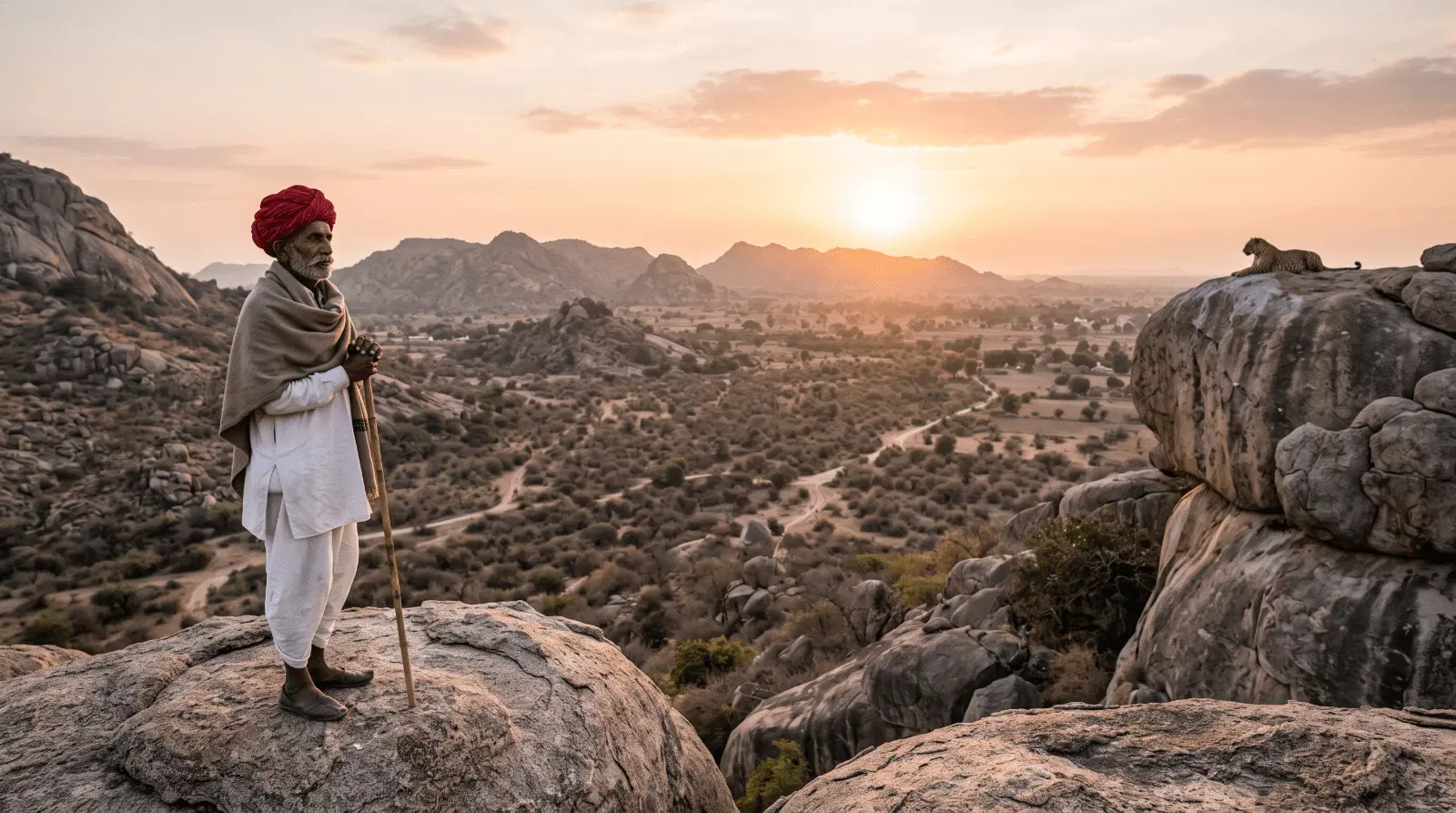
It is tempting, when telling the Jawai coexistence story, to skip past the actual cost of it. Leopards do take livestock here. Goats and sheep are the animals most commonly lost, and occasionally a young camel or calf, and each loss is a real economic hit to a household whose margins are often thin to begin with. Any honest account of Jawai has to sit with this fact directly rather than talking around it, because the coexistence this site describes elsewhere is not a story about a cost-free relationship between a predator and a community. It is a story about a community that has, for generations, absorbed a genuine cost without escalating it into retaliation. Understanding how that absorption actually works, without inventing tidy numbers or a formal system that may not exist as cleanly as it sounds, is the purpose of this piece.
What Predation Actually Looks Like
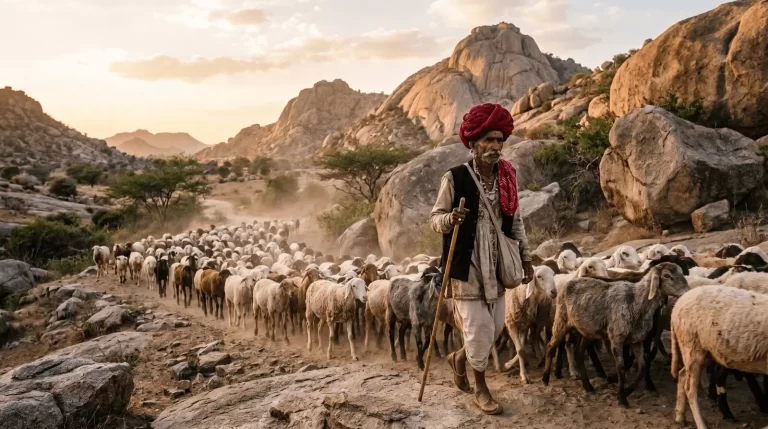
Leopard predation on livestock in Jawai typically involves individual animals taken from a herd during grazing, or occasionally from an enclosure at night if security is inadequate, rather than large-scale losses affecting an entire herd at once. Goats and sheep, generally smaller and more vulnerable than adult camels or cattle, make up the majority of recorded losses, consistent with what is typically observed in leopard predation patterns near livestock-keeping communities elsewhere. The frequency of loss for any individual household varies considerably depending on herd size, grazing patterns, enclosure quality at night, and simple chance, and it would be inaccurate to describe predation as either a constant daily occurrence or a rare, exceptional event. It is, for many herding households in this landscape, an occasional but recurring part of the risk profile of keeping livestock here, in the same broad category as disease or a bad season for grazing, though distinct from those risks in the specific way it involves a visible, identifiable animal rather than a diffuse cause.
The Question of Compensation
India’s wildlife protection framework does, in various states including Rajasthan, include provisions for compensating farmers and herders for livestock losses caused by protected wildlife, leopards among them. In principle, a herder who loses an animal to a leopard may be able to report the loss to forest department authorities and pursue compensation through the applicable state scheme. In practice, and this is the point that deserves honest emphasis rather than a reassuring gloss, the functioning of these schemes varies considerably in speed, reliability, and the amount actually paid relative to the animal’s real value, and this varies by state, by district, and by year, depending on administrative capacity and budget allocation at any given time. This site does not have, and will not invent, a specific figure for what compensation typically amounts to in Jawai specifically, because doing so would risk stating something either out of date or simply inaccurate, and because the honest, useful point is a different one: no visitor or reader should assume that a functioning, prompt, fully adequate compensation system is quietly handling this cost in the background. Some households pursue compensation claims when a loss occurs; others may not, whether because the process is seen as slow or uncertain relative to the effort involved, because of practical barriers to filing a claim from a remote settlement, or because the household simply absorbs a modest loss without engaging a bureaucratic process for it.
What can be said with more confidence is that compensation, where it exists and where it is successfully claimed, functions as a partial offset rather than a complete substitute for the value of a lost animal, and it does not appear to be the primary mechanism that explains why retaliatory killing has not taken hold here. If tolerance depended primarily on reliable, prompt government compensation, the pattern would likely be far less stable than it has proven to be, given how commonly compensation schemes elsewhere are criticized for slow processing and inadequate payouts. The coexistence pattern in Jawai predates the existence of most formal compensation schemes in anything like their current form, which is itself a strong indication that something other than compensation is doing most of the work in sustaining it.
Accepted Loss as a Social and Economic Norm
What appears to actually sustain the pattern, based on long-term observation of the community, is a social norm in which livestock loss to a leopard is categorized, informally but consistently, as an accepted cost of living and grazing in this particular landscape, comparable in kind, if not always in scale, to loss from disease, drought, or ordinary accident. This is a meaningfully different mental framework than one in which each loss is treated as a wrong committed against the household that must be answered, whether through retaliation or through insistence on full financial restitution. Framing loss as an accepted, if unwelcome, feature of the landscape rather than a grievance against a specific responsible party appears to lower the pressure toward retaliation considerably, even though it does nothing to reduce the real financial impact of the loss itself on the household that experiences it.
It would be a mistake to read this social norm as evidence that the loss does not matter economically or emotionally to the family involved. A herding household operating with a modest number of animals feels the loss of even one animal in concrete terms, in income, in future breeding stock, in the working capital the herd represents. The social norm does not erase that cost; it simply channels the response to that cost away from retaliation and toward acceptance, absorption, and, where available and worth pursuing, a compensation claim through official channels.
Why Loss Is Not Evenly Distributed
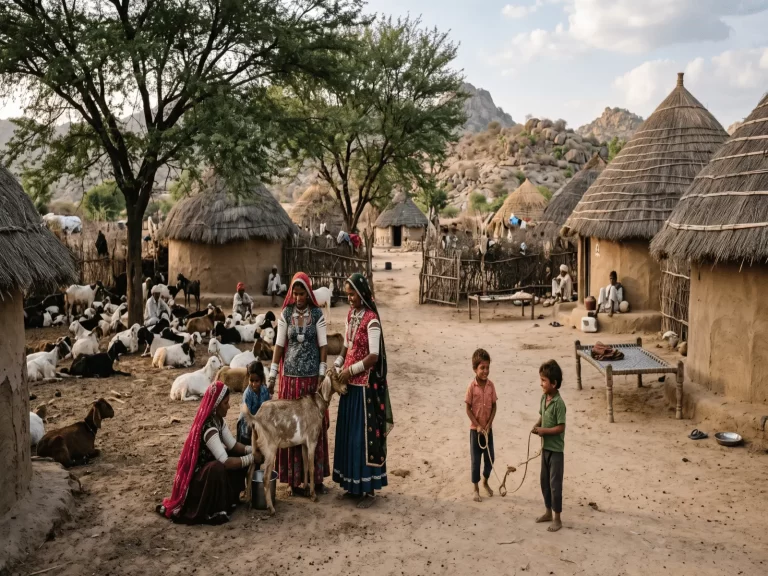
It is worth noting that predation risk and its economic impact are not spread evenly across every Rabari household in the region. Families with larger herds can generally absorb an individual loss with less relative disruption than families keeping only a small number of animals, for whom a single lost goat or sheep represents a larger proportional hit to household assets. Settlement location relative to the densest leopard territory also plays a role, with households closer to the most active granite outcrops likely facing a somewhat higher baseline exposure than those further out, though grazing routes mean exposure is never fully confined to any one settlement. This unevenness matters because it means the accepted-loss norm described here is not experienced identically by everyone; some households carry meaningfully more of this cost than others, and the community-wide pattern of tolerance holds despite that uneven distribution rather than because the burden happens to be shared equally.
How Households Manage the Risk in Practice
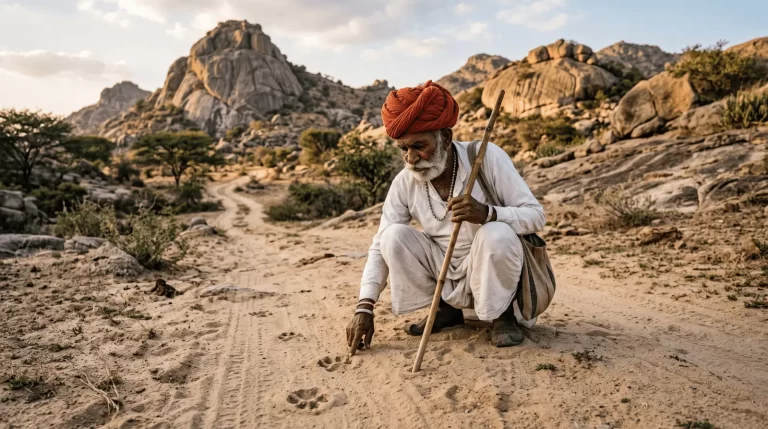
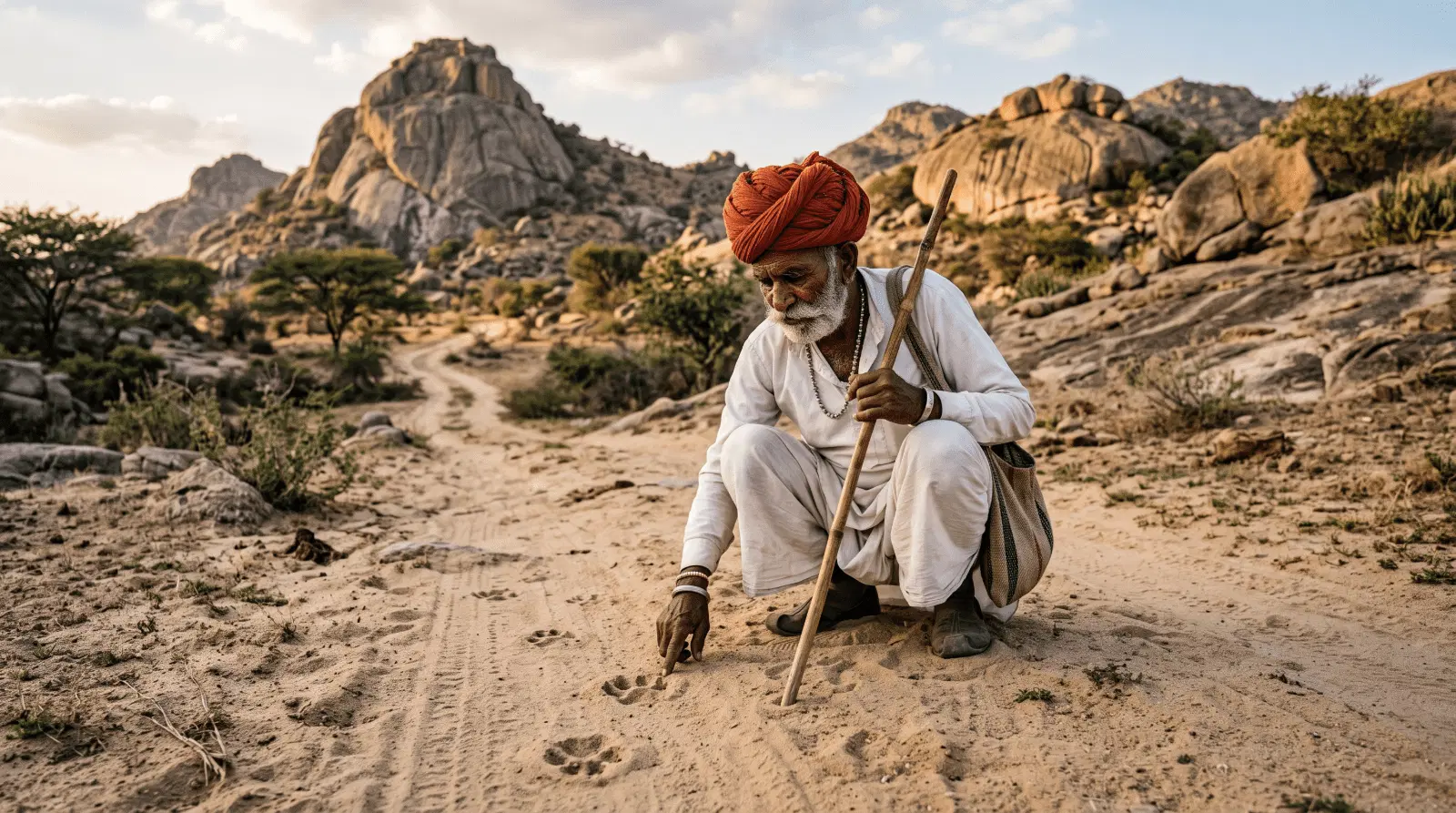
Beyond formal compensation, households and the community more broadly manage predation risk through a range of practical measures that have developed over generations of experience with this specific landscape. Enclosures for livestock overnight are generally built with an awareness of the need to keep animals secure from predators, though enclosure quality varies by household resources. Grazing routes and timing are adjusted, where practical, based on herders’ working knowledge of where leopards are more likely to be resting on a given day, without this amounting to avoidance of the hills altogether, since the hills are also where much of the useful grazing is located. Herd composition itself, the mix of goats, sheep, and camels a household keeps, spreads risk to some degree, since different animals carry different vulnerability to predation and different economic value, meaning a loss of one type of animal does not necessarily threaten the household’s entire economic base at once.
None of these measures eliminate predation risk, and none are presented here as a complete solution; they are better understood as the accumulated, practical adaptations of a community that has had a very long time to learn how to reduce, without eliminating, a cost it has decided to live with rather than fight.
The Forest Department’s Role
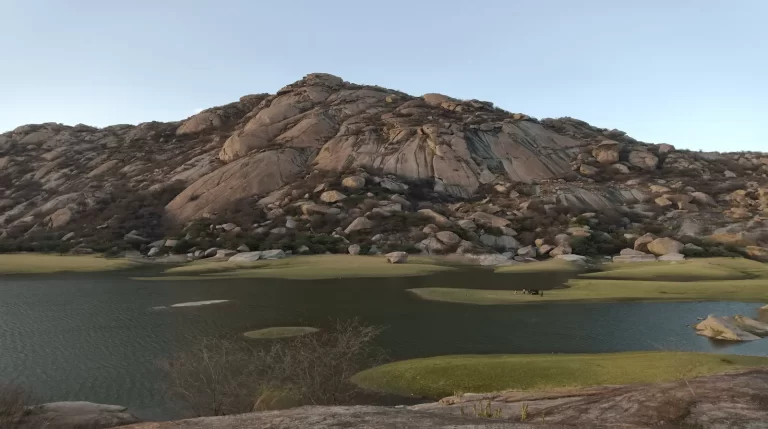
The forest department’s involvement in Jawai has historically centered more on wildlife monitoring and, more recently, on the safari regulation framework introduced under the Jawai Safari and Eco Tourism Coordination Committee, than on an active, comprehensive predation-management or compensation infrastructure specifically built around Rabari livestock loss. This is a general pattern seen across many Indian wildlife landscapes, where forest department capacity and attention are often weighted toward core protected areas and formally designated sanctuary zones, and Jawai, notably, is not yet a formally declared wildlife sanctuary, a possibility state authorities have been asked to examine following recent regulatory changes. That status matters here because it affects the level of institutional infrastructure, funding, and staffing directed at the landscape, including whatever capacity exists to process compensation claims efficiently. A future change in that formal status could plausibly shift how predation loss is handled administratively, and this is a genuinely open question rather than a settled one, worth watching for readers who follow Jawai’s regulatory situation closely rather than something this site can predict with confidence.
Why This Matters for How Jawai Should Be Understood
Telling the coexistence story honestly means resisting the temptation to smooth over the economic reality behind it, either by implying the loss does not matter or by inventing a government safety net that fully absorbs it on the community’s behalf. The actual picture is harder-edged and, in a way, more admirable than either simplified version: a community that experiences a real, recurring economic cost from sharing its land with a protected predator, that has limited and inconsistent formal support in offsetting that cost, and that has nonetheless sustained a pattern of tolerance rather than retaliation across generations. That is not a story about an easy, cost-free arrangement between people and wildlife. It is a story about a community absorbing a genuine cost as the price of a way of life and a set of values it has chosen to maintain, and it deserves to be told with that weight intact rather than edited down into something more comfortable.
Message us on WhatsApp for current pricing and a quote tailored to your dates and group size.