
Plan Your Trip
Most people arrive at this page knowing that Jawai has leopards, granite hills, and a reputation among serious wildlife travellers, and not much else. Jawai is not a place you show up to and figure out on arrival, the way you might in a city with hotels on every corner. It is a rural landscape in Pali district, Rajasthan, and how your trip goes depends heavily on decisions made before you leave home: which operator you book with, how many nights you give the place, which season you travel in, and whether you understand what you are actually walking into. This page will not cover every detail in exhaustive depth — we link to dedicated guides for the deeper logistics — but it gives you a genuinely complete picture of what Jawai is, why it works differently from a conventional wildlife destination, and how to plan a trip here that actually succeeds.
What Jawai Actually Is
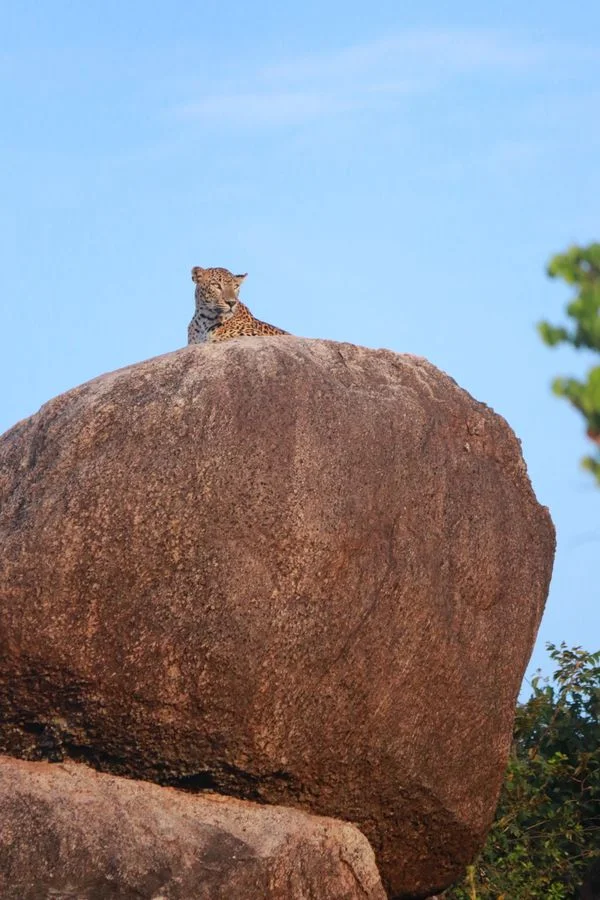
Jawai is built around a cluster of granite hill formations — locally divided into the Bera, Sena, and Devgiri zones — and the Jawai Bandh, a dam completed in 1957 that backs up a substantial body of water across an otherwise semi-arid landscape. That combination of rock, water, and scrub forest is what created the conditions for a resident leopard population here, and what makes the place unlike almost anywhere else leopards are found in India.
The detail that surprises most first-time visitors, and the one that genuinely defines Jawai, is that none of this is fenced. There is no gate, no boundary wall, no reserve office issuing entry permits the way you would at a national park. Jawai is an open, inhabited landscape. Rabari pastoralist families live across this terrain and have done so for generations, grazing camels, goats, and cattle across the same hills and scrub where leopards rest, hunt, and raise cubs. The leopards here are wild, unfenced, and free-ranging — this is not a sanctuary with a controlled cat population, it is a wild leopard territory that overlaps with human settlement. What makes Jawai remarkable is not that leopards and people are kept apart by clever management, but that they are not kept apart at all, and the tension you might expect from that simply does not exist. A shepherd walking his herd past a granite outcrop where a leopard is resting is an entirely ordinary Jawai scene, not a dramatic exception.
This matters for trip planning because it reframes what you are actually booking. You are not booking entry to a park with marked zones and a ticket counter. You are booking a guided safari drive, run by a local operator in a vehicle authorised to be on these tracks, through a landscape that is simultaneously wild habitat and someone’s home ground. That distinction changes how you think about timing, expectations, and the operator you choose — all covered below.
The 2026 Regulatory Reality — Why This Is the First Thing to Understand
If you read nothing else on this page before booking anything, read this section. In 2026, a Rajasthan High Court order combined with a Forest Department Standard Operating Procedure restructured how safaris in Jawai are allowed to operate. This is the single most important practical fact for anyone planning a trip to Jawai right now, and it directly affects which operators you should be willing to book with.
What Changed
Here is what changed, in plain terms:
- Safari vehicles must now be registered with a dedicated coordination committee before they can legally run commercial safaris.
- Every registered vehicle must carry GPS tracking that the Forest Department can monitor.
- Safari hours are fixed to daylight — roughly 6am to 7pm — and night safaris are no longer permitted under any circumstance.
- Spotlighting, drone use, baiting wildlife to stage a sighting, and playing recorded animal calls to draw leopards out are all explicitly banned.
- These are not soft guidelines: violators face suspension or outright blacklisting from the registry.
Why This Matters to You, Not Just to Operators
These rules exist because some operators were cutting corners in ways that were bad for the leopards, bad for the Rabari communities, and bad for the visitor experience — baiting and playback create artificial, stressed encounters rather than genuine wildlife behaviour, and unregulated night driving was never particularly safe to begin with. A committee-registered, GPS-tracked operator is part of a system built to keep the leopards wild and the experience sustainable.
Practically, when you choose who to book a safari through — through us or independently — registration status and GPS compliance should be the first question you ask, before timing or logistics. An operator who cannot show you their registration is not a bargain, they are a liability who can lose authorisation mid-season and leave you without a safari. We work exclusively with committee-registered, GPS-tracked operators for this reason. For the full detail on the court order and SOP, our dedicated guide on Jawai’s new safari rules covers the regulation in full.
How Long to Stay: Day Trip, One Night, or Two
This is one of the most common planning questions we get, and the honest answer depends on how much of Jawai you actually want to experience versus simply pass through.
The Day Trip
A day trip from Udaipur or Jodhpur is possible, and plenty of travellers do it, particularly if Jawai is a detour on a Rajasthan circuit rather than the destination itself. Given the drive times involved, a day trip typically means one safari drive, with the rest of the day absorbed by the road. It works if your schedule genuinely cannot accommodate an overnight stay, but it is the version of Jawai with the least margin for anything going differently than planned — one safari means one shot at a sighting, no time to switch zones if conditions are quiet, and very little room to simply sit with the landscape rather than rush through it.
One Night
An overnight stay — one night, two safaris, typically dawn and late afternoon — is a meaningful step up, and probably the minimum we would recommend if Jawai matters enough to you to be worth the drive at all. Two drives across different light and often different zones roughly doubles your chances of a good sighting and gives you a fuller sense of how the landscape changes between the cold stillness of dawn and the warmer light of late afternoon.
Two Nights — Our Recommendation
Two nights is what we actually recommend for most travellers who want to do Jawai properly, and it is the length of trip that most reliably produces the kind of visit people talk about afterwards. It gives you three or four safari drives, enough time to experience more than one zone — Bera, Sena, and Devgiri each have a distinct character in terrain and the leopard territories active there — and enough slack that if your first drive is quiet, or you want to add a Rabari village walk or a slower evening at the dam watching the birdlife, there is room for it. It also lets you rest into the pace of the place rather than experiencing it as a checklist. Jawai rewards unhurried time more than almost anywhere else in Rajasthan, and a single rushed day trip captures very little of that.
If you are deciding between these options for your specific itinerary, our dedicated comparison of a day trip against an overnight stay, and our separate guides to planning the two-night Jawai trip and to Udaipur or Jodhpur day trips specifically, go into far more route-level and scheduling detail than makes sense here.
When to Visit: A Brief Seasonal Overview
Jawai has a genuine season, shaping both the experience and how far ahead you need to plan.
Winter (October to February)
This is peak season — comfortable days, crisp dawn safaris (bring real layers; mornings get cold even though afternoons warm up), and the bulk of both domestic and international travellers, so slots are tightest and booking ahead matters most.
Summer (March to June)
This brings serious heat, and safaris shift almost entirely to cooler morning and evening windows. Fewer travellers come through, and waterhole-focused sightings can be surprisingly good as heat concentrates wildlife around remaining water.
Monsoon (July to September)
This transforms the landscape — hills turn green, the dam fills, and this is a season most competitors barely mention despite a real case for visiting, particularly for green-season photography or seeing Jawai without a winter crowd.
Each season also changes road conditions, safari timing, and what to pack. Our dedicated best-time-to-visit guide covers this month by month, and is the right next stop if timing is your main open question.
How to Get There: A Brief Overview
Jawai has no airport of its own, so your entry point will almost always be Udaipur or Jodhpur, both with the nearest commercial airports and both workable bases for the onward drive. From Udaipur, Jawai is roughly 130 to 150 kilometres, about two and a half to three and a half hours. From Jodhpur it is similar — roughly 140 to 160 kilometres, around three to three and a half hours. Neither route is arduous, but neither is a short hop, which is part of why the day-trip-versus-overnight question matters so much: a three-hour drive each way eats a large share of a single day.
Most travellers arrange a private transfer directly from their arrival city, easy to combine with a broader Rajasthan itinerary since Jawai sits more or less on the Udaipur-Jodhpur route rather than requiring a large detour. There is also a railway station near the dam, though usefulness depends on which trains stop there, and self-driving suits travellers comfortable with rural roads, though the final stretch into the villages is narrow and easy to misjudge after dark. Our dedicated how-to-reach-Jawai guide, plus city-specific breakdowns for Udaipur, Jodhpur, and Jaipur or Delhi, covers this in far more depth.
Where to Stay: A Brief Overview
Accommodation around Jawai generally falls into three categories: dedicated wildlife camps built around safari access, resorts and heritage-style properties offering more conventional hospitality, and homestays that put you in direct contact with local life. Camps sit closest to the hills and the early-morning safari start, resorts offer more amenities and comfort, and homestays offer the most intimate sense of place at the cost of some conventional comforts.
Where you base yourself also matters geographically: Bera, Sena, and Jawai town each sit at different distances from different leopard territories, and the right choice depends on which zone is expected to be most active during your travel window. We handle stay arrangement directly as part of planning your trip, matching you to a property based on travel style, group size, and the right zone for your dates, rather than a fixed list to choose from blind. Our dedicated where-to-stay guide and our Bera-vs-Sena-vs-Jawai-town comparison cover the trade-offs in more depth.
Practical Logistics: Connectivity, Cash, and Health
A handful of practical realities are worth knowing before you arrive.
Connectivity
Mobile network coverage is patchy — generally fine in the main towns and at established accommodation, but it thins out quickly on safari tracks and in remoter pockets, with slow data even where signal exists. Download maps and confirm plans before heading out for a drive rather than assuming signal all day.
Cash
ATMs are limited beyond the larger towns and card acceptance cannot be relied on, so carry sufficient cash for tips and incidentals throughout your stay.
Health
Facilities equipped for anything beyond minor first aid are a genuine drive away, not a short trip — this is rural Rajasthan, so travel insurance, sufficient regular medication, and a realistic understanding that a serious situation means travel time before treatment are worth having. None of this should be alarming; most trips pass without it becoming relevant, but going in with clear eyes about the region’s rural character is part of planning well.
Temperature swings matter for packing too, especially in winter: dawn safaris can be genuinely cold while afternoons warm up substantially, so removable layers matter more here than almost any other packing decision. Our dedicated guides on connectivity, ATMs and the nearest hospital, and on what to pack season by season, go into the specifics in far more useful detail.
Is Jawai Safe? Notes for Families, Solo Travellers, and Couples
This question deserves a direct answer rather than a vague reassurance. Jawai is, on the whole, a safe place to travel, including for solo travellers and families, but “safe” here means something slightly different than at a fenced national park. Because the landscape is open and unfenced, safety is less about physical barriers and more about respecting the wildlife, following your guide’s instructions, and staying inside a vehicle during safari drives rather than approaching wildlife on foot. Registered operators and their guides are experienced in exactly this, and the new safari hour restrictions — daylight only, no night driving — exist partly because that structure is safer for everyone, guests, guides, and wildlife alike.
Families
The main considerations are less about danger and more about pacing — young children on long, early, cold safari drives need realistic expectations set, and the two-night structure described above gives you room to skip a drive or slow down if needed.
Solo Travellers
Jawai is a genuinely manageable destination for travelling alone; joining a shared or private safari, staying at an established property, and keeping someone informed of your plans given the patchy connectivity covers the practical bases well.
Couples
Jawai’s particular strength is quiet — this is not a crowded, high-traffic destination, and the stillness of a dawn safari or an evening at the dam has a romantic, unhurried quality distinct from a conventional honeymoon-resort experience.
Our dedicated safety guide, along with our separate pieces on travelling with kids and travelling solo, covers these scenarios in more depth.
How We Actually Work: A WhatsApp-First Way to Plan
It is worth being direct about what kind of business this is, because it shapes how planning a trip with us actually works. We are a curation and booking service, not a safari operator ourselves. We do not own jeeps or employ guides directly. What we do is work exclusively with committee-registered, GPS-tracked local operators, and we use our knowledge of the zones, the season, the operators, and the accommodation landscape to put together a trip that matches what you actually want — rather than selling you a single fixed package off a shelf.
In practice, that means the way you plan a trip with us is a conversation, not a checkout page. You reach out to us on WhatsApp, tell us your travel dates, where you are coming from, how many people are travelling, and roughly what you are hoping to get out of the trip — whether that is a quick day-trip detour, a relaxed two-night stay, a photography-focused visit, or something built around a broader Rajasthan circuit. From there we talk through the realistic options: which zone makes sense for your dates, how many safari drives fit your schedule, what stay category suits your group, and how the logistics of getting there fit around the rest of your trip. Because we are not selling a fixed package, this conversation can flex to what you actually need rather than forcing your trip into a predetermined mould.
One thing we will never do, and you should be wary of any operator who does, is guarantee a leopard sighting. Leopards here are wild, free-ranging animals, not a managed population kept for guaranteed encounters, and anyone promising certainty is either overselling or not being straight with you. What we can promise is a properly registered, GPS-tracked vehicle, a guide who knows the current activity in the zones, honest odds based on the season and recent sightings, and a trip built by people who know this landscape and its rules well enough to give you the best realistic chance of the encounter you are hoping for.
What Makes a Well-Planned Jawai Trip Succeed
Pulling this together, the trips that go well tend to share a handful of things in common:
- They start with a properly registered, GPS-compliant operator, checked before anything else is discussed.
- They give the landscape enough time — a single rushed day trip is workable but a real compromise, and two nights is where Jawai’s particular quality actually has room to show itself.
- They are planned around the season honestly, with realistic expectations set for how far ahead booking needs to happen in peak winter months versus the quieter flexibility of summer or monsoon.
- They come prepared for the practical realities of a rural landscape — patchy signal, limited ATMs, real temperature swings — rather than assuming Jawai will behave like a resort town.
- They come in understanding that a leopard sighting is a genuine wildlife encounter with a wild, unfenced animal, not a scheduled performance, which paradoxically tends to make the sightings that do happen feel more remarkable rather than less.
This page is meant to be the starting point for all of that thinking, not the final word on any single piece of it. From here, the natural next steps are the deeper guides this hub connects to — on best time to visit, on how to reach Jawai from your specific starting city, on the practical travel-guide details and the new safari rules in full, and on where to stay — along with our dedicated content on the wildlife and landscape itself, the Rabari culture that makes this place unlike anywhere else, the trips and circuits we put together most often, and the photography side of a Jawai visit if that is part of what draws you here.
If you have read this far and are starting to picture your own dates, message us on WhatsApp for current pricing and a quote tailored to your dates and group size.