
Best Time to Visit Jawai
Reading Jawai by Season
Jawai does not have a single “right” time to visit, and anyone who tells you it does is simplifying a landscape that changes character four distinct times a year. What Jawai has instead is a set of trade-offs that shift month by month: temperature against crowd size, water level against leopard visibility, bird spectacle against safari comfort, festival energy against booking availability. Understanding those trade-offs, rather than chasing a single “best month,” is what actually helps you plan a trip that matches what you want from Rajasthan’s granite hill country.
This guide sets out the full-year picture: how the seasons in Pali district actually move, how the water level in Jawai Bandh dam governs what you will and will not see, when the migratory birds arrive and leave, and how the safari experience itself differs depending on when you book. Each of the seven linked guides below goes deeper into one specific angle – winter’s peak season crush, summer’s heat-driven sightings, monsoon’s quiet green transformation, the shoulder season most travellers skip past without realising what they are missing, a month-by-month weather breakdown, the migratory bird calendar at the dam, and a decision guide matched to different kinds of travellers. Read this page for the overview. Follow the links for the depth.
Why Jawai’s Calendar Works Differently to a Tiger Reserve
Most Indian wildlife tourism calendars are built around a single closure period – tiger reserves in central India shut for the monsoon months and reopen in October. Jawai does not close. There is no core forest zone with restricted entry, no monsoon shutdown mandated by a tiger reserve authority. Safaris here run across a working agricultural and pastoral landscape of granite hills, temple sites, and Rabari grazing land, threaded around the Jawai Bandh dam. That means the “season” at Jawai is really a question of what the landscape and the animals are doing at any given time, not a question of whether the gate is open.
Since 2026, that year-round access comes with a firmer regulatory frame than existed before. Following a Rajasthan High Court order, a Forest Department Standard Operating Procedure established a Jawai Safari & Eco Tourism Coordination Committee, and only vehicles registered with that committee – each one GPS-tracked – may legally run commercial safaris here. Safari hours are restricted to daylight, roughly 6am to 7pm, and night safaris, spotlighting, drone use, baiting, and call playback are all prohibited, with real penalties for operators who break the rules. This changes very little about when you should visit, but it changes a great deal about who you should book with, whatever the month. We only work with committee-registered, GPS-tracked operators, and we would say the same thing to a July guest as to a January one: check registration before you check rates.
The Four-Season Shape of the Jawai Year
Broadly, the Jawai year divides into four stretches, each covered in far more depth in its own linked guide.
October to February is winter and the established peak season. Mornings are genuinely cold on an open jeep before sunrise – this surprises people who arrive picturing Rajasthan as uniformly hot – and daytime temperatures settle into a comfortable range that makes for long, pleasant safari sessions. This is when booking demand is highest, when accommodation fills first, and when the dam’s migratory bird population is at its fullest, with flamingos and demoiselle cranes present from around September through the winter months. Our winter deep dive below covers what a day actually looks like in this window, how far ahead you realistically need to book, and how crowding at the more popular viewpoints affects the experience.
March to April is the shoulder season, and it may be the most underrated stretch of the Jawai calendar. Temperatures are still comfortable rather than punishing, sightings remain strong, and the crowds that build through peak winter have largely thinned. Many experienced wildlife travellers now treat March specifically as a deliberate choice rather than a compromise. Our shoulder season guide goes into why.
May and June bring real heat to Pali district, with conditions that test comfort rather than threaten safety when managed properly. Counter-intuitively, this is often when sightings concentrate rather than disappear, because wildlife activity clusters tightly around the remaining water sources on the property and around the dam itself. Our summer guide explains the heat-management logistics and who this season genuinely suits.
July to September is monsoon, and it is the season most Jawai content simply skips, because it does not fit the “peak season” sales narrative. It should not be skipped. The granite hills turn green, the dam refills after the dry months, and visitor numbers drop to a fraction of peak season – producing a genuinely different, quieter Jawai experience that suits photographers and slow travellers in particular. Our monsoon guide covers the trade-offs honestly, including the days when safaris are curtailed by heavy rain.
The Water Level Story: Why the Dam Runs the Whole Calendar
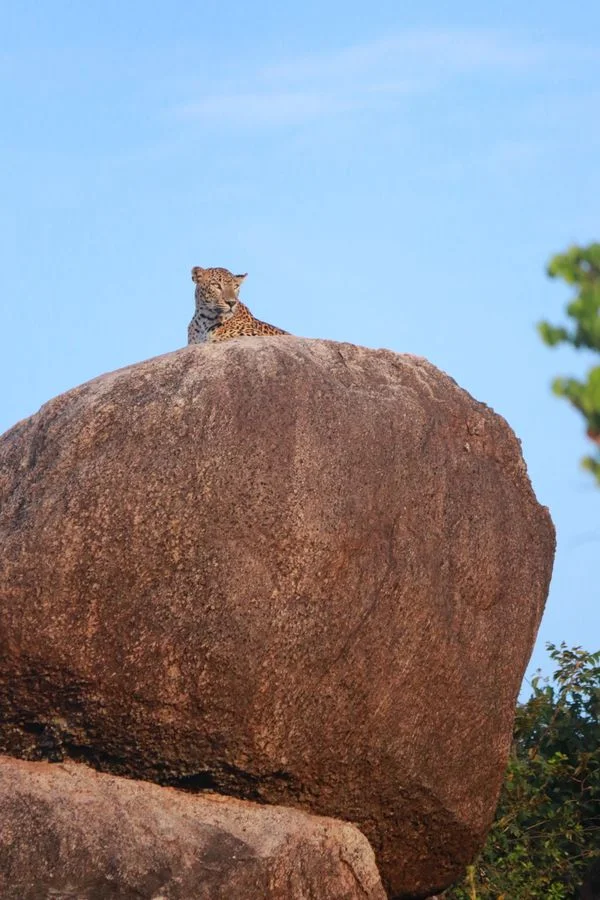
If there is one mechanism that explains more about the Jawai seasonal experience than any other, it is the relationship between the water level in Jawai Bandh dam and the visibility of the leopards on the granite hills around it.
Jawai Bandh was built in 1957 as an irrigation project for Pali district – a purely functional piece of infrastructure with no conservation intent behind it at all. What it created by accident, over the decades since, is one of India’s more unusual wildlife ecosystems: a reservoir ringed by exposed granite kopjes across the Bera, Sena, and Devgiri zones, where leopards den in the rock crevices and hunt across open, largely unforested terrain, living alongside the Rabari pastoralist community that has grazed this land for generations.
The water level in the dam moves on an annual cycle tied to the monsoon. It is at its highest just after the rains, around September and October, and it draws down steadily across the dry season, reaching its lowest point around January and February before the pre-monsoon heat of April and May pushes it lower still. As the water recedes, more of the granite surface around the dam’s edges is exposed – and leopards, along with the smaller prey they rely on, become considerably easier to see against that open rock. This is a large part of why January and February sit at the very peak of “the peak season”: it is not only the comfortable weather driving demand, it is that the physical terrain itself is offering up the best possible visibility of the year.
Come monsoon, the reverse happens. The dam fills, the exposed granite shrinks back, vegetation greens up across the hills, and leopards have more cover and more choices about where to move. Sightings do not stop – Jawai’s leopards are resident, not migratory, and they do not vanish for three months – but the terrain works less in your favour, and a good guide’s ability to read fresh tracks and recent activity matters more than in the dry months when the animals are simply more exposed by default.
The Migratory Bird Calendar
Jawai Bandh is not only a leopard landscape. From around September, migratory water birds begin arriving at the dam, and by the heart of winter the reservoir supports a genuinely significant seasonal population, including flamingos and demoiselle cranes among a broader range of waterfowl. This bird presence tracks the same water-level cycle described above: as the dam holds water through autumn and winter, it offers the shallow margins and food sources migratory species need, and birdlife builds steadily from initial arrivals in early autumn to a full winter population.
This means the same window that delivers the best leopard visibility – the cooler, lower-water months of the winter peak – also delivers the best birdwatching at the dam. It is one of the reasons a winter Jawai trip rewards travellers who are not purely leopard-focused: an early morning safari for leopard activity can be paired with a slower dam-side session for the birds without needing to change location dramatically. Our dedicated migratory bird guide covers timing, the specific species to watch for, and how to position yourself at the dam respectfully and effectively.
Crowds, Booking Windows and What Changes Season to Season
Because Jawai now operates under the committee-registered, GPS-tracked vehicle system, the total number of vehicles able to run safaris on any given day is genuinely limited – a freeze on new tourism licences accompanied the 2026 regulatory changes. This makes booking timing matter more in peak season than it once did. October through February, and particularly the weeks around Diwali, Christmas, and New Year, see the heaviest demand, and both vehicle availability and accommodation can tighten well in advance. Shoulder season and monsoon months carry a completely different rhythm: availability is easier, pace is calmer, and the landscape itself is doing something different rather than merely “less.”
None of this changes the fundamental honesty we try to build every piece of content around: nobody can guarantee a leopard sighting on any single safari, in any season. What changes with the calendar is the balance of factors that influence the odds – temperature, terrain exposure, vehicle traffic, and the sheer number of hours you spend out on the granite. A well-timed two-safari day in January is not a guarantee. It is a set of odds stacked more favourably than a single rushed evening drive in May.
Matching the Season to the Traveller
Different travellers get different things out of each Jawai season, and this is worth being direct about rather than defaulting everyone toward peak winter.
- Photographers focused on capturing leopards against exposed granite in strong directional light often prize the peak dry months for exactly the water-level reasons described above, though a growing number now also seek out monsoon’s dramatic green-hill light and near-empty tracks for a different kind of image.
- Families travelling with children generally do best in the shoulder season or early winter, when temperatures are comfortable across the full day and safari timings do not require the pre-dawn cold-weather starts of deep winter.
- Travellers prioritising fewer crowds and a slower pace should look hard at March-April or the monsoon months, both of which deliver a meaningfully different, calmer version of Jawai than the October-February rush.
- Birdwatchers should centre a trip on the winter months, when the dam’s migratory population is at its fullest and most varied.
- Budget-conscious travellers often find that shoulder and off-peak months bring more flexibility in accommodation and vehicle availability, even though fixed pricing is not published here – the details of what suits your dates and group are best worked out directly.
Our companion decision-guide article goes much further into this traveller-by-traveller breakdown, if you want a fuller comparison before deciding.
What Stays Constant Across Every Season
A few things about Jawai do not change with the calendar. The leopards here are wild and unfenced year-round – this is not a reserve with a boundary fence and a gate that opens and closes. The Rabari pastoralist community continues its daily grazing and herding routines regardless of season, and the low-conflict coexistence between leopards and herders that makes this landscape unusual is a constant, not a seasonal feature. Safari hours remain restricted to daylight in every month, and the same registered-operator, GPS-tracked compliance standard applies to a January morning drive just as much as a July monsoon session. And in every season, honesty about sighting probability rather than promises of guaranteed encounters remains the only responsible way to set expectations before a safari.
What does change, season to season, is the specific texture of the experience: the temperature on your skin at 6am, the amount of exposed granite catching the light, the number of other jeeps on the same track, the birdlife at the dam, and the particular quality of quiet or bustle that defines the trip. Read the linked guides below for the specific depth on each of those seasonal textures, and use this page as the map for how they all fit together across the year.
How the Three Zones Behave Across the Seasons
Jawai’s safari geography is split across three zones – Bera, Sena, and Devgiri – and each carries its own granite character, water sources, and typical leopard activity. None of the zones “closes” for a season, but the way water and cover distribute themselves does shift how routes are planned across the year. In the dry, low-water months of peak winter and into early summer, activity tends to concentrate more predictably around the remaining pools and the dam’s shrinking margins, which is part of why guides can often narrow down a likely search area with more confidence in this window. Through monsoon, when rain fills seasonal pools across a wider area of the hills, animals have more places to be, and the value of a guide who knows the recent tracks and local grazing patterns – rather than one simply driving a fixed loop – goes up correspondingly. This is one of the clearest arguments for booking through a registered operator with real, current ground knowledge rather than choosing a vehicle at random: the same zone can reward very different search strategies depending on the month.
Festivals, Holidays and the Peak-Within-the-Peak
Within the October-to-February window, certain stretches compress even further. The weeks around Diwali, and again around Christmas and New Year, bring a surge of domestic and international travellers combining a Jawai stop with a wider Rajasthan circuit through Udaipur or Jodhpur. Vehicle availability during these specific windows can be tighter than the rest of peak season, simply because the pool of committee-registered vehicles is fixed and demand spikes sharply for a handful of calendar weeks. If your travel dates already fall in one of these windows, the practical planning advice is to lock in a registered operator earlier than you would for a random January weekday, rather than assuming peak season flexibility extends evenly across the whole winter.
A Note on Rain, Heat and Safari Disruptions
It is worth being direct about the two ways weather can actually interrupt a planned safari at Jawai, because honest planning beats a surprised guest. During the heart of monsoon, sustained heavy rain can occasionally make certain tracks difficult for vehicles, and a scheduled drive may need to be shifted in timing or route on short notice – this is a genuine trade-off of visiting July through September, not a hidden flaw, and it is one reason monsoon suits travellers who can hold their plans loosely. During peak summer, the risk runs the other way: extreme midday heat is simply unsafe and unproductive for a safari, which is why summer drives are structured tightly around the cooler hours at each end of the day rather than spread across the full daylight window. Neither of these is a reason to avoid those seasons outright. They are reasons to plan the days around the season’s real behaviour instead of forcing a winter-style schedule onto a July or May trip.
Combining Jawai With the Wider Rajasthan Circuit
A large share of visitors reach Jawai as part of a longer Rajasthan route, most commonly threading it between Udaipur and Jodhpur, with the granite hills and dam serving as a wildlife stop between the two cities’ heritage architecture. Season affects this routing decision too. In peak winter, Jawai’s own draw is strong enough to justify an overnight stay in its own right, with two safari sessions and a dam visit filling a comfortable one or two nights. In the shoulder and monsoon months, some travellers instead treat Jawai as a shorter, calmer detour within a broader circuit, valuing it precisely because it offers a change of pace from busier heritage-city sightseeing. Neither approach is wrong; the point is that the season you choose should inform how much time you allocate to Jawai within a larger itinerary, not the other way around.
Planning Your Visit
Whichever window in the calendar you are drawn to, the details that actually matter – which zone to prioritise, how many safari sessions make sense for your dates, how to combine a Jawai stop with an Udaipur or Jodhpur circuit, and which registered operators have capacity on your specific dates – are best worked through directly rather than guessed at from a blog post. Message us on WhatsApp for current pricing and a quote tailored to your dates and group size.