A Morning with the Herders: What Daily Life in Bera Actually Looks Like
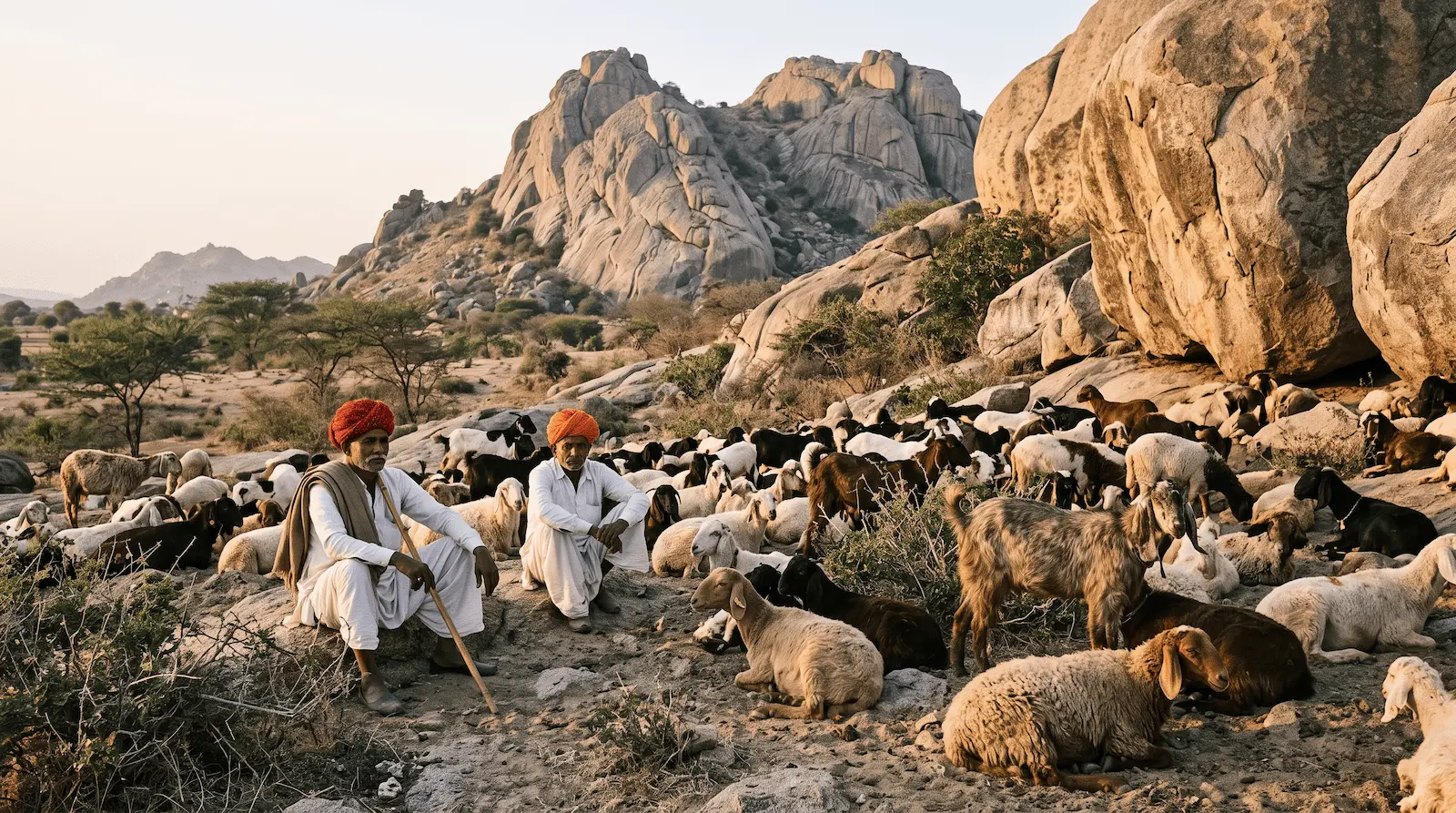
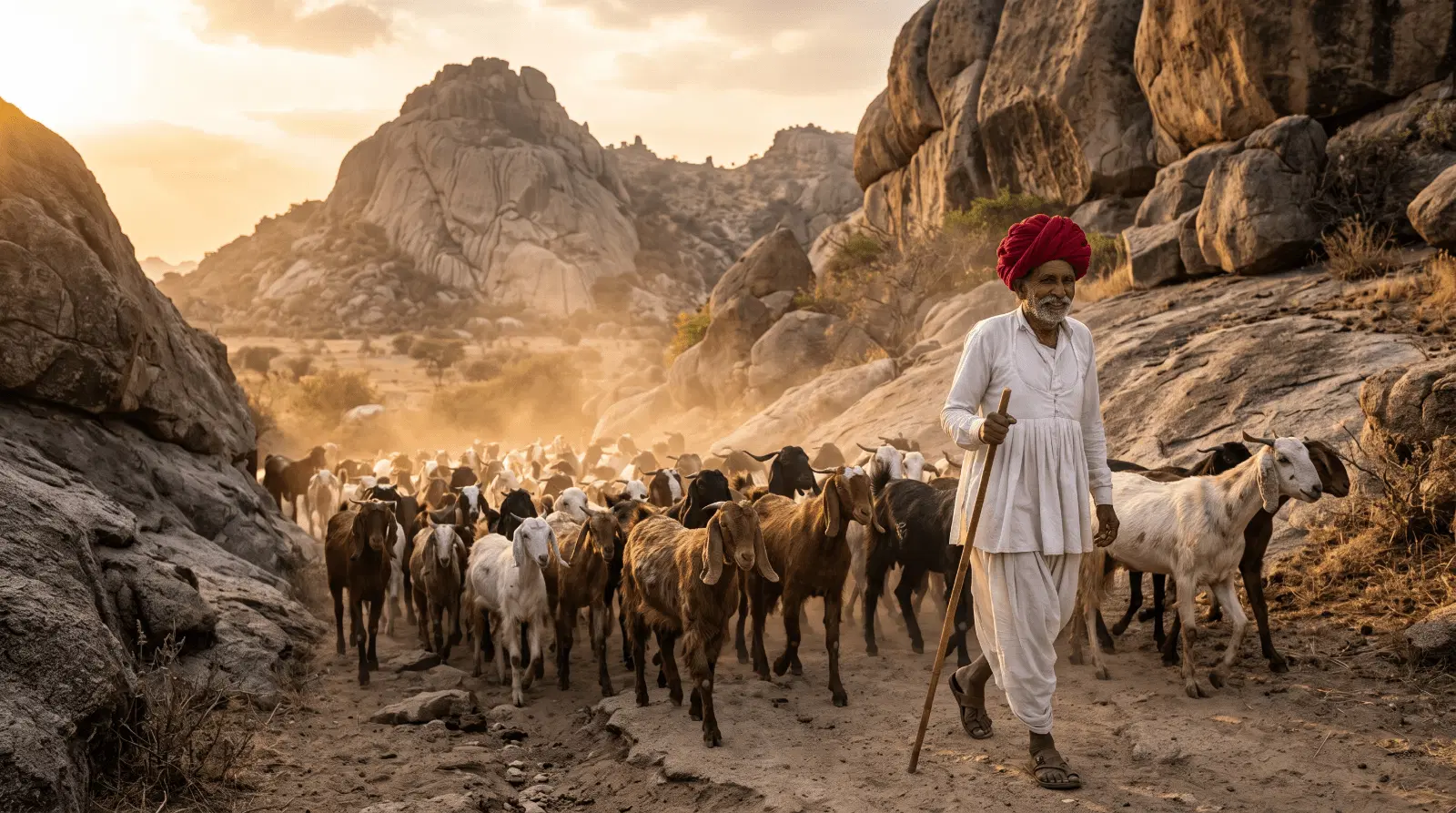
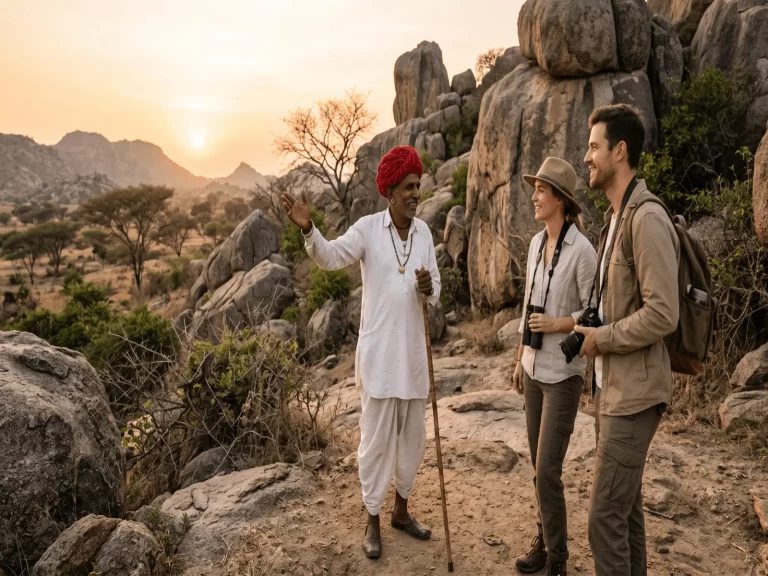
Before a leopard is spotted on a granite ledge, many visitors to Jawai notice something else first: a herder in the distance, dressed in a way that immediately signals this is Rajasthan and nowhere else, white cloth catching the early light, a bright turban visible from a considerable distance across open ground. Rabari dress, jewelry, and textile work are among the most visually distinctive elements of this landscape, and they deserve to be understood as living material culture, made and worn for the community’s own reasons, rather than as costume or scenery for arriving visitors. This piece describes what is actually being seen, in general and respectful terms, without claiming more specific or intimate ethnographic detail than can be responsibly stated.
Men’s Dress: The White Garment and the Turban
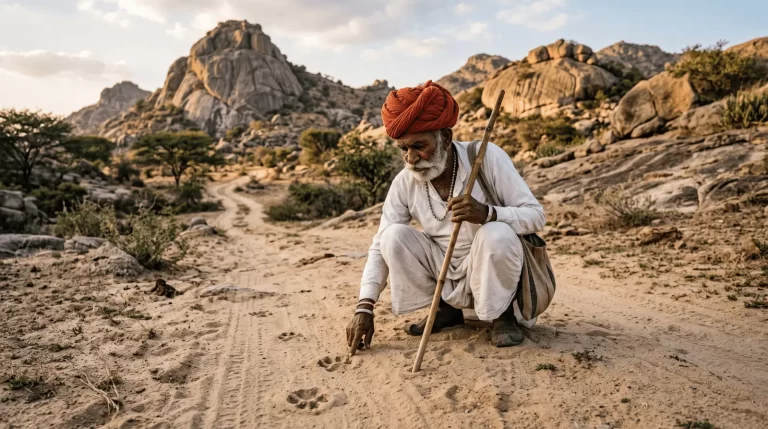
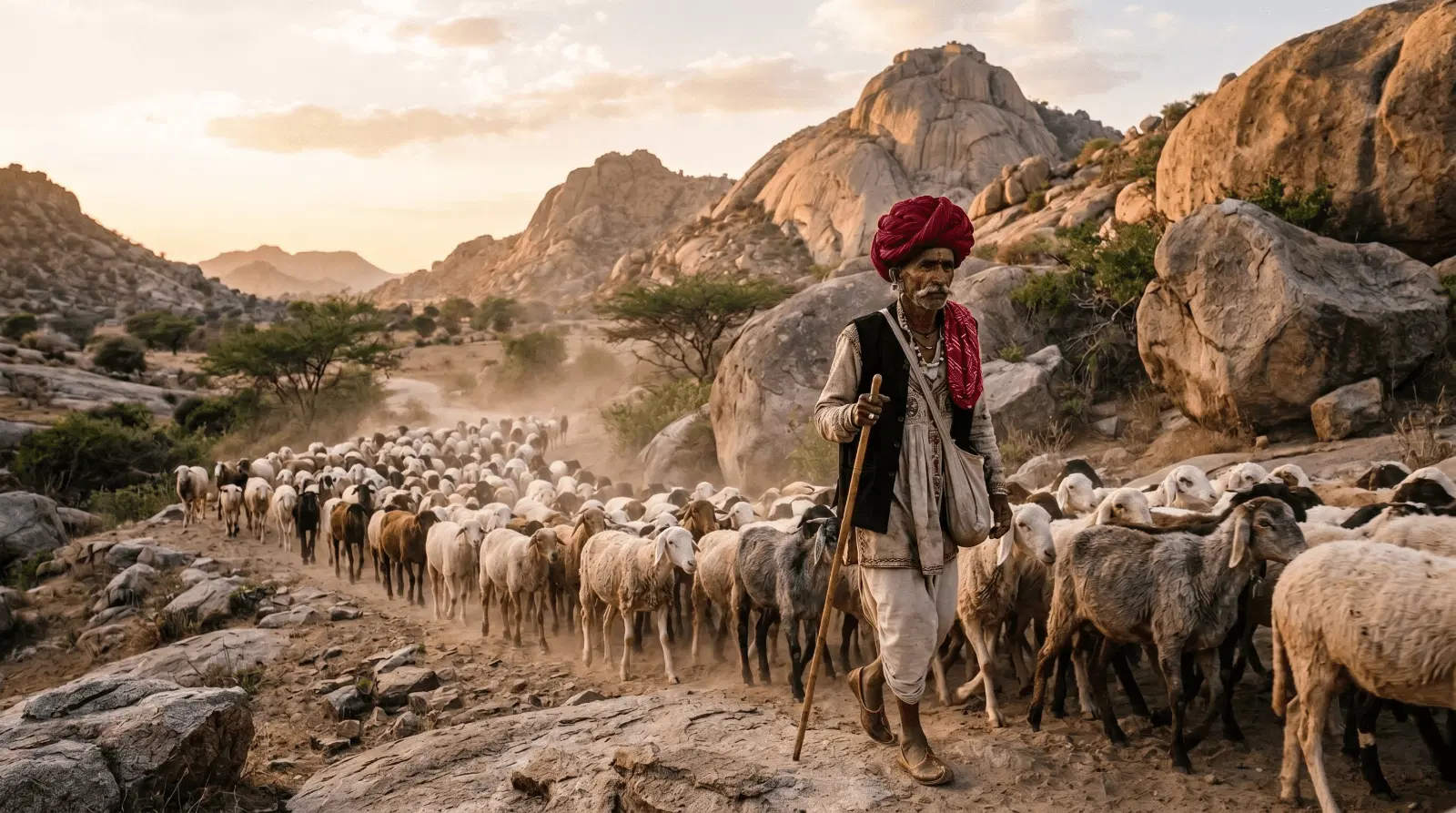
Rabari men in this region are typically seen in white or off-white draped clothing, often including a loose upper garment and a dhoti-style lower wrap, practical choices for a hot, dry climate and for a working life spent largely outdoors managing livestock across long distances on foot. The turban is the most visually striking element to most visitors, both for its color and for the specific style of wrapping, which can vary by community, region, and occasion. Turban color and style carry meaning within Rajasthani pastoral communities more broadly, sometimes signaling regional origin, clan association, or simply personal and family preference, and it is not accurate or responsible for an outside visitor to assume a single fixed meaning applies uniformly to every turban seen in the region. What can be said generally is that the turban is a marker of identity and belonging worn as a normal, everyday part of dress, not a ceremonial item reserved for special occasions or for the benefit of visitors.
It is worth noting that dress has changed over generations, as it does in any living community, and continues to change. Some younger Rabari men, particularly those working outside traditional herding roles, may dress in more universally modern clothing for daily life while retaining traditional dress for specific community or family occasions. This variation should be expected and respected rather than treated as a departure from some more authentic, unchanging standard. There is no single correct version of Rabari dress frozen at a particular historical moment; there is simply what the community wears, which has always evolved and continues to.
Women’s Dress, Jewelry, and Adornment
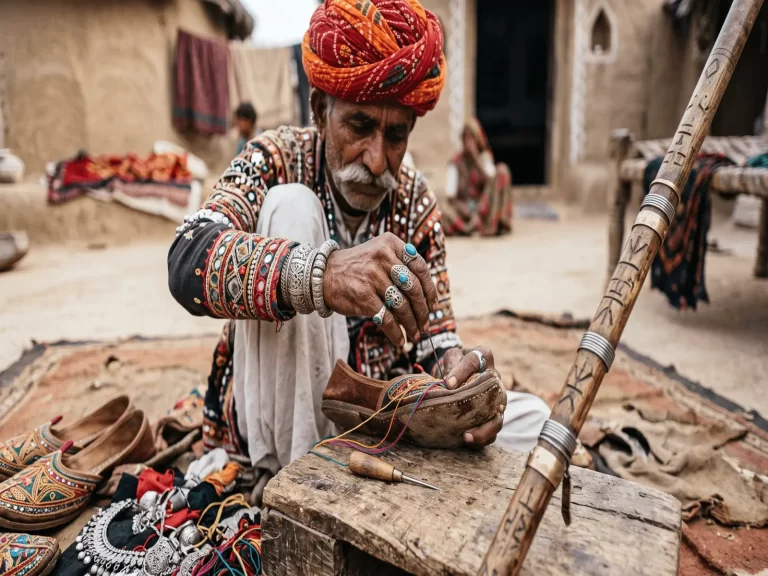
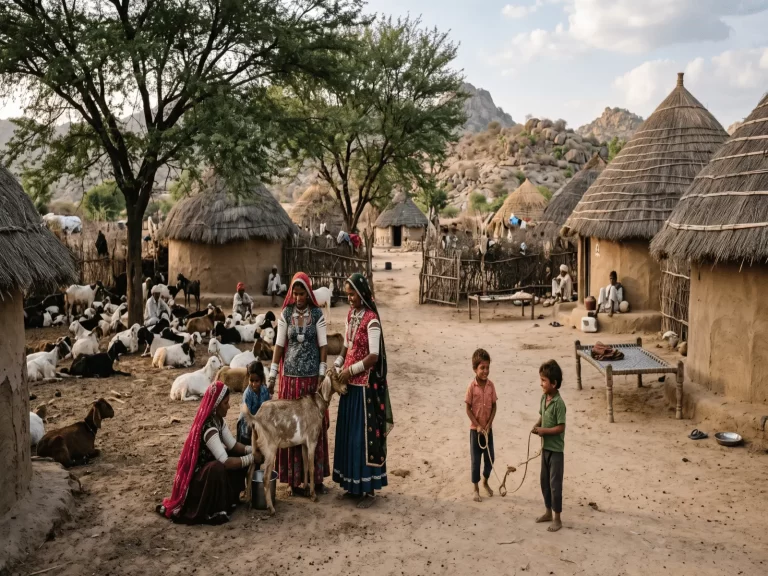
Rabari women in this region are often recognized for a distinctive combination of dress and jewelry, including dark-colored wrapped garments, often black or deep red depending on region and community, worn with elaborate silver jewelry that can include large earrings, nose ornaments, necklaces, bangles, and anklets. Silver has held particular cultural and practical significance across many Rajasthani pastoral communities historically, functioning simultaneously as adornment, as a marker of marital or community status, and as a portable, tangible form of family wealth that could be worn rather than stored, a practical consideration for a historically mobile, herding way of life. Specific pieces and their meanings vary across communities and families, and this description is deliberately general rather than claiming precise, family-specific knowledge that would overstate what can responsibly be known and stated by an outside source.
As with men’s dress, it would be inaccurate to describe women’s jewelry and adornment as a fixed, unchanging tradition. Practices around what is worn daily versus on specific occasions, and the balance between older heirloom pieces and newer additions, vary by family and have shifted over time, including in response to changing economic circumstances, since silver jewelry can also represent a family’s accumulated savings and is sometimes sold or exchanged when genuinely needed. This economic dimension is worth remembering: adornment here is not purely decorative or symbolic, it has functioned historically as a real, practical store of value within the household economy.
Textile Work and Embroidery
Rabari communities across Rajasthan and Gujarat are recognized for embroidery traditions that include mirror work, in which small pieces of reflective material are stitched into cloth in patterned arrangements, alongside a range of other stitch techniques used to decorate garments, hangings, and household textiles. This embroidery work is typically done by women within the household, often across long stretches of time worked into the margins of an otherwise full day of domestic and pastoral responsibilities, and traditionally passed down within families rather than taught through any formal institution. The resulting textiles carry real cultural and often economic value, both for use within the family and, increasingly, as items that can be sold, a pattern seen across many South Asian textile-producing pastoral and rural communities as market access to urban and international buyers has grown over recent decades.
It is important to state plainly that this embroidery tradition is a living, evolving craft, not a static folk-art form preserved unchanged for the benefit of collectors or visitors. Patterns, techniques, and the balance between traditional and newer stylistic influences shift over time, as they do in any living craft tradition anywhere, and individual practitioners bring their own skill, preference, and innovation to the work within the broader shared tradition. Describing this embroidery as ancient or unchanging would misrepresent it as more static than it actually is, and would flatten the individual skill and ongoing creative choices involved into something closer to a museum artifact than a living practice.
Why This Deserves Description Without Display
There is a meaningful difference between describing Rabari material culture respectfully, in the way this piece attempts to, and treating it as a visual spectacle to be sought out and photographed on demand during a visit. Dress, jewelry, and craft are part of how this community presents itself in ordinary daily life, not a display mounted for visitors, and the same consent principles that govern any interaction with Rabari individuals apply fully here. A guest curious about embroidery technique or jewelry tradition is welcome to ask respectful questions through a host during a properly arranged visit, and many community members are, from what long-term local hosts describe, genuinely willing to discuss their craft when approached with real interest rather than a request for a close-up photograph taken without conversation or consent.
What should not happen, and what we actively discourage in any visit we help arrange, is treating a Rabari woman’s jewelry or a family’s textile work as a photographic subject to be captured the way a wildlife sighting might be, quickly, from a distance, without interaction or permission. Material culture is part of a person, not a separate object available for documentation independent of the person wearing or making it. Cluster content on this site covering responsible visitor conduct and photography etiquette goes into this distinction in more direct, practical detail.
Everyday Wear Versus Occasion Wear
Visitors sometimes assume that anything distinctive seen on a herder in the field represents special or ceremonial dress, when in fact most of what a visitor sees on an ordinary safari morning or during a properly arranged visit is simply everyday working wear. The white draped garments, the turbans, and a good portion of women’s daily jewelry are worn as a matter of course, not reserved for festivals or ceremonies. This matters for setting expectations correctly: a visitor hoping to see elaborate ceremonial dress on an ordinary day is likely looking for something that would only appear during specific community occasions, weddings, particular religious observances, seasonal festivals, none of which are tourism events and none of which this site arranges access to. What is visible on an ordinary day is not a lesser or incomplete version of Rabari dress; it is simply what daily life actually looks like, which is the accurate and honest thing for a visitor to see in the first place.
Material Culture Within the Wider Rajasthani Textile Economy
Rabari embroidery and craft work sit within a much broader Rajasthani and Gujarati textile tradition that includes many distinct communities, each with recognizable stitch styles, color preferences, and motifs. Rabari work is one identifiable thread within that larger regional fabric, not an isolated tradition unconnected to the surrounding textile economy. Over recent decades, growing interest from urban Indian and international buyers in handmade and heritage textiles has created new market channels for embroidery originating from pastoral communities across the region, and some Rabari households have found this an additional, welcome source of income alongside herding. This economic dimension deserves acknowledgment because it complicates any simple narrative that frames Rabari craft purely as heritage rather than as a living, sometimes commercially important, activity that intersects with the same regional and national markets any other artisan community engages with.
A Living Tradition, Not a Costume
The single most important point to take from this description is one already stated but worth restating clearly: none of what has been described here exists for tourism. The white dress and turban, the silver jewelry, the mirror-work embroidery, all of it predates Jawai’s emergence as a wildlife destination by generations and would continue exactly as it does whether or not a single visitor ever arrived to see it. Visitors are, at best, occasional and peripheral witnesses to a material culture that belongs entirely to the community that makes and wears it, for its own reasons, on its own terms. Understanding it this way, rather than as one more photogenic detail of a Rajasthan trip, is the difference between genuine cultural curiosity and the exoticizing gaze this site has committed not to participate in.
Message us on WhatsApp for current pricing and a quote tailored to your dates and group size.