Who the Rabari Are: The Shepherd Community Behind the Red Turbans
We get asked, fairly often, whether a Jawai trip can include a Rabari village visit, usually phrased exactly like that, as one more item on a checklist alongside the safari and the dam sunset. It is a reasonable thing to ask, and we understand the curiosity behind it. But the honest answer requires slowing the question down, because a Rabari settlement is not an attraction with fixed opening hours, and treating it as one is precisely the kind of framing we have committed not to use. This piece explains what we actually mean when we say a respectful visit is possible, how it gets arranged, and what a guest should and should not expect walking in.
Why This Cannot Work Like a Standard Tourist Stop
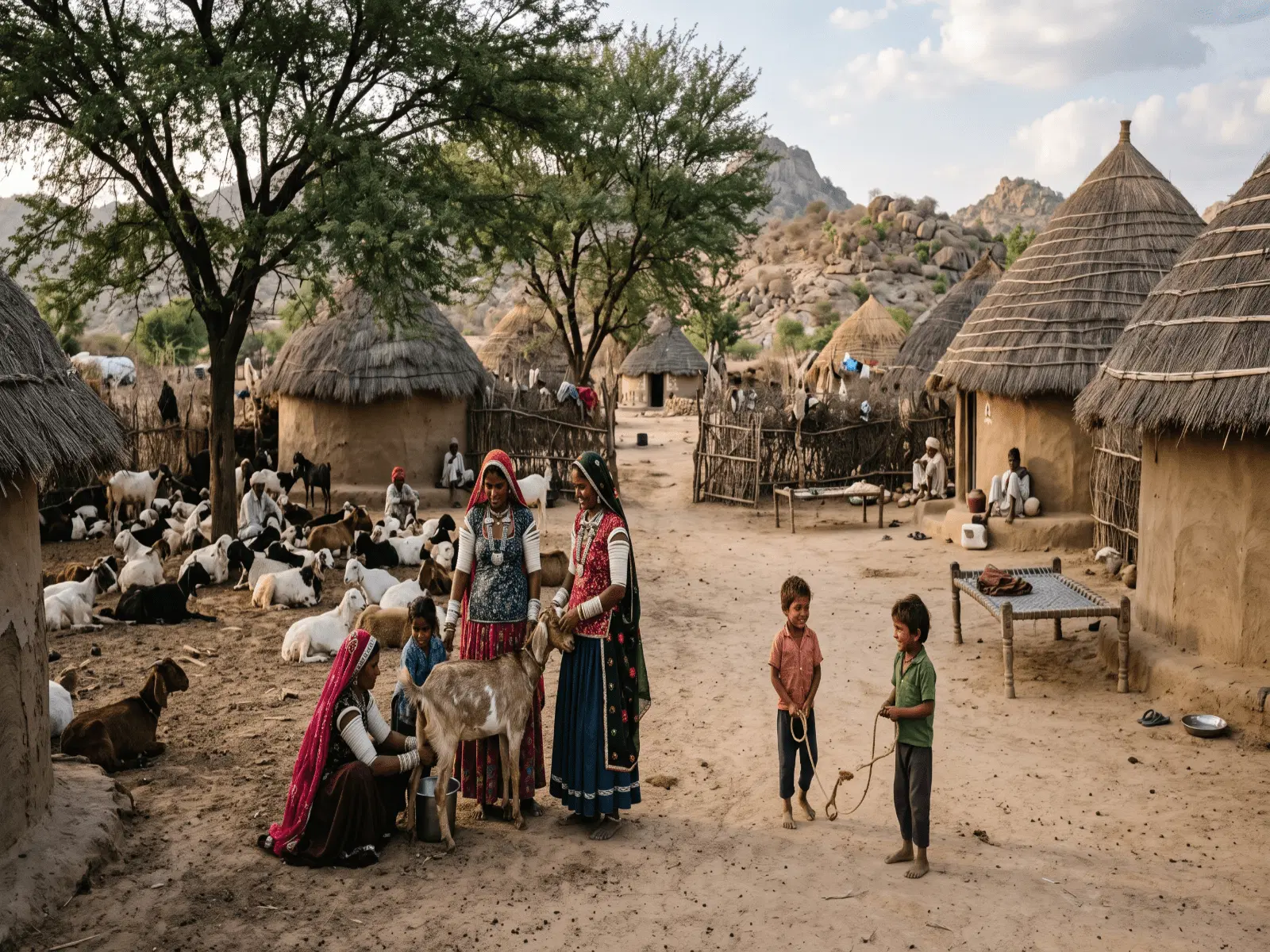
A Rabari settlement is someone’s home, workplace, and community, all at once. It is not a cultural center built for visitors, and it does not operate on a schedule designed around tourism. Herders are out with their livestock for most of daylight hours, women in the household are often occupied with domestic work, textile or embroidery work, or their own responsibilities, and the rhythm of daily life does not pause because a jeep has pulled up outside. Treating a visit as something that can simply be booked, the way a museum ticket or a monument entry fee can be booked, misunderstands what is actually being requested: access to people’s private, working lives, on their terms, not a transaction that automatically grants entry because payment changed hands.
This is why our starting position, stated plainly, is that we do not present the Rabari as a tourist attraction, and we do not arrange visits that treat a community’s daily life as a photo opportunity. Any visit we help arrange rests on an existing, genuine relationship with the specific household or community involved, built over time, based on mutual understanding of what a visit involves and what it does not. Where that relationship does not exist for a given group’s dates or location, we say so directly, rather than manufacturing an experience that would not hold up to honest description.
What Community Consent Actually Means Here
Consent, in this context, is not a single signature or a one-time permission granted once and assumed to cover every future visitor indefinitely. It is an ongoing relationship in which the community retains real control over what is shown, when, to whom, and under what conditions, and in which that control can be adjusted or withdrawn at any point without needing to justify it to us or to a guest. In practice, this means a visit only happens on a day and at a time the household or community has agreed to, involves only the specific activities or spaces they are comfortable sharing, and stops or changes the moment discomfort is expressed, whether stated directly or communicated through more indirect social cues that an experienced local host is expected to notice and respect.
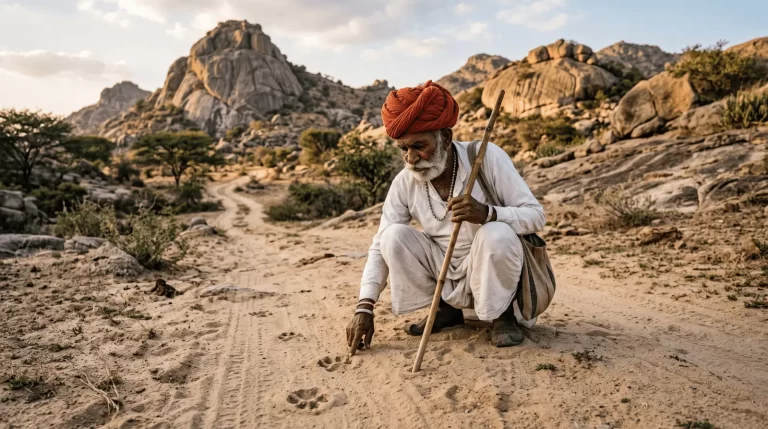
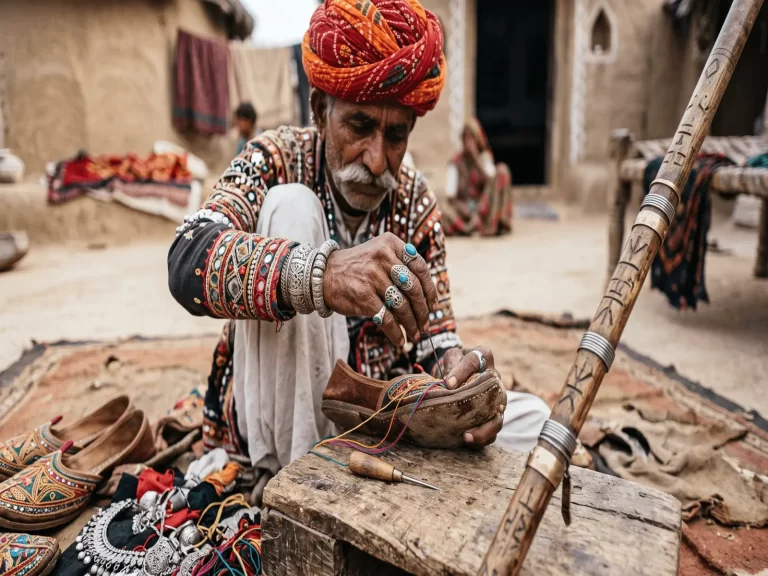
It also means that no part of a visit is staged for effect. If a herder happens to be out with the animals when a small group arrives, guests may see ordinary daily activity, conversation, tea, a look at textile or craft work in progress, but nothing is arranged to look more picturesque than it actually is, and nothing is repeated or re-performed because a photograph did not come out well the first time. The value of a properly arranged visit is precisely that it is not staged. A staged version would be easier to guarantee and easier to sell, and we do not offer it, because it would misrepresent a living community as a performance.
What a Genuine Visit Typically Involves
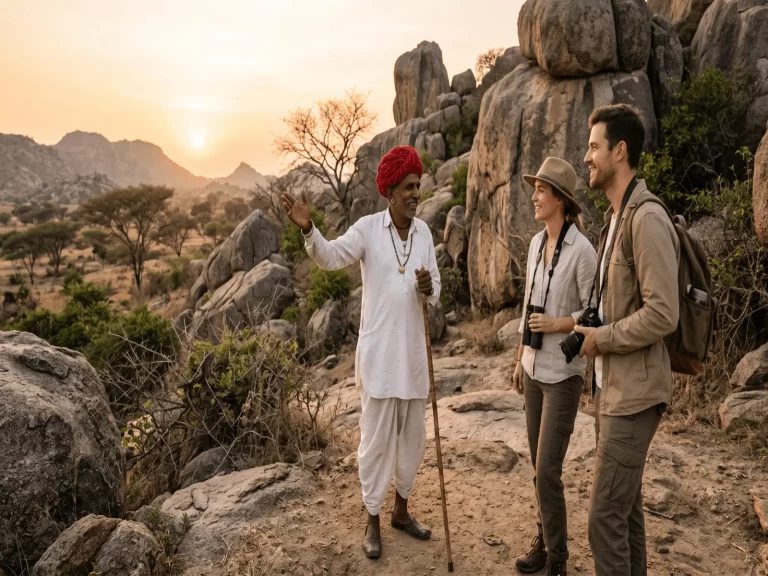
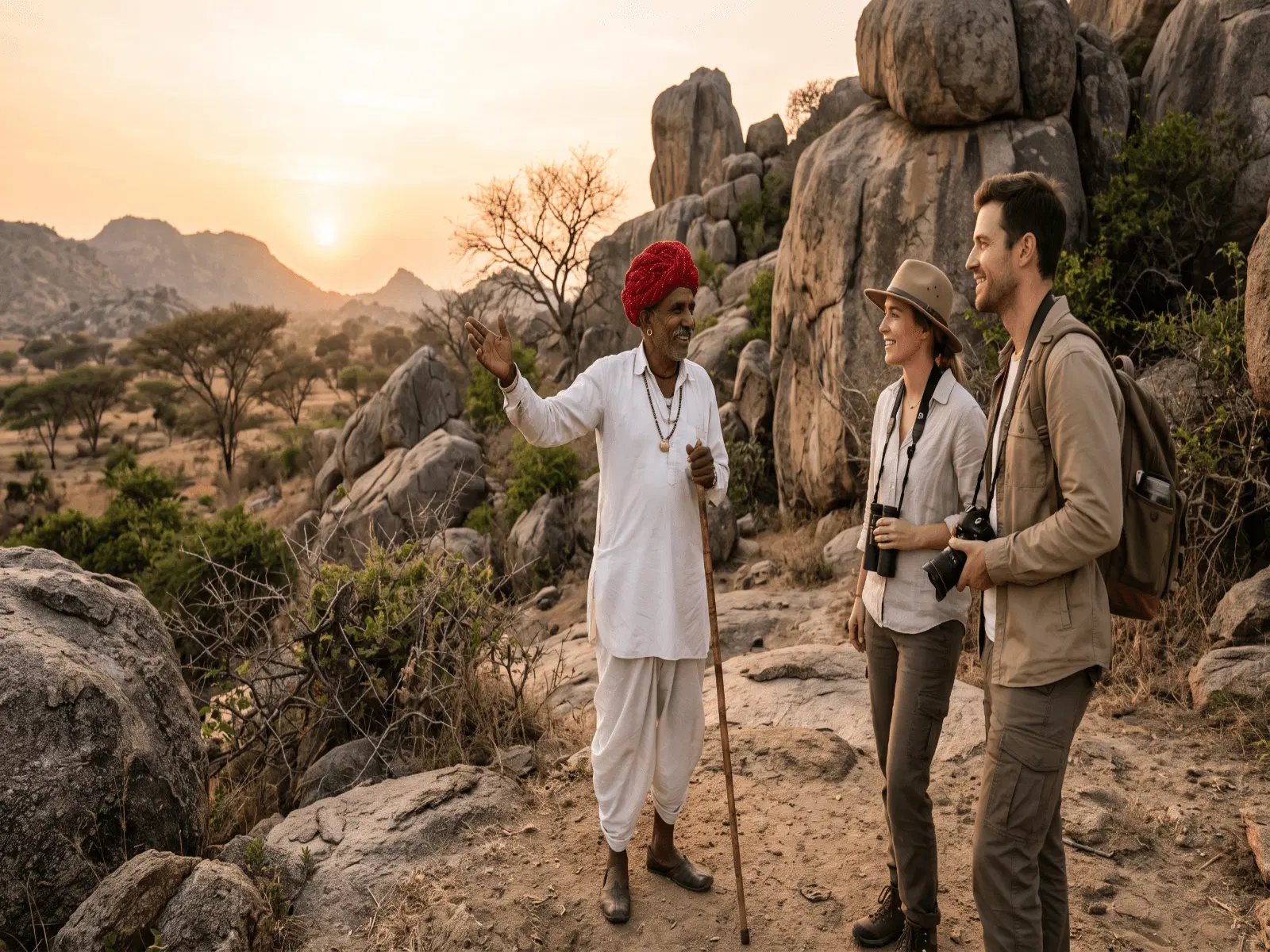
Where a visit is arranged, it typically centers on a walk through the immediate area with a local host who has an existing relationship with the community, an opportunity to see ordinary daily life, herding activity, domestic routines, craft work, at a respectful distance and pace, and conversation where the household is comfortable engaging in it, often mediated through a host who can translate and provide context. Guests should expect to be guests, in the fullest sense of that word: present by invitation, following the lead of their host and the household regarding where to walk, what to look at, and what questions are appropriate to ask.
What a genuine visit does not typically involve is a fixed script, a guaranteed set of photographs, entry into private living spaces without explicit invitation, or any expectation that money paid for the broader trip entitles a guest to a specific level of access to specific people. It also does not involve requests directed at community members to dress a particular way, pose in a particular way, or perform an activity out of its natural context for a better photograph. If a guest arrives hoping for a checklist of authentic-looking images to collect, a properly arranged Rabari visit will likely disappoint that expectation, because meeting it would require exactly the kind of staging this site refuses to offer.
What We Ask of Guests Before a Visit
Before any visit we help arrange, we brief guests directly on a small number of expectations, and we ask for genuine agreement to them, not just passive acknowledgment. Photography of individuals requires clear consent, given in the moment, not assumed because a general visit was arranged in advance; a household agreeing to host a visit is not the same as every individual within that household agreeing to be photographed, and guests are expected to understand and respect that distinction. Guests are asked to follow their host’s guidance on where to walk and what to avoid, since working homesteads often include animals, tools, and spaces that are not safe or appropriate for an unfamiliar visitor to wander into unaccompanied. Guests are asked not to offer money, sweets, or gifts directly to children, a practice that can create uncomfortable dynamics for a community regularly visited by outsiders, and any appropriate gesture of appreciation is handled through the host rather than as a spontaneous individual transaction. And guests are asked to accept, before arriving, that the visit may be shorter, quieter, or different than they imagined, because it is responding to real people’s real availability and comfort on that specific day, not to a fixed itinerary promise.
Why We Sometimes Say No
There are trips where we do not offer a village visit at all, and we would rather say so plainly than manufacture something thin to fill a request. This happens when travel dates do not align with when a host relationship is available, when a group size is too large to visit respectfully, or when a specific request, a wedding, a religious ceremony, an interior home visit, sits outside what the relationship we have actually supports. In those cases, we explain the limitation honestly rather than offering a diminished or invented substitute dressed up as the real thing. A guest who wants the Rabari story understood properly is generally better served by an honest not-on-this-trip answer than by a hollow version of a visit that leaves everyone, including the community, worse off.
Group Size and Pacing
Group size matters more here than in almost any other part of a Jawai itinerary. A single vehicle’s worth of guests, moving quietly and briefly through a settlement with a familiar host, is a manageable, low-impact presence. Multiple vehicles arriving at once, or a large tour group moving through a small settlement together, changes the character of the interaction entirely, turning what could be a genuine, low-key encounter into something closer to the spectacle we are trying to avoid. For this reason, we keep village visits small, generally limited to the size of a single travelling group, and we do not stack multiple unrelated groups into the same visit window even when it would be more efficient to do so. Pacing matters too. A visit that lasts long enough to feel like an intrusion on an ordinary working day defeats its own purpose, and a good host generally errs on the side of a shorter, calmer visit over a longer one that overstays its welcome.
What Guests Usually Take Away
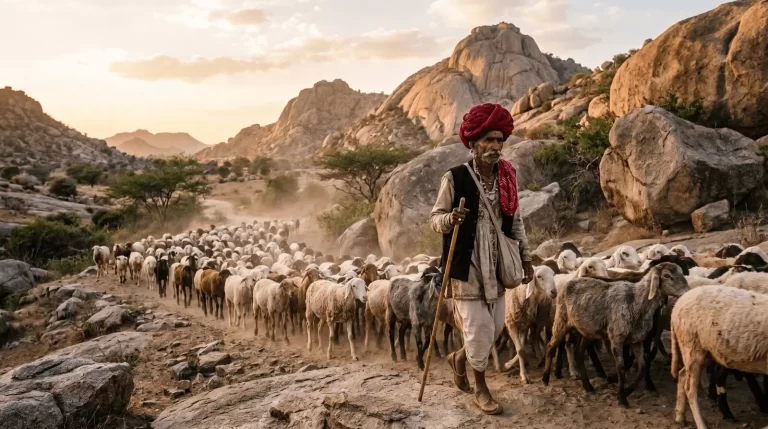
Guests who go into a properly arranged visit with the expectations described here tend to come away with something different than they anticipated, and generally something more valuable than a set of striking photographs. They tend to describe the ordinariness of it: the tea, the conversation conducted through a host, the sight of a herd being brought in as the light changes, the sense of having witnessed a small, unremarkable slice of someone’s actual day rather than a performance built for them. That ordinariness is the point. It is also, often, the detail that stays with a visitor longest after the trip, longer than most safari sightings do, because it is the part of a Jawai trip that cannot be replicated anywhere else and was never manufactured to be memorable in the first place.
The Standard We Hold Ourselves To
The test we apply, internally, before agreeing to arrange any visit, is a simple one: would the household or community involved describe this visit, afterward, the same way we are describing it to the guest beforehand. If the honest answer is that they would feel observed, interrupted, or treated as a spectacle rather than genuinely hosted, we do not offer the visit, regardless of guest interest or demand. This standard is slower and less convenient than simply listing a village visit as a standard checkbox on every itinerary, and we accept that trade-off deliberately, because the alternative treats a living community’s dignity as negotiable against a booking, and it is not.
Message us on WhatsApp for current pricing and a quote tailored to your dates and group size.