The Rabari and the Leopard: The Coexistence That Defines Jawai
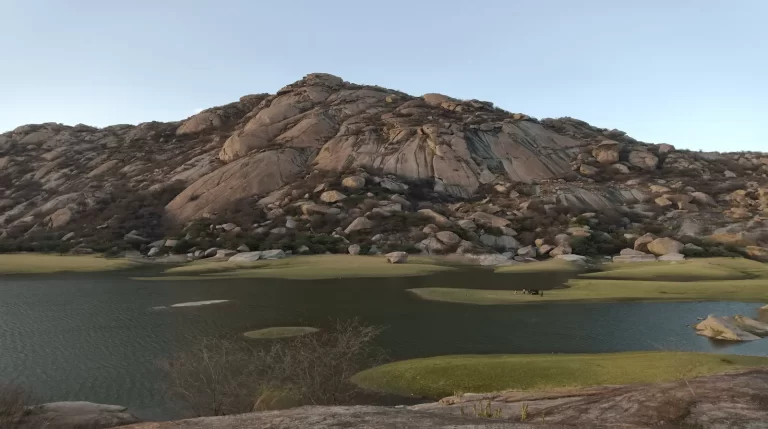
Before Jawai was a safari destination, it was, and still is, a working pastoral landscape. The granite hills that make this stretch of Rajasthan famous for leopard sightings are also, and have always primarily been, grazing country: dry, rocky, thorn-scrub terrain that supports goats, sheep, and camels far better than it ever supported large-scale farming. The Rabari community that herds this land did not arrive because of tourism, and their daily routines have not been substantially reshaped by it either. Understanding what that routine actually involves, separate from the leopard story that usually gets attached to it, is worth doing on its own terms.
A Herding Life Organized Around Water and Grazing
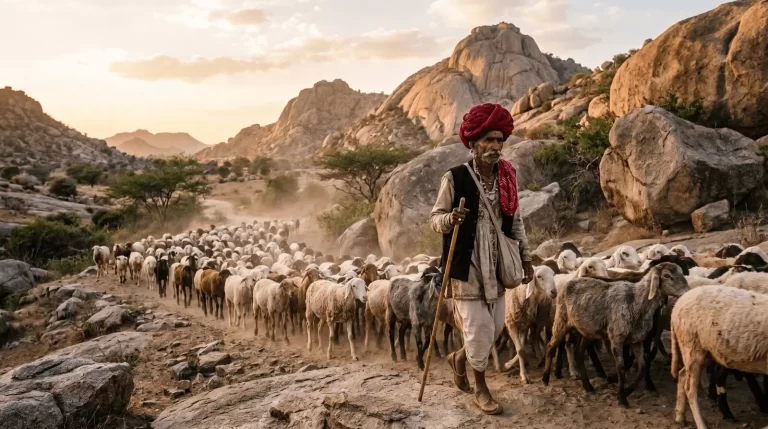
Rabari pastoralism in this region follows a rhythm dictated almost entirely by two things: where the water is and where the grazing is, both of which shift with the season. In the cooler, drier months, herds are typically taken out early, often before or right around sunrise, moved across open scrub and around the base of the granite hills to grazing ground that can sustain goats and sheep on thorn bush, dry grass, and whatever green growth the season allows. Camels, historically more central to Rabari life across Rajasthan and still present in smaller numbers around Jawai today, range further and tolerate drier forage, and herding them involves longer distances and a different daily pattern than the tighter, closer grazing circuits typical of goat and sheep flocks.
Water is the organizing constraint. The Jawai Bandh, the dam completed in 1957, has become one of the most important water sources in the region, not only for the town and for agriculture but for the livestock economy that depends on reliable water access through the dry months. Herds are routinely walked toward the dam or toward smaller seasonal water points scattered through the hills, and the timing of that walk, along with the route taken, is something experienced herders judge based on the season, the water level, and which grazing areas still have anything worth eating. This is not casual wandering. It is a learned, place-specific skill, refined over a working lifetime and typically passed down within families, involving genuine knowledge of terrain, seasonal water behavior, and the condition of specific grazing patches that shift year to year with rainfall.
The Working Day
A typical herding day begins early and stretches across most of the daylight hours. Animals are moved out from the home settlement in the morning, grazed steadily across a route that may cover several kilometers depending on the season and the condition of nearby land, and brought back toward evening, often timed to daylight for safety and practicality rather than any formal rule. Herders, historically most often men and boys though the work is not exclusively gendered and varies by family, spend the bulk of the day on foot, watching the herd, moving them from one patch of grazing to the next, and managing the ordinary hazards of open-range herding: heat, thorns, the occasional sick or injured animal, and the general unpredictability of livestock left to graze across uneven, rocky ground.
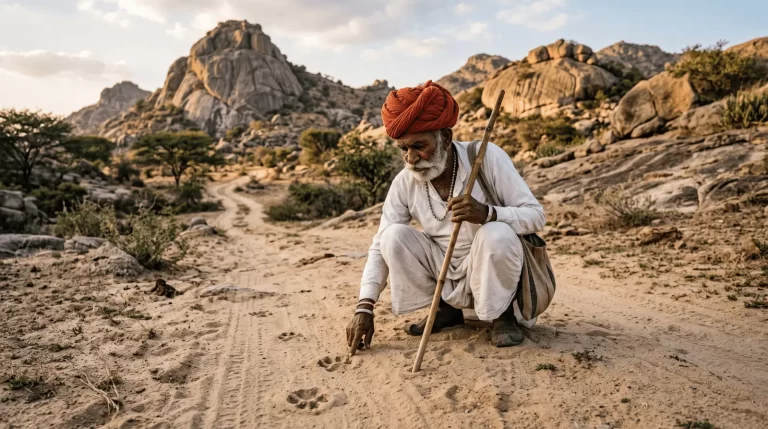
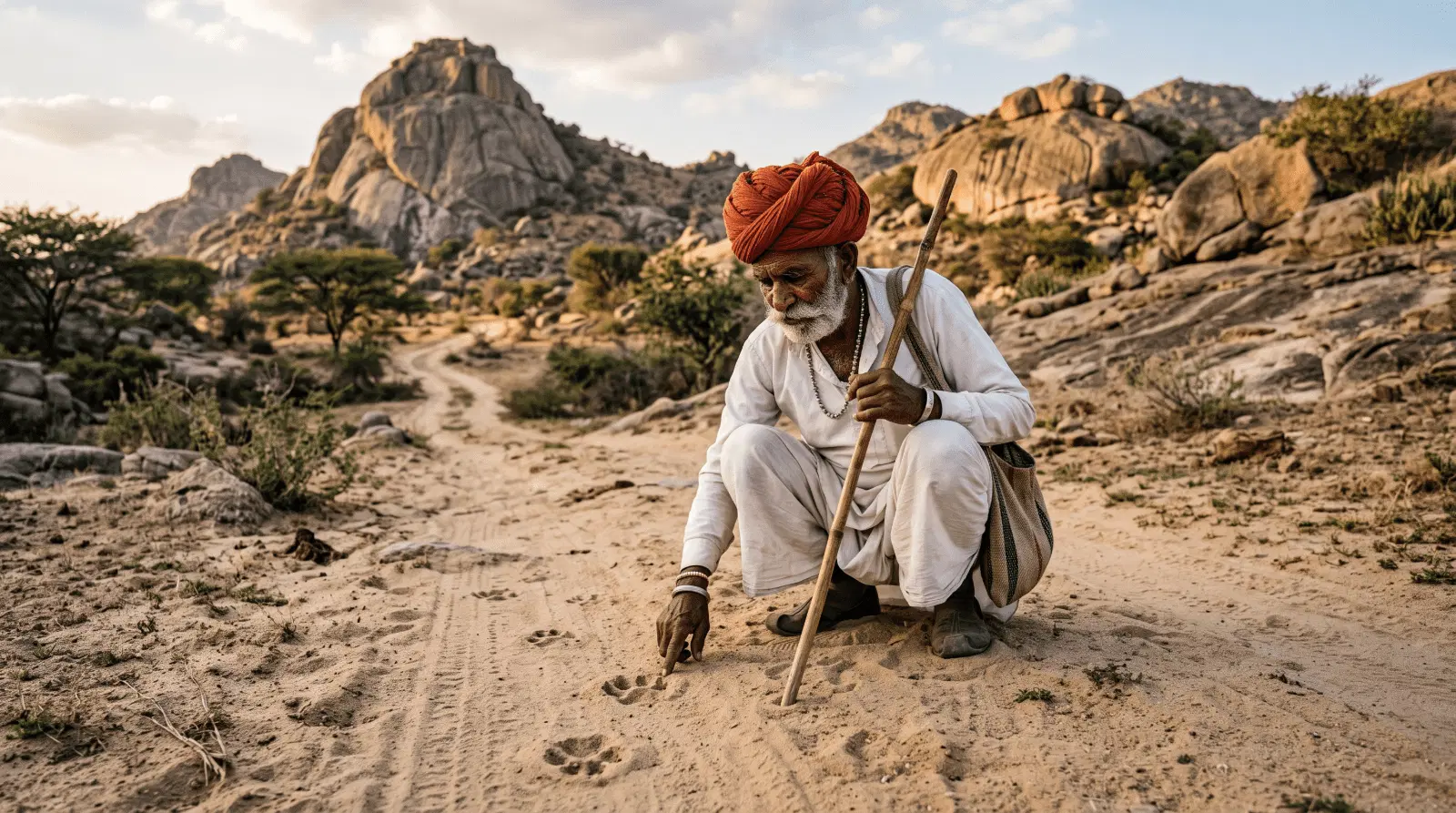
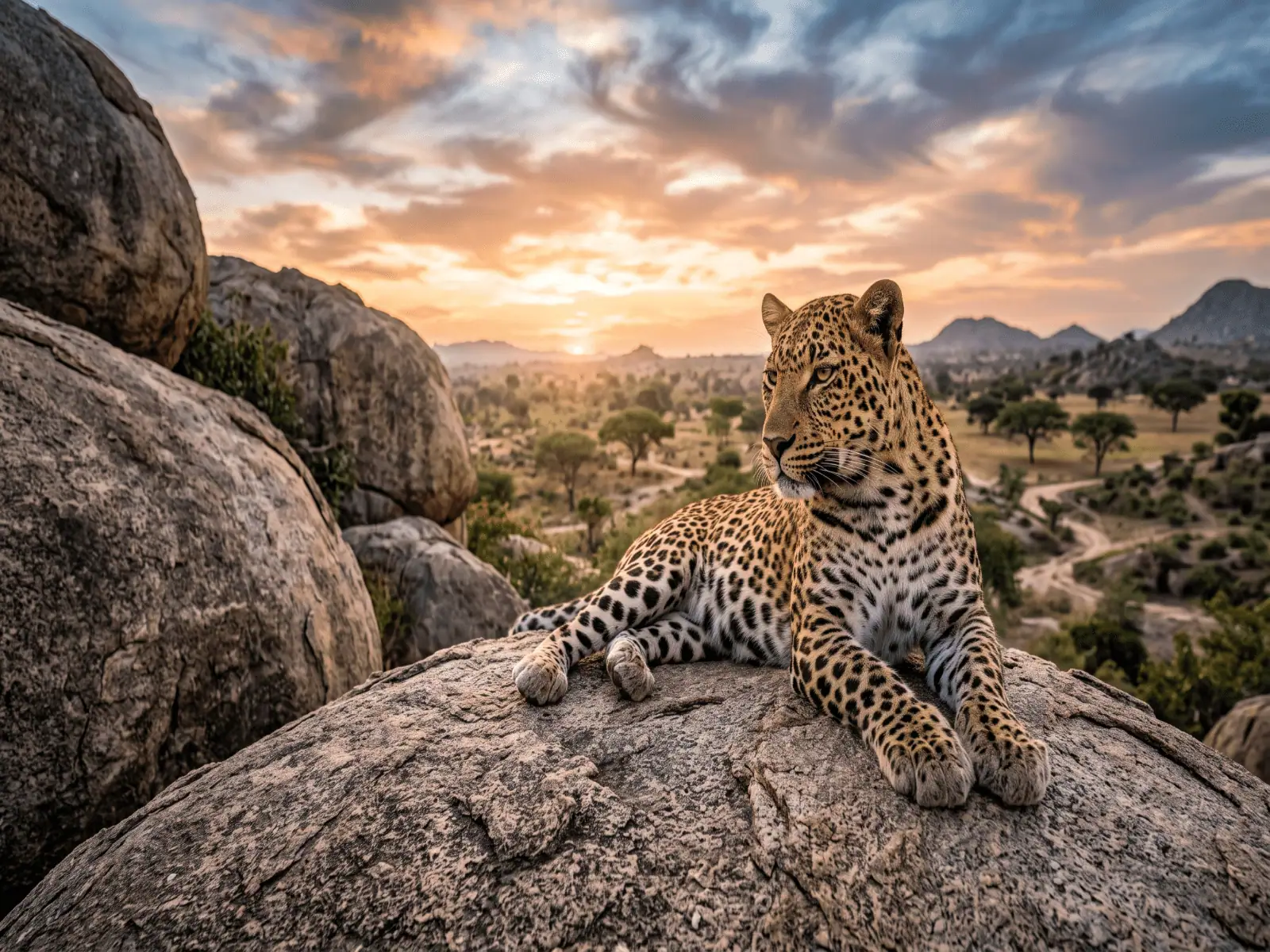
Because the terrain includes the same granite outcrops that leopards use for resting and denning, herders in this specific landscape have, across generations, developed a practical, working awareness of where leopards are likely to be, without this awareness functioning as fear in the way it might in a community with a different relationship to the animal. Experienced herders often have a working sense of which outcrops are more likely to have a resting leopard on a given day, similar to the kind of terrain literacy any long-term herder develops about water, grazing quality, or weather. This is treated as one more feature of the landscape to read and work around, not as an emergency to manage.
Livestock: What Is Kept, and Why
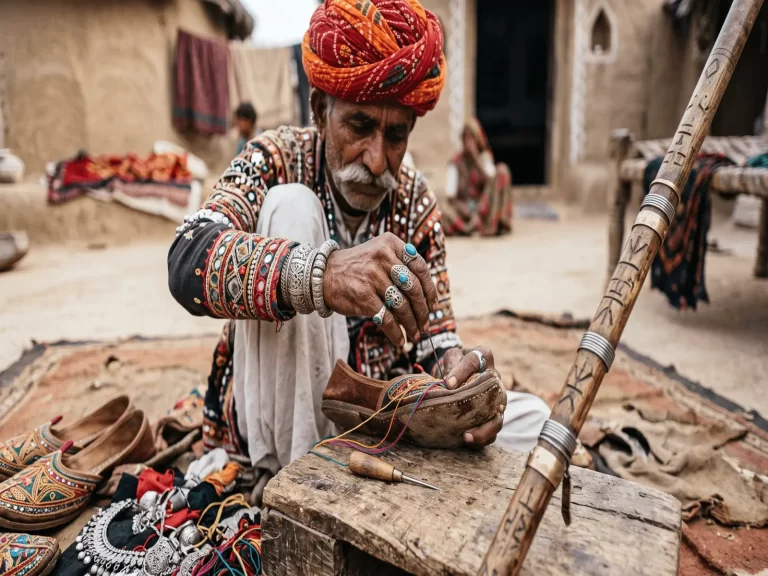
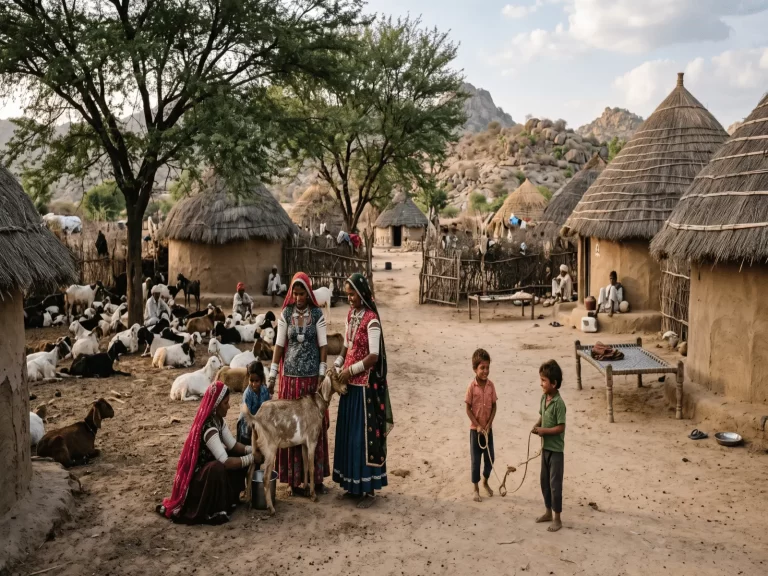
Goats and sheep make up the bulk of Rabari livestock in and around Jawai today, valued for meat, milk, and wool or hair depending on the breed, and for their relative tolerance of dry, sparse grazing compared to cattle. Camels, while reduced in overall numbers compared to earlier generations across Rajasthan broadly, remain part of the pastoral economy in this region and carry particular cultural weight within Rabari identity, tied historically to long-distance trade and transport in ways goats and sheep never were. Cattle are present in smaller numbers and tend to require better grazing and more water than this specific terrain reliably offers, which is part of why goats, sheep, and camels have historically dominated the Rabari herding economy here rather than cattle-centric pastoralism seen in other parts of India.
The economics of this herding life are modest by design; it is a subsistence and small-surplus economy for most households, not a large commercial livestock operation. Animals are sold, when they are sold, into local and regional markets, and the herd itself functions as a working store of value for the family in a way not unlike how livestock functions in pastoral economies worldwide. This matters for understanding the coexistence story properly. Losing an animal to a leopard is not an abstract or trivial loss. It is a real economic cost to a household operating on thin margins, which is precisely what makes the historical pattern of tolerance, rather than retaliation, worth taking seriously rather than assuming it comes easily or costs nothing.
Settlement Patterns and the Proximity to Wildlife
Rabari settlements in the Jawai-Bera region are generally positioned close to the granite hill systems rather than at a deliberate distance from them, a pattern that long predates any modern awareness of leopard tourism and reflects simple practicality: the hills provide some shelter, the surrounding land offers grazing, and water points are within manageable walking distance. This means that daily life for many Rabari households in this area has always involved visual and physical proximity to leopard habitat as an ordinary condition of where they live, not as an unusual or occasional encounter. Children grow up in a landscape where the hills behind the house are also where a leopard might be resting on a given afternoon, and that fact is treated as ordinary background information about the place they live, not as a special or notable circumstance requiring explanation.
This proximity is a large part of why the coexistence pattern in Jawai reads differently than similar stories from areas where a predator population expanded into a previously separate human settlement, or where human settlement expanded into previously separate wildlife habitat. In Jawai, the settlement pattern and the wildlife habitat developed alongside each other over a very long period, with neither displacing the other in any decisive historical push. The practical result is a community whose daily working knowledge of the landscape already includes the leopard as one of its permanent features, in the same category as knowing where the good grazing is after rain or where a water point tends to run low by April.
Change Within the Tradition
It would be inaccurate, and a disservice to the community, to describe Rabari herding life in Jawai as an unchanging tradition frozen against modern pressure. Herding families here, as elsewhere in Rajasthan, have faced real economic pressure from land-use change, shifting grazing rights, generational movement toward other kinds of work, and the broader pull of urban migration and formal education drawing younger family members away from full-time herding. Some households combine herding with other income sources; some younger family members pursue education and work outside the pastoral economy entirely while maintaining family and cultural ties to herding relatives; and the herding population itself has almost certainly changed in scale and composition over recent decades in ways that are not fully captured by any single outside account, including this one.
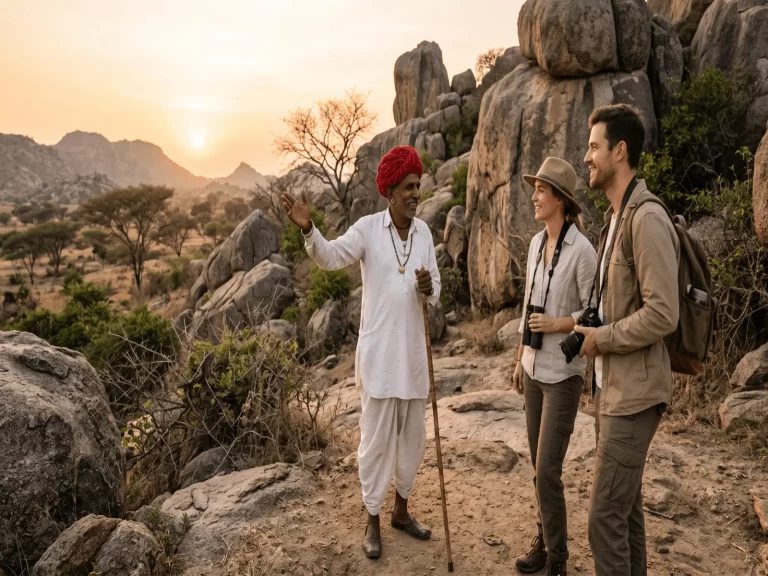
What has persisted through that change, based on consistent long-term observation, is the working method itself wherever herding continues: livestock moved on foot across shared, open terrain, timed to water and grazing conditions, carried out by people with deep, practical, place-specific knowledge of the land they work. Tourism has added a new layer to this landscape, principally through safari vehicles and the visitors who arrive on them, but it has not replaced the underlying pastoral economy, which continues largely on its own terms, on its own schedule, independent of when a jeep happens to pass by.
Seasonal Rhythm Across the Year
The herding calendar in Jawai shifts noticeably across the year, tracking the same monsoon-and-dry-season pattern that governs most of Rajasthan’s agricultural and pastoral life. Through the monsoon months, roughly July to September, rainfall greens the scrub and fills seasonal water points across a much wider area, which loosens the daily grazing routine and allows herds to range across land that would be unusable the rest of the year. This is also when the Jawai Bandh itself is fullest, which reshapes both the wildlife picture, drawing migratory birds and supporting the resident crocodile population, and the grazing map, since low-lying land near the dam’s edge becomes seasonally rich grazing once the water recedes slightly from its peak.
Through the long dry season that follows, roughly October through June, grazing becomes progressively harder, water points shrink or disappear, and herding routes concentrate around whatever reliable water remains, principally the dam itself and a handful of other dependable sources. This is the period when herders’ route-planning skill matters most, since a poorly judged day’s grazing circuit in peak dry season can mean walking animals a long distance for very little actual forage. It is also, not coincidentally, the peak safari season, which means the months when Jawai draws the most visitors are the same months when the pastoral economy is working hardest against the constraints of its landscape, a fact that rarely makes it into visitor-facing accounts of the destination but shapes daily life for the community considerably more than the safari calendar does.
Why This Deserves Attention Beyond the Leopard Story
It is easy, when writing about Jawai, to describe Rabari herding life only as the backdrop to the leopard sightings that draw most visitors here. That framing undersells what is actually a distinct, place-specific pastoral tradition worth understanding on its own terms: a working method adapted precisely to this granite and scrub terrain, a livestock economy organized around goats, sheep, and camels rather than the cattle-heavy pastoralism common elsewhere in India, and a settlement pattern that has shared this exact landscape with a wild predator population for so long that the two are, in a very real sense, part of the same ecological and cultural picture. The leopards are one part of what makes Jawai distinctive. The herding life that has moved through these same hills for generations, on its own schedule and for its own reasons, is another, and it deserves to be understood as more than scenery.
Message us on WhatsApp for current pricing and a quote tailored to your dates and group size.