Why Leopards Sit in the Open Here: The Granite Hills Explained
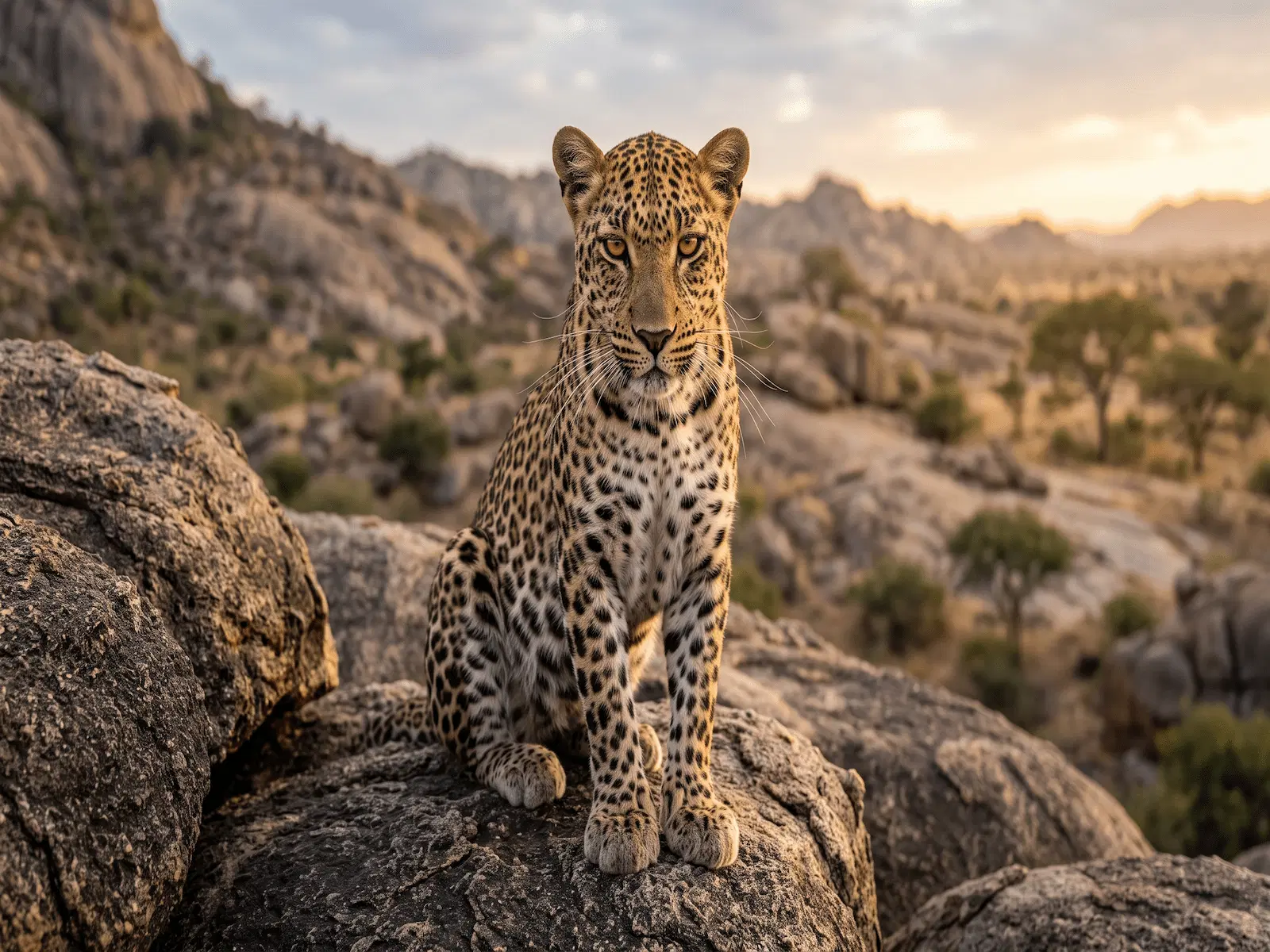
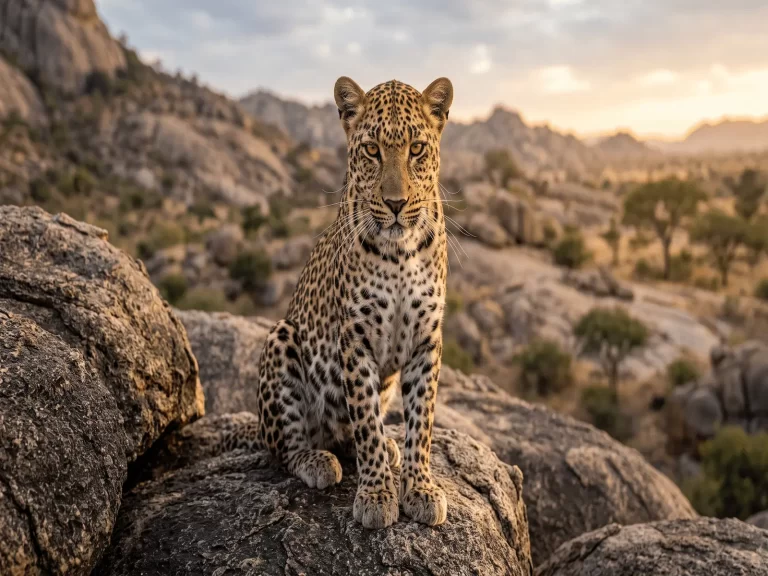
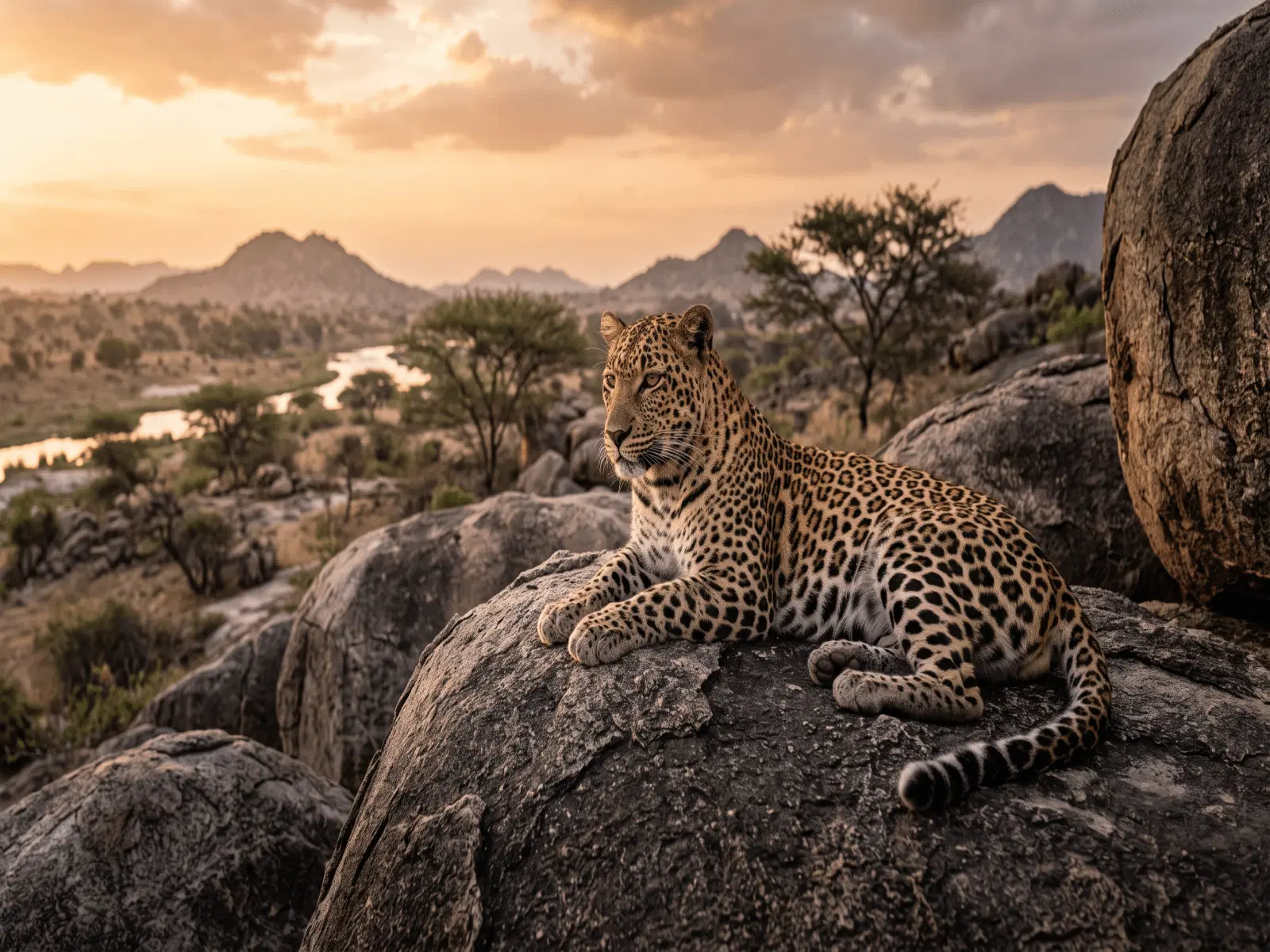
The single question every first-time visitor to Jawai eventually asks, usually while photographing a leopard stretched out on bare rock in mid-morning sun, is why the animal is not hiding. Everything most travelers have read or seen about leopards elsewhere in India suggests they should be. And in most of India, they are right — leopards are shy, largely nocturnal, and spend daylight hours tucked into cover so effectively that a sighting is often a matter of luck and timing rather than expectation. Jawai breaks that pattern, and the reason is written into the rock itself.
The Geology: Some of the Oldest Hills on the Planet
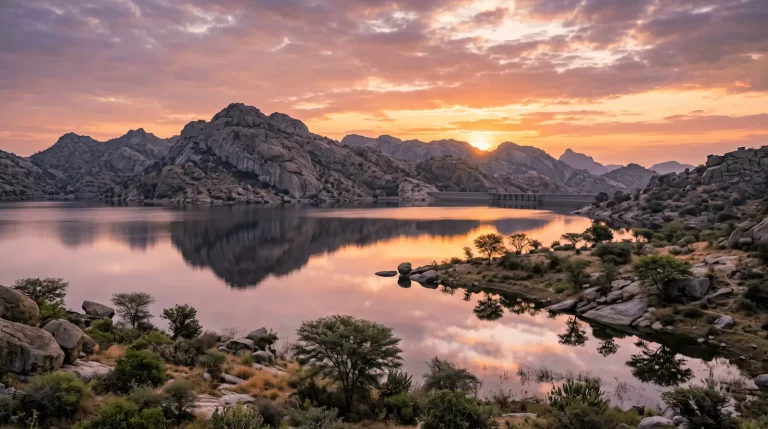
Jawai’s hills belong to the Aravalli range, a mountain system that runs diagonally across Rajasthan and is counted among the oldest surviving mountain ranges on Earth, considerably predating the Himalayas. Age, in geological terms, means erosion — hundreds of millions of years of it. Whatever sharp peaks and cliff faces the Aravallis once had have been worn down into a landscape of smooth, rounded granite domes, split boulders, and shallow caves known as inselbergs, or locally and more evocatively as kopjes, a word shared with similar granite outcrops in East Africa’s savannas.
This matters for vegetation as much as for the rock itself. Younger, sharper mountain terrain tends to hold soil in crevices and folds where, given enough rainfall, dense scrub and forest can take hold. Jawai’s ancient, rounded granite sheds soil more readily, supports thinner vegetation, and — combined with a semi-arid climate and centuries of grazing pressure from Rabari livestock — has never developed the kind of continuous forest canopy that gives leopards elsewhere their primary means of concealment. What stands here instead is open granite country: bare rock domes rising out of dry thorn scrub, babul and ronj trees, and cultivated fields, with cover that is sparse and patchy rather than continuous.
Why Concealment Matters So Much to a Leopard
To understand why this terrain changes leopard behavior, it helps to understand what a leopard actually needs cover for. Leopards are ambush predators, not endurance hunters. They lack the stamina of a wolf or wild dog and cannot sustain a long chase; their entire hunting strategy depends on getting close enough, undetected, to cover the final distance in a short, explosive rush. That requirement for concealment before the strike is also, by extension, a requirement for concealment at rest, because a visible, exposed leopard alerts every prey animal in range and effectively cancels its own hunting prospects for that period.
Across most of India, dense forest or tall grassland supplies that concealment, and leopards use it constantly — lying up through the heat of the day in thick cover, moving to hunt at the low-light margins of dawn and dusk when detection is harder for both predator and prey. This is why leopard sightings in most Indian reserves are difficult: the animal is doing exactly what its survival strategy requires, which is staying out of sight for the majority of daylight hours.
What Granite Substitutes for Vegetation
Jawai’s leopards face the same underlying pressure — the need for security while resting and while approaching prey — but the landscape offers a different solution. Instead of hiding within vegetation, they use elevation and rock geometry. A leopard resting in a crevice partway up a granite dome, or tucked beneath a boulder overhang, is often entirely visible from a jeep track or a village path below. There is no foliage screening it from view. But visibility is not the same as vulnerability. Nothing that might threaten the leopard — domestic dogs, humans on foot, competing predators — can climb the smooth granite face to reach it. The rock does the job that dense brush does elsewhere: not making the animal invisible, but making it inaccessible.
This distinction, between concealment and inaccessibility, is the entire mechanism behind Jawai’s famous daylight leopard sightings. A leopard does not need to disappear from view if nothing can reach it anyway. Once that security is available around the clock rather than only during the low-visibility hours of dawn and dusk, the pressure that forces leopards elsewhere into strictly crepuscular and nocturnal patterns simply is not present in the same way here. Jawai’s leopards can afford to rest in the open, in full daylight, on a rock ledge fifty feet from a grazing track, because the geometry of the terrain — not darkness — is what keeps them safe.
Thermoregulation: A Secondary but Real Factor
Granite also plays a role in how leopards manage heat, which shapes exactly where and when they choose to be visible. Rajasthan’s climate swings from cold winter mornings to extreme pre-monsoon heat, and granite responds to both extremes distinctively — it absorbs and holds warmth through cold mornings, which is part of why leopards are so often seen basking on exposed rock faces just after sunrise in the cooler months, and it can become uncomfortably hot to the touch during the peak of summer afternoons, which pushes leopards toward shaded crevices and the underside of larger boulders during the hottest hours even though they remain within the same rock formations.
This means the specific rock face or boulder pile where a leopard is likely to be resting shifts somewhat with season and time of day — a pattern experienced trackers read closely when deciding which route to take on a given drive. It is not a random search; it is an informed reading of where the rock, the light, and a known leopard’s territory intersect on that particular morning.
Territory Size and the Open Landscape
The open nature of the terrain also affects how leopards use space. In dense forest, a leopard’s territory can be relatively compact because thick cover lets the animal move largely undetected across a smaller range. In Jawai’s open granite country, territories tend to be larger and shaped around the specific hill formations, water access points, and prey concentrations available, because the leopard cannot rely on continuous cover to move unseen between them. A resident male’s range might span several linked kopjes and the scrub and farmland between them, with particular boulder piles used repeatedly as rest sites across seasons — which is part of why experienced local trackers can often predict, with reasonable but not certain confidence, which formation a specific known leopard is likely to be using in a given week.
Why This Is Not a Uniform Effect Across All Three Zones
Bera, Sena, and Devgiri, the three zones most commonly referenced in Jawai safari planning, do not have identical granite character, and the openness that drives daylight visibility is not perfectly uniform across all of them. Some pockets within each zone carry denser scrub cover or more broken, vegetated ravines than others, and leopards using those particular pockets can behave slightly more cautiously than leopards holding territory on the most exposed, bare rock formations. This is one of the reasons recent, zone-specific activity reports matter more to a good sighting than which zone carries the best general reputation — the mechanism described here operates at the level of a specific rock formation and territory, not uniformly across an entire zone.
What the 2026 Safari Rules Change and Do Not Change
The daylight-only safari restrictions introduced in 2026 do not alter any of the geological or behavioral mechanism described here — the leopards were already daylight-visible animals before the rule existed, for reasons rooted in rock and generations of coexistence, not in what hours safaris were permitted to run. What the rule changes is simply the window during which visitors can observe that pre-existing behavior, cutting off the very early pre-dawn hours and full night that some operators previously used. Because Jawai’s leopards were never primarily nocturnal to begin with, this restriction has had less practical impact on sighting quality here than it would in a forest reserve where leopards genuinely depend on night activity to avoid detection.
Reading the Rock Like a Tracker
None of this should be mistaken for a guarantee. Rock geometry explains why a leopard can rest in the open here; it does not mean a leopard will be visible on any particular drive, on any particular rock, at any particular hour. What a good guide brings to that uncertainty is a working knowledge of specific formations, recent activity, wind direction, and light — reading the same granite the leopards themselves are reading, and using that understanding to put a jeep in the right place at the right time far more often than chance alone would allow.
Trackers who work this landscape year-round tend to build a mental map that goes well beyond “leopards live in the hills.” It includes which individual boulder piles have functioned as reliable rest sites across multiple seasons, which formations tend to hold a resident female with cubs versus a transient male passing through contested territory, and which specific crevices catch morning sun first and are therefore likely to be occupied on a cold winter dawn but abandoned by mid-morning once the rock elsewhere has warmed. This granular, formation-by-formation knowledge is arguably the single biggest differentiator between an experienced local guide and someone simply driving a jeep through generally leopard-inhabited hills, and it is built entirely on understanding how the rock itself behaves across the day and across the seasons.
How This Compares to Other Leopard Landscapes in India
It is worth placing Jawai’s granite mechanism against the more familiar leopard landscapes elsewhere in India to make the contrast concrete. In the forests of Madhya Pradesh or Maharashtra, leopard sightings depend heavily on the animal choosing to cross an open track or a clearing at the right moment, because the surrounding forest offers total concealment the instant the leopard steps back into it. Guides in those landscapes read alarm calls from langurs, deer, and birds as the primary tool for locating a hidden cat, since the leopard itself typically cannot be seen until it is no longer trying to hide.
Jawai inverts this almost completely. Alarm calls still matter and are still read carefully, but they are a secondary tool here rather than the primary one, because a resting leopard on open granite frequently does not need to be located through indirect evidence at all — it can simply be seen, provided the jeep is on the right track at the right time. This is the practical, on-the-ground consequence of the geological difference described above, and it is why guides trained in forest-reserve tracking methods sometimes need to consciously adjust their approach when they begin working in Jawai, shifting emphasis from indirect signs toward direct scanning of known rock formations.
What Visitors Can Do to Read the Landscape Themselves
Guests do not need a tracker’s years of experience to start noticing some of these patterns during a single safari. Watching which rock faces receive direct sun at what time of day, noticing where vegetation is slightly denser and therefore where a leopard might behave a little more cautiously even within an otherwise open zone, and paying attention to a guide’s explanation of why the vehicle is heading toward one specific formation rather than simply driving the same loop every time, all deepen the experience considerably beyond passively waiting for something to appear. Understanding the mechanism behind the sighting, rather than treating it as unexplained luck, tends to make the wait itself more engaging and the eventual sighting, when it happens, more meaningful.
Message us on WhatsApp for current pricing and a quote tailored to your dates and group size.