Migratory Season at the Dam: When the Flamingos and Cranes Arrive
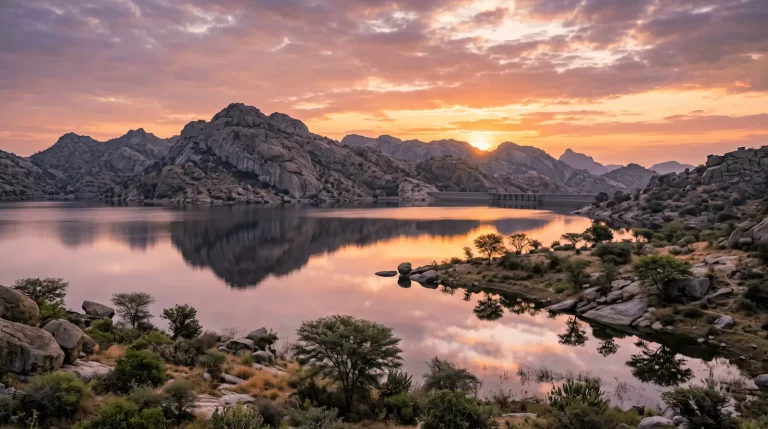
There is a specific week, most years somewhere in the second half of September or the opening of October, when the character of Jawai Bandh changes almost overnight. The dam has spent the monsoon and its immediate aftermath as a swollen, mostly bird-empty stretch of water ringed by green hills. Then the first flamingos appear, usually in small, tentative groups feeding at the shallower margins, and over the following weeks their numbers build alongside a widening cast of other migratory arrivals, until the dam becomes, by peak winter, one of the more rewarding birding locations in this part of Rajasthan.
Why the Dam Attracts Migratory Birds at All
Jawai Bandh was never intended as a bird habitat. It was completed in 1957 purely as a drinking water and irrigation reservoir for Pali district, with no conservation purpose in its design. What it created, entirely as an unplanned side effect, is a large, semi-permanent body of water in an otherwise dry, granite-dominated landscape — precisely the kind of reliable wetland habitat that migratory waterbirds moving along the broader Central Asian flyway look for as a wintering ground or a stopover point. Central Asia’s breeding grounds become inhospitable for many waterbird species as temperatures drop through autumn, and India’s wetlands, including large reservoirs like Jawai Bandh, offer a substantially milder and more food-rich alternative for the winter months.
The dam’s specific value lies in its combination of open water, shallow marshy margins, and the surrounding agricultural land that supplements the birds’ diet with grain and invertebrates. Species with different foraging needs — deep-water divers, shallow-margin waders, grain-feeding cranes — can all find suitable habitat within or immediately around the same reservoir, which is part of why the site supports such a varied bird list rather than just one or two dominant species.
The Headline Arrivals: Flamingos and Demoiselle Cranes
Greater flamingos are the most visually striking of the dam’s migratory arrivals, appearing in the shallower stretches where they filter-feed on small invertebrates and algae by sweeping their distinctively shaped bills through the water and mud. Their numbers build gradually through the autumn months and generally peak during the core winter period, when a good vantage point over the right stretch of shoreline can reveal groups ranging from a handful of birds to considerably larger congregations, feeding in the characteristic slow, wading shuffle that stirs up the sediment they filter for food.
Demoiselle cranes are the other headline species, and arguably the more remarkable of the two when their migration is properly understood. These cranes breed in Central Asia, including areas as far as Mongolia and southern Siberia, and undertake one of the more demanding migrations of any bird species to reach their Indian wintering grounds, including a crossing of the Himalayas at extreme altitude. Their arrival in the wider Rajasthan region, including at Jawai Bandh, represents the tail end of that journey, and the birds that do stop at or near the dam are typically seen in family groups or larger flocks, feeding in adjacent agricultural fields as much as on the water itself, since their diet leans more toward grain and seeds than the flamingo’s aquatic invertebrate diet.
The Wider List Most Visitors Miss
Flamingos and cranes draw the attention, understandably, but the full migratory and wintering bird list at Jawai Bandh is considerably longer and worth knowing about even for visitors who are not dedicated birders. A range of duck species arrive through the winter months to use the open water, alongside various wader species working the shallow margins and mudflats, and a supporting cast of smaller waterbirds that use the reservoir’s marshy edges and adjacent wetland patches. Resident waterbirds, present at the dam year-round independent of the migratory calendar, add further to what a dedicated birding visit can turn up, meaning the dam rewards attention even outside the peak migratory window, just with a different and somewhat shorter species list.
Raptors also respond to the seasonal concentration of prey around the dam, with wintering birds of prey, including species that arrive from further north alongside the resident population, taking advantage of the seasonal abundance of smaller birds and other prey drawn to the water.
How the Migratory Calendar Differs From the Leopard Calendar
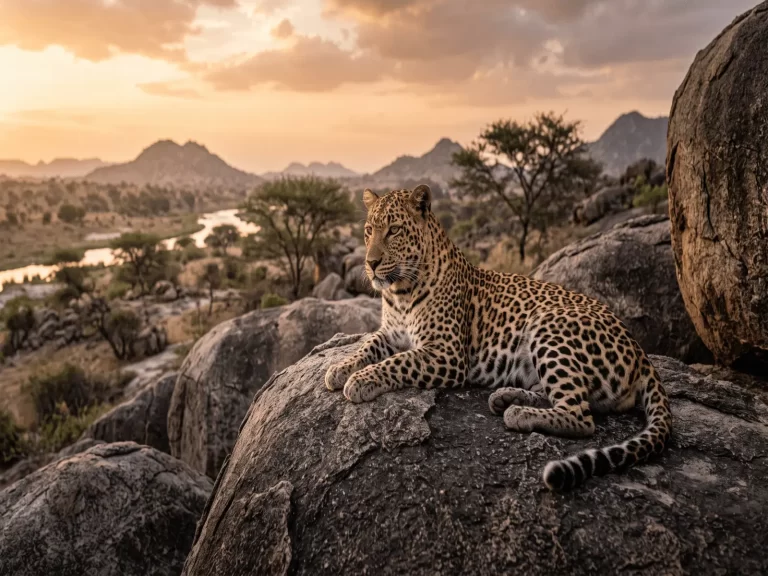
One of the more practically useful things to understand about Jawai’s wildlife is that the best months for birding and the best months for leopard safaris are not the same thing, and travelers building a trip around one should not assume it automatically delivers the other. The migratory bird season runs roughly from September through the winter months, building to a peak typically in the core winter period and tapering off as birds begin their return migration in early spring. Leopard sightings, by contrast, are possible year-round, since the resident leopard population does not migrate and daylight visibility is a function of terrain and behavior rather than season.
There is meaningful overlap — the peak winter months work well for both leopards and birds, and this overlap is a large part of why winter is Jawai’s most popular season overall. But a visitor whose primary goal is the migratory bird spectacle specifically should plan against the bird calendar, checking on recent arrival reports rather than assuming any winter date automatically catches the dam at its best, since the exact build-up and departure timing shifts somewhat from year to year depending on conditions both at the breeding grounds and locally.
Water Level and Bird Concentration
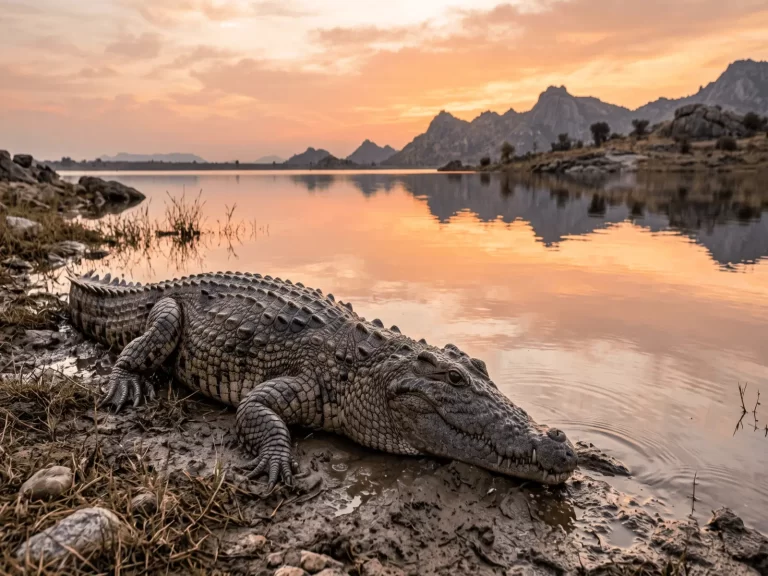
The dam’s water level, which fluctuates considerably across the year depending on monsoon performance, has a direct effect on where and how visibly birds concentrate, in much the same way it affects crocodile visibility. A dam that is fuller, following a strong monsoon, offers more open water for diving and dabbling species but can push wading birds and flamingos toward a narrower band of shallow margin habitat. As the dam recedes through the dry season, exposed mudflats and shallow margins expand, often improving conditions for waders and flamingos specifically, up to a point — if water levels drop too far in a particularly weak monsoon year, the reduction in overall wetland habitat can work against bird numbers rather than for them. This is one of the reasons a single generic answer to “when is birding best” understates the real variability from year to year, and current, season-specific information matters more than a fixed calendar rule.
Where to Position for a Birding Visit
Productive birding at Jawai Bandh generally rewards patience at a fixed vantage point over constant movement, particularly for flamingos and waders, which can take considerable time to work their way into range of a good viewing spot along the shoreline. Early morning tends to offer calmer conditions and better light for both viewing and photography, with birds often more actively feeding before the day’s heat sets in. A dedicated bird-and-crocodile dam outing, distinct from a hill-focused leopard safari, is generally a more productive way to spend meaningful time specifically on bird behavior than treating birding as an incidental stop on a leopard-oriented drive, since the two activities reward different pacing and different vantage points.
When the Birds Leave
The departure is generally quieter and less remarked upon than the arrival, but it follows its own logic worth understanding. As temperatures begin rising through late winter and into early spring, and as breeding grounds to the north become viable again, migratory species progressively depart, typically in a staggered sequence rather than all at once, with some species lingering later into spring than others depending on their specific breeding schedule and the distance they need to cover to reach it. Demoiselle cranes generally begin their return migration before flamingo numbers fully taper off, and by the point the pre-monsoon heat sets in, the dam has largely reverted to its resident bird population, with the more dramatic migratory spectacle absent until the cycle begins again the following autumn.
This tapering matters for anyone planning a late-season visit specifically for birds. A trip planned for the tail end of the traditional winter season may still catch meaningful numbers of some species while largely missing others that have already begun their journey north, and current, season-specific reports are considerably more useful than a fixed assumption about when “winter” ends.
Birding Alongside a Leopard-Focused Itinerary
Most visitors are not planning a trip purely around birds; the migratory season is more often a valuable addition to a primarily leopard-focused itinerary than the sole reason for visiting. Built thoughtfully, a multi-day stay during the winter overlap window can combine hill-based leopard drives in the morning or late afternoon with a dedicated, unhurried visit to the dam’s shoreline at a different time of day, capturing both halves of what this landscape offers without compromising either. Treating the dam visit as an afterthought squeezed into a leopard safari’s return route tends to shortchange both experiences, since productive birding rewards patience and a fixed vantage point in a way that does not combine naturally with a moving hill-based game drive.
An Ecosystem Still Explained by the Same Accident
It is worth returning, in any discussion of Jawai’s migratory birds, to the fact that none of this was planned. The dam’s 1957 construction had a single, narrow purpose — securing drinking water and irrigation supply for a semi-arid district — and the wetland habitat that now draws flamingos from hundreds of kilometers away and demoiselle cranes from across the Himalayas is a complete accident of that infrastructure decision. The same is true of the crocodile population, the concentrated prey base that supports the leopards, and much of what makes this landscape ecologically distinctive. Understanding the migratory bird season is, in that sense, also a way of understanding how much of Jawai’s wildlife identity rests on a single mid-century engineering project that was never meant to create any of it.
Message us on WhatsApp for current pricing and a quote tailored to your dates and group size.