Beyond the Leopard: Hyenas, Wolves and What Else the Drives Turn Up
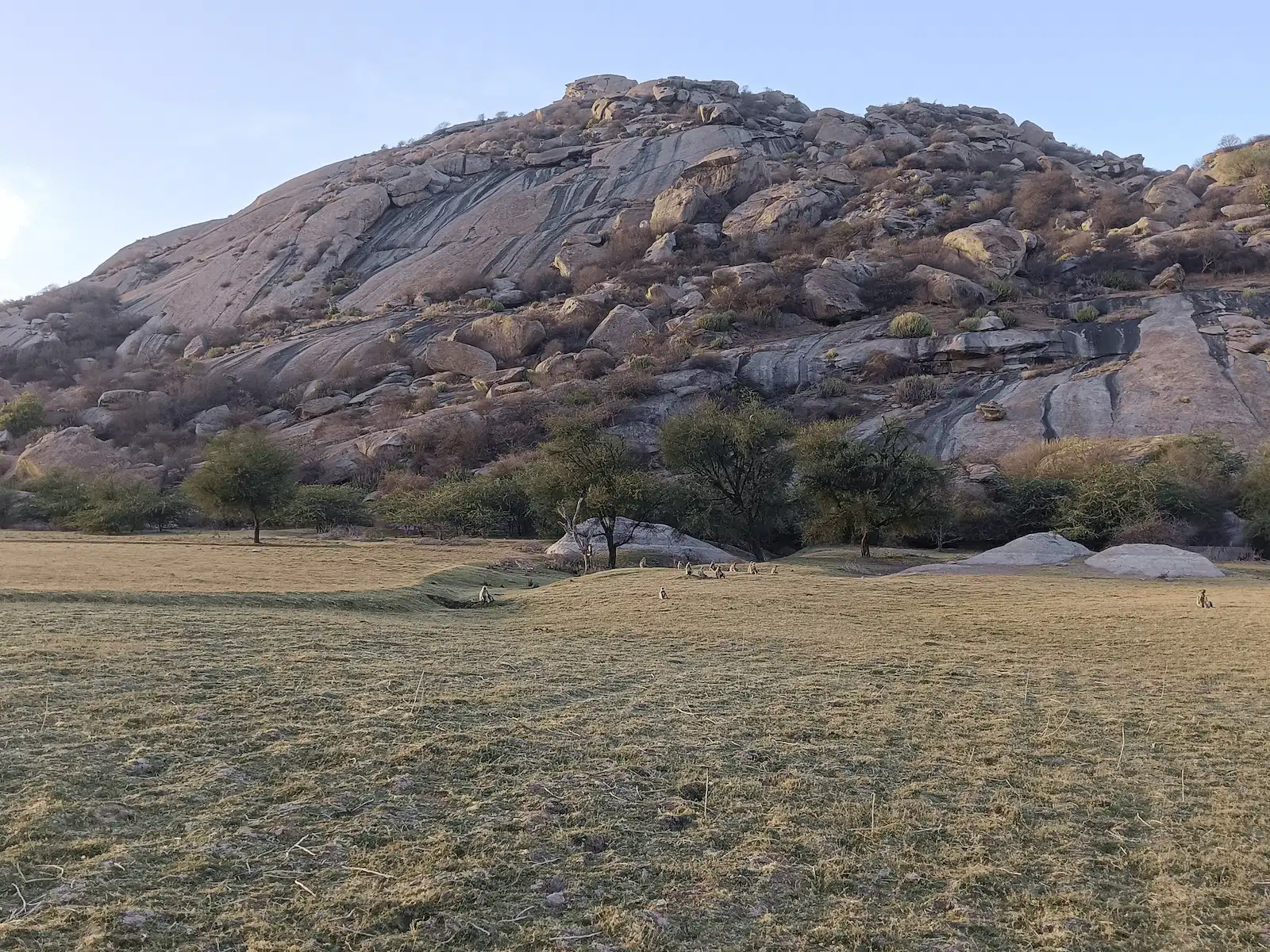
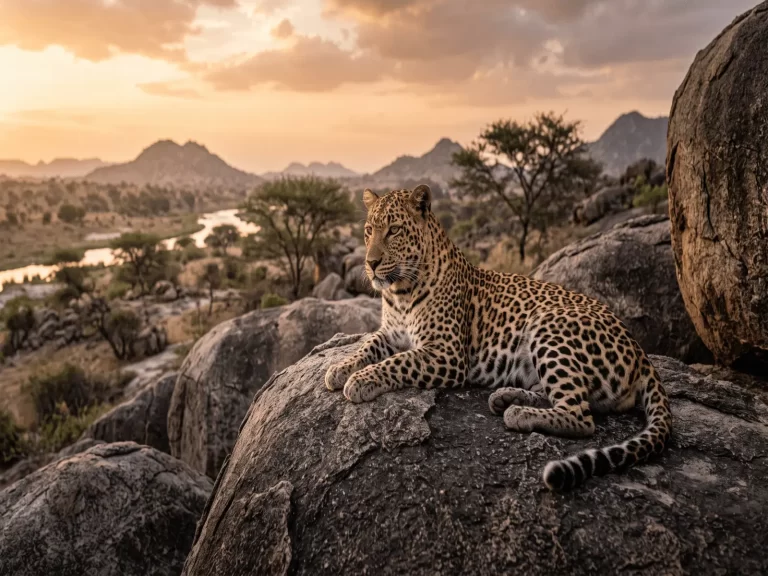
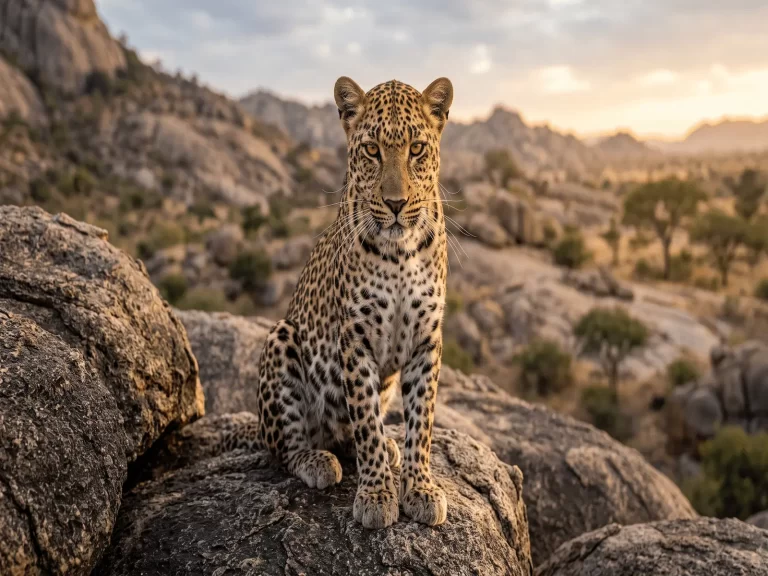
Leopards get the headline, understandably. But guests who go into a Jawai safari expecting the drive to be only about the leopard tend to underrate what else the granite hills and the dam below them actually hold. Across a typical multi-drive stay, the mammal and bird list a jeep turns up is considerably longer than most first-time visitors expect, and understanding what else is out there, and how realistic it is to see any given species, makes for a far better-calibrated trip than fixating on a single animal.
Striped Hyenas: Present, but Increasingly Hard to Time
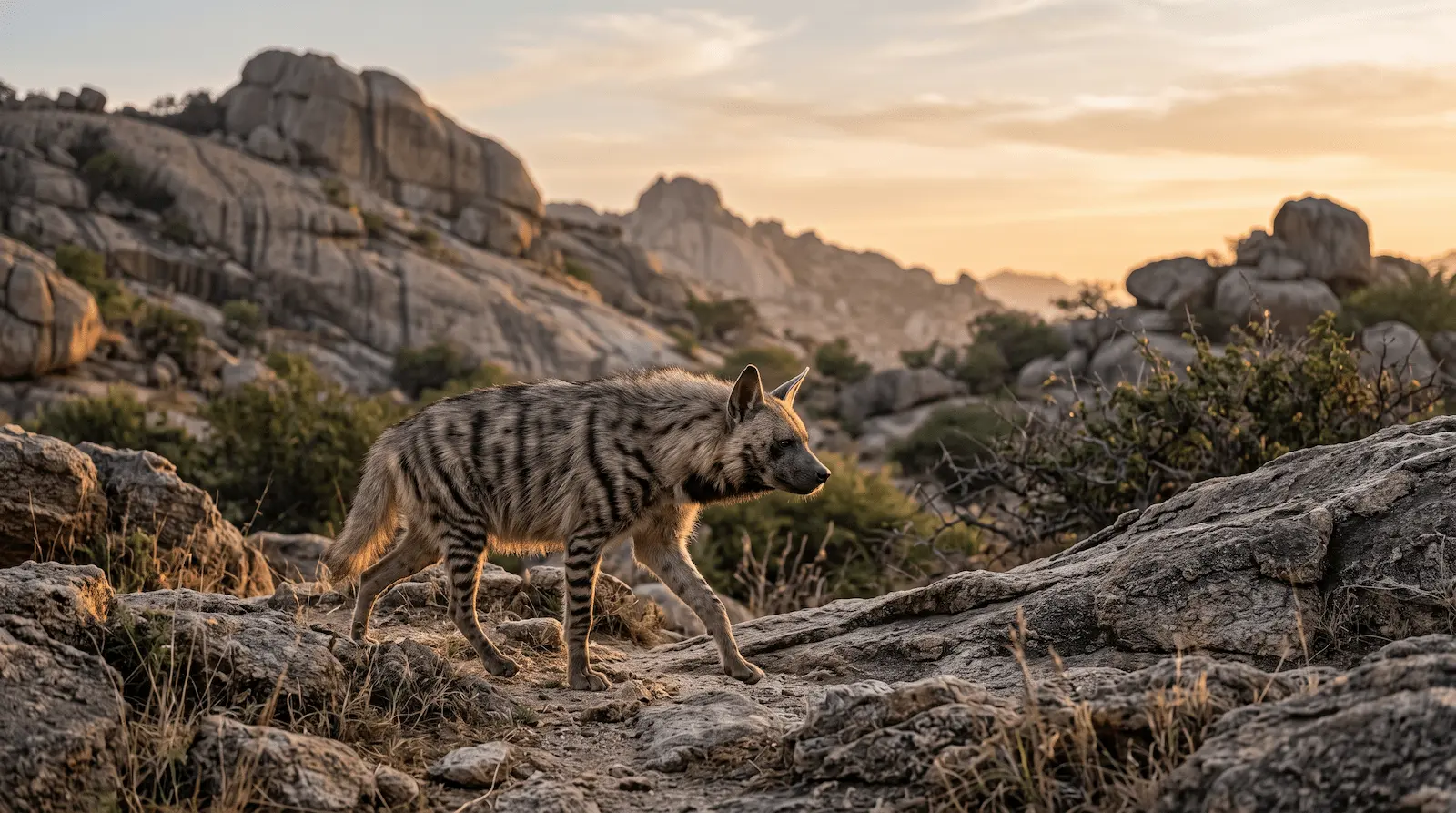
Striped hyenas are a genuine resident presence across the Bera-Jawai landscape, denning in rock crevices and boulder piles not unlike those the leopards use, and feeding on a mix of carrion, small mammals, and whatever else their opportunistic diet allows. They are shier and considerably more nocturnal in habit than Jawai’s leopards, which is precisely why they present the clearest example of how the 2026 safari rules have changed what is realistically observable here. With night safaris, spotlighting, and any drive outside the roughly six-in-the-morning to seven-in-the-evening window now prohibited under the Rajasthan High Court order and the Forest Department’s standard operating procedure, the hours during which hyenas were most active and most likely to be encountered are largely off-limits to commercial safari traffic.
This is worth stating plainly rather than glossing over: a hyena sighting on a daylight drive in Jawai is a genuine bonus, not something to expect or plan around. The best realistic chances come at the very edges of the permitted safari window — the first hour after the 6am start and the last hour before the 7pm close — when hyenas returning to or leaving a den site sometimes overlap with legal safari hours. Fresh hyena tracks, den entrances, and old kill remains are all more commonly encountered than the animal itself, and a good guide will point these out as evidence of a healthy resident population even on drives without a direct sighting.
Indian Wolves: Rare, and Worth Being Honest About
The Indian wolf, a subspecies adapted to the arid and semi-arid grasslands and scrub of the subcontinent, is present in the wider landscape around Jawai but in genuinely small numbers, and sightings are correspondingly rare. Wolves here tend to favor the more open scrub and grassland stretches away from the densest granite formations, hunting in small packs or pairs across territories that can be considerably larger than a leopard’s. Because of both their low numbers and their wariness of vehicles and human activity, a wolf sighting during a standard safari is closer to a rare stroke of luck than a realistic planning expectation, and any traveler whose primary goal is specifically wolves should have their expectations set accordingly, and honestly, before booking.
Golden Jackals: The Common, Underrated Presence
Golden jackals are, by a wide margin, the most frequently encountered of Jawai’s wild canids, and arguably one of the more underrated parts of a typical drive. They are active across a wider range of hours than hyenas, including daylight periods, and their distinctive calls — a rising, wavering howl often triggered by one animal and answered by others across a distance — are one of the more atmospheric and recognizable sounds of dawn and dusk in this landscape. Jackals are opportunistic and adaptable, scavenging leopard kills, hunting small mammals and birds, and moving comfortably through both open scrub and the fringes of village land. A drive that does not produce a leopard will very often still produce a jackal sighting, and a good guide treats this as a genuine highlight rather than a consolation.
Indian Foxes: Small, Quick, and Easy to Miss
The Indian fox, smaller and more delicately built than the golden jackal, favors the drier, more open stretches of scrub and grassland at the margins of the granite formations. They are quick, low to the ground, and easy to miss unless a tracker is specifically watching for the flash of movement at the edge of a track. Foxes are primarily active around dawn and dusk, though not exclusively so, and a sighting tends to be brief — a fox crossing a track or pausing at a den entrance before disappearing into scrub. They are not rare in the sense that wolves are rare, but they require an attentive eye rather than a wide, obvious presence.
Nilgai and Chinkara: The Prey Base That Explains Everything Else
If leopards are the reason people come to Jawai, nilgai and chinkara are a large part of the reason leopards are here at all. Nilgai, the largest antelope species in Asia, are common and conspicuous across the landscape, grazing in small groups across open scrub and cultivated field margins, and their size and visibility make them one of the most reliably seen mammals on almost any drive. Chinkara, considerably smaller, more delicate, and far more easily spooked, tend to favor slightly more open, drier terrain and bound away in a distinctive stotting gait at the first sign of a vehicle or a predator. Both species cluster in higher densities within reach of the dam’s water and the irrigated fields it supports, which is precisely why leopard territories concentrate in the same general area — the prey base and the predator population track each other closely across this landscape.
Raptors and the Wider Bird List
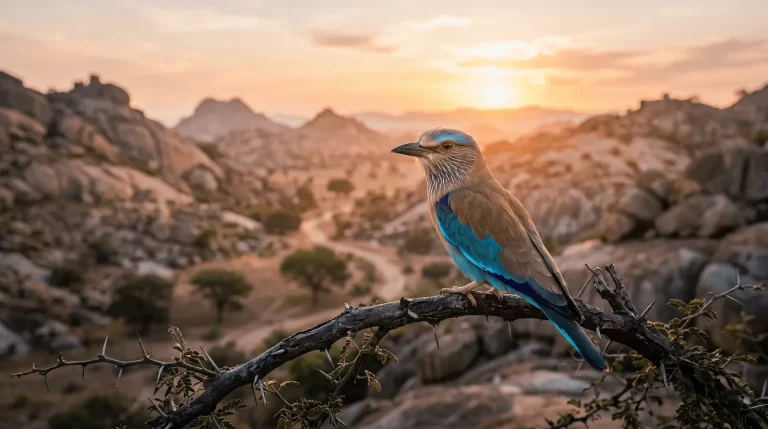
Birdlife in Jawai extends well beyond the migratory flamingos and demoiselle cranes that arrive at the dam from around September through winter. Resident raptors are a genuine year-round feature of the skies above the granite hills — a range of eagles, including the substantial and increasingly uncommon steppe eagle during winter passage, along with buzzards, kestrels, and vultures that patrol the thermals rising off sun-warmed rock in search of carrion or small prey. Vultures in particular play an underappreciated ecological role, cleaning carcasses quickly in a landscape where livestock mortality is a regular occurrence, and their presence circling above a distant point on the hills is often the first visual clue a tracker uses to locate a kill site, which in turn can indicate recent leopard activity in that area.
Away from the raptors, the scrub and field edges support a rich smaller bird community — francolins, larks, bee-eaters, and a variety of resident waterbirds around the dam’s margins that are present independent of the big migratory arrivals. A dedicated birding drive, distinct from a leopard-focused safari, can turn up a genuinely long list across a single morning, particularly around the dam’s shoreline and backwaters.
Reptiles and the Dam’s Other Resident
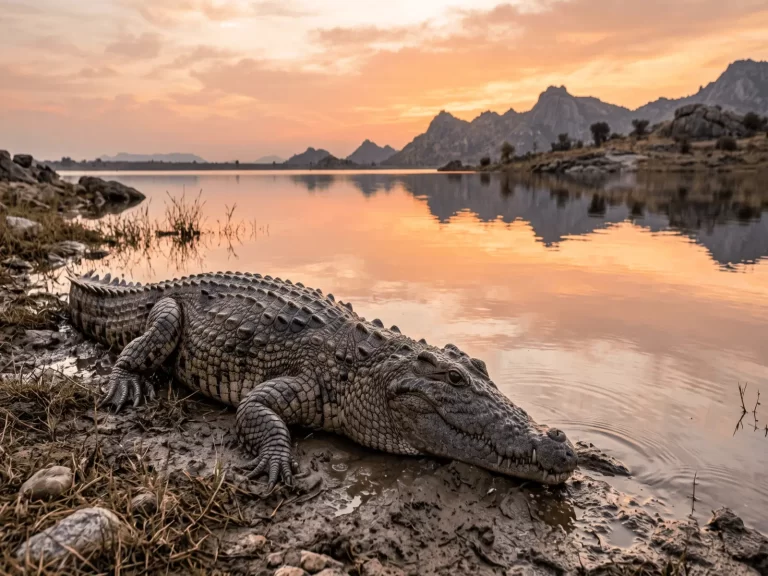
The mugger crocodile population resident in Jawai Bandh’s waters deserves mention here as part of the wider wildlife cast, even though it merits its own deeper treatment elsewhere. Muggers bask openly along the dam’s banks, particularly as water levels recede through the dry months and expose more shoreline, and a crocodile sighting genuinely surprises most first-time visitors who arrive with no expectation that Jawai holds anything beyond leopards and birds.
Small Mammals and the Overlooked Middle of the Food Web
Beneath the more conspicuous species, Jawai’s scrub and rock country supports a range of smaller mammals rarely mentioned in trip planning but genuinely part of what a sharp-eyed drive can turn up. Indian hares are common across the open scrub and are frequently flushed from cover along a track at dawn or dusk. Various rodent species, including gerbils adapted to the dry, sandy soil, form an important part of the diet for smaller predators and raptors alike, and their burrow systems are a common sight along field margins even when the animals themselves stay hidden. Indian palm squirrels are a near-constant background presence around villages and cultivated areas, and while unremarkable individually, they are part of the same layered food web that ultimately supports the landscape’s larger predators.
Reptiles Beyond the Dam’s Crocodiles
The mugger crocodiles resident in Jawai Bandh’s waters get most of the reptile attention, and deservedly so, but the drier granite and scrub country away from the dam supports its own reptile community. Monitor lizards are present and occasionally seen basking on rock or moving along the base of a granite formation, moving with a distinctive deliberate gait that is easy to mistake at a distance for something larger. A range of snake species inhabit the rock crevices and scrub, most rarely seen due to their secretive and largely nocturnal habits, though cooler winter mornings occasionally bring individuals out to bask in early sun on exposed rock, much like the leopards themselves favor the same warming surfaces.
How Seasonal Change Affects the Wider Cast
The composition and visibility of this wider wildlife cast is not static across the year. The monsoon and its immediate aftermath green the hills considerably, thickening scrub cover in a way that makes some of the smaller mammals and the more retiring canids somewhat harder to spot than during the dry season, when vegetation dies back and visibility across the open terrain improves. Winter, by contrast, tends to be the most productive season for the widest single-day species list, combining good visibility, the arrival of migratory birds at the dam, and daytime temperatures mild enough that mammals remain active for longer stretches rather than retreating to shade during the hottest hours, as they do through the pre-monsoon summer months.
How to Think About a Drive That Turns Up “Only” the Wider Cast
A safari that does not produce a leopard sighting but does turn up nilgai, chinkara, a jackal pair, circling vultures, fresh hyena tracks, and a good raptor list has, by any honest measure, been a successful wildlife drive — not a consolation for missing the main event. Jawai’s ecological story is genuinely richer than a single predator, and the granite terrain and dam ecosystem that make leopards so visible here support this entire cast simultaneously. Guides who frame the drive this way, rather than treating every non-leopard sighting as a lesser outcome, are giving guests a more accurate and ultimately more satisfying picture of what this landscape actually offers.
Message us on WhatsApp for current pricing and a quote tailored to your dates and group size.