How the Water Level Shapes the Safari: A Season-by-Season Reading
Most trip planning advice about Jawai focuses on months and seasons in the abstract — winter is good, summer is hot, monsoon is green. What gets left out, and what genuinely changes what a safari can show a visitor from one visit to the next, is the water level in Jawai Bandh itself. The dam is not a fixed backdrop. It rises and falls substantially across the year depending on how the monsoon performs, and that fluctuation reshapes where prey animals concentrate, how visible the resident crocodiles are, how the migratory birds distribute themselves, and even which stretches of the surrounding hills see the most reliable leopard activity. Reading the water level is one of the more genuinely useful, underused pieces of planning information available to anyone trying to time a Jawai visit around wildlife rather than around a generic seasonal calendar.
Why the Water Level Swings So Much
Jawai Bandh depends almost entirely on monsoon inflow to refill each year, since Pali district’s climate offers little reliable rainfall outside the monsoon window. A strong monsoon season fills the dam close to capacity, creating a large, deep reservoir that persists well into the following dry season. A weak or delayed monsoon leaves the dam considerably lower, and that shortfall compounds across the dry months that follow, since there is little to no natural replenishment until the next monsoon arrives. This means the water level at any given point in the year is not simply a function of the calendar month; it is a function of the specific monsoon that preceded it, and the same month can look meaningfully different from one year to the next depending on how much rain actually fell.
This is worth stating clearly because generic seasonal advice — “visit in December for the best water levels” — can be misleading in a year following a weak monsoon, when December water levels might already be considerably lower than they were the previous year at the same point in the season. Anyone planning a trip with specific water-dependent sightings in mind should ask current questions about the dam’s actual state rather than relying purely on a fixed monthly calendar.
Post-Monsoon: The Fullest the Dam Will Be
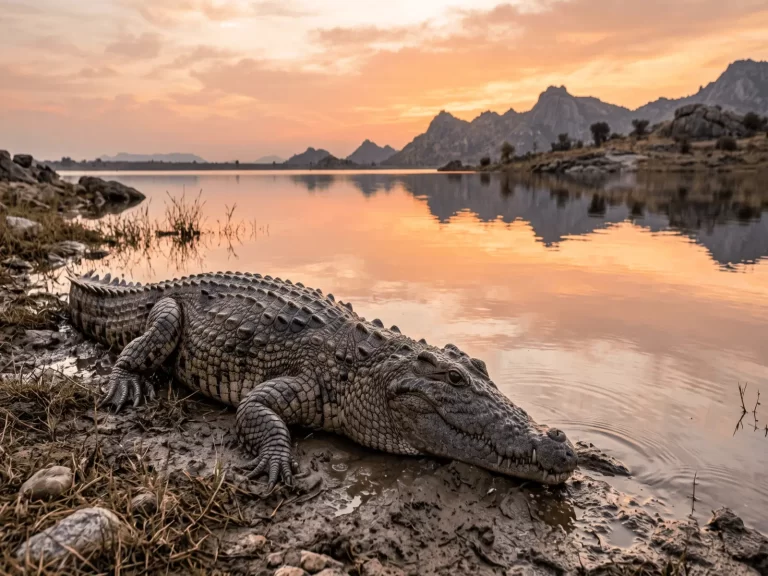
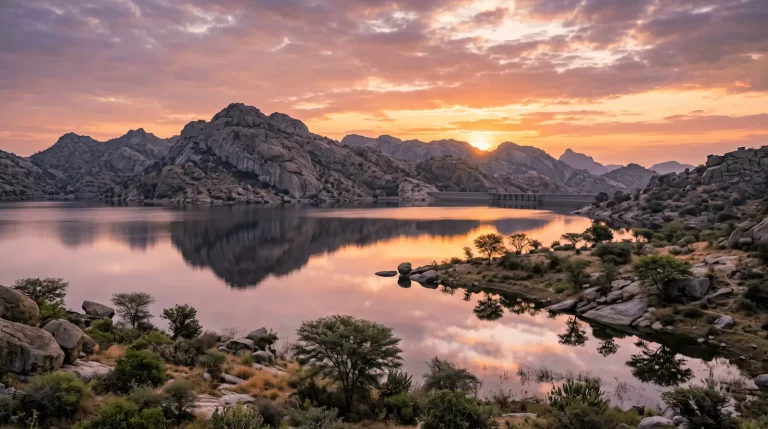
Immediately following the monsoon, typically from around late September into October, the dam is generally at or near its fullest point for the year. This is the most visually dramatic period for the reservoir itself — a wide expanse of water against the granite hills, with the surrounding landscape still green from the rains rather than the dry brown it turns later in the season. It is also, somewhat counterintuitively, not the best period for certain water-dependent sightings. A full dam gives crocodiles far more submerged water to retreat into and considerably less exposed shoreline for basking, meaning mugger sightings during this period, while possible, tend to be less frequent and less predictable than later in the season. Migratory birds are just beginning to arrive during this window, with numbers building rather than at their peak.
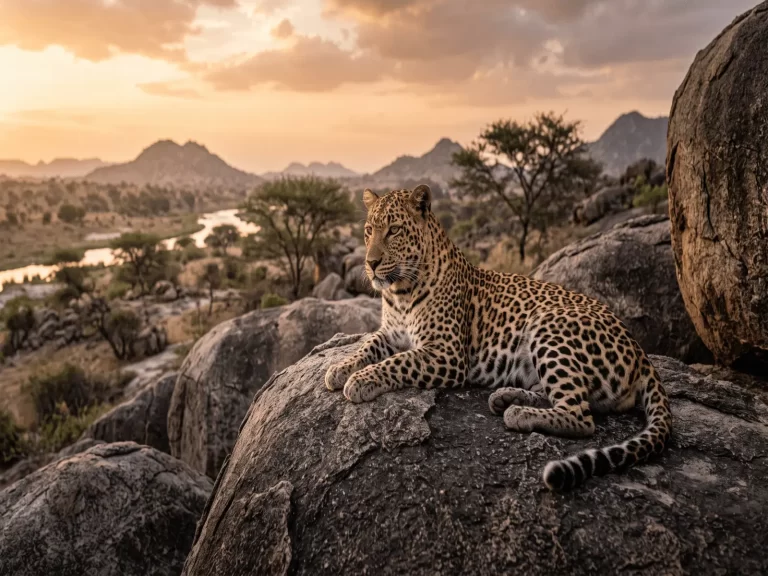
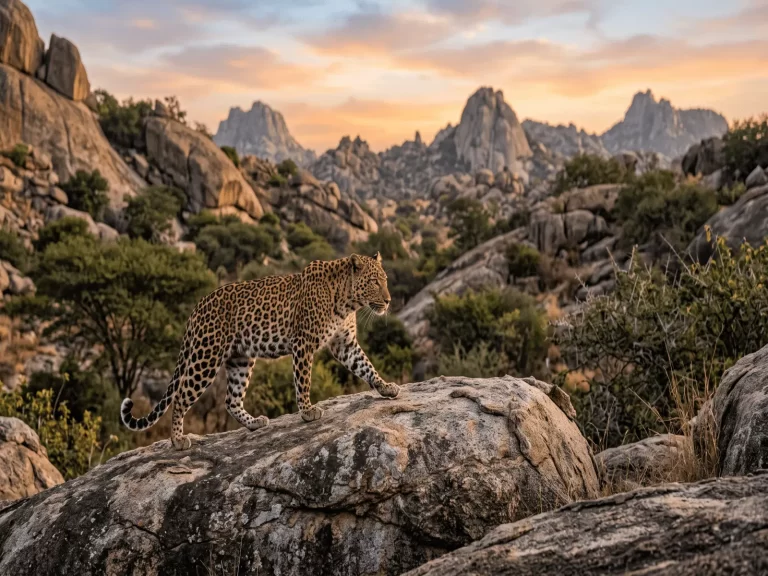
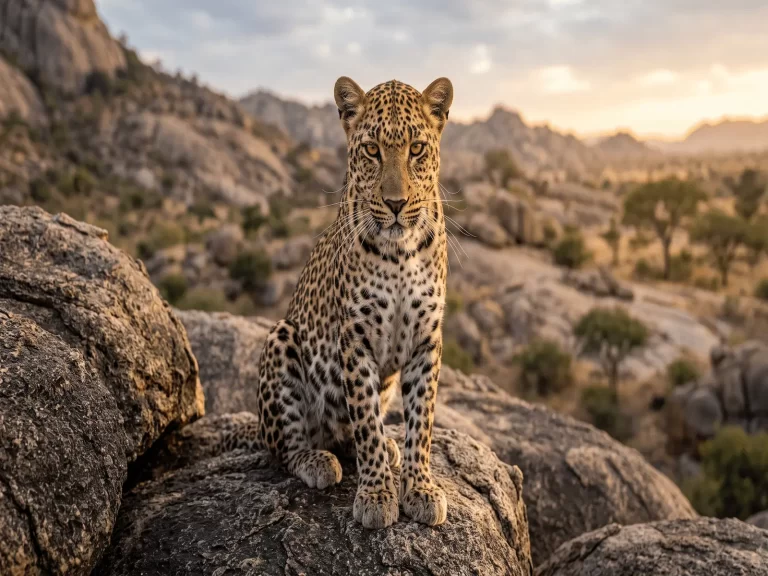
Leopard activity in the surrounding hills during this period benefits from the general flush of prey availability that follows good monsoon rains, and vegetation across the hills, while never approaching true forest density, is at its thickest for the year, which can occasionally make spotting marginally more challenging in the denser pockets even though the overall open-granite advantage remains intact.
Winter: The Balance Point
Through the core winter months, the dam’s water level typically recedes gradually from its post-monsoon peak, exposing progressively more shoreline, mudflat, and sandbank as the dry season progresses. This is generally the period that offers the best overall balance across every major sighting category. Crocodile basking becomes more frequent and more visible as shoreline exposure increases. Migratory bird numbers build toward their peak, with flamingos and demoiselle cranes present in their greatest numbers of the year, taking advantage of the expanding shallow-margin habitat that recession creates. Vegetation across the hills has begun dying back from its post-monsoon peak, improving overall visibility for leopard tracking without yet reaching the stark, fully dry conditions of late spring. Cooler temperatures also mean leopards bask more readily on sun-warmed rock in the mornings, adding a specific and reliable behavioral window to the safari day.
This convergence of favorable factors across birds, crocodiles, and leopards is a large part of why winter is Jawai’s most popular season overall, and why it is also the period requiring the most advance planning given demand.
Late Winter Into Early Spring: Water Continues to Drop
As winter progresses toward spring, the dam continues its gradual recession, and by this point the difference between a year following a strong monsoon and a year following a weak one becomes considerably more visible. In a good water year, the dam still holds a substantial reservoir through this period, sustaining crocodile and resident bird activity comfortably. In a weaker water year, recession may be considerably more advanced by this point, with exposed shoreline extending further and the reservoir itself noticeably smaller than it would be in a stronger year. Migratory birds begin their staggered departure during this window, with numbers tapering as breeding grounds to the north become viable again, though the exact timing shifts from year to year.
Summer: The Dam at Its Lowest, and a Different Kind of Concentration
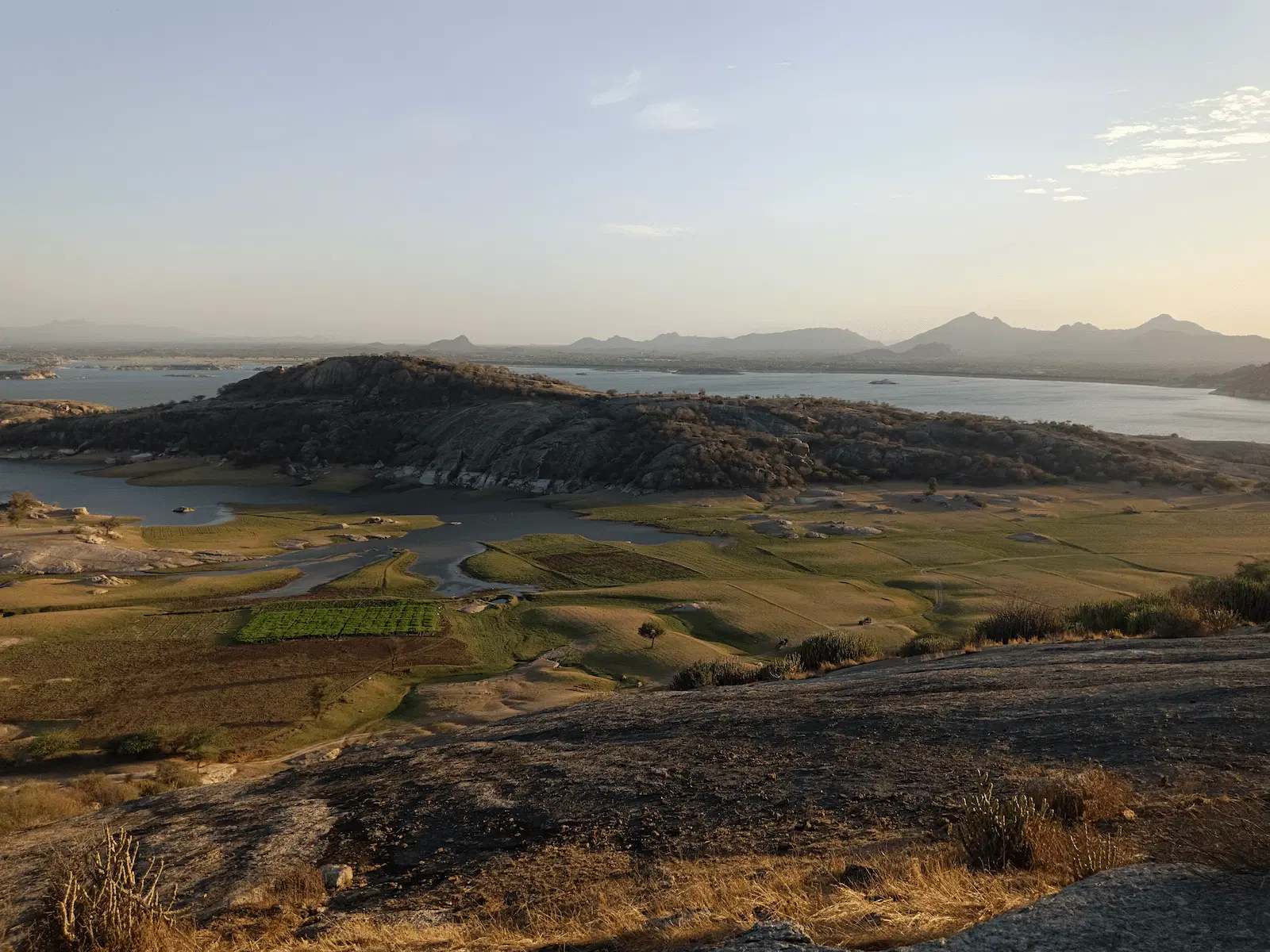
By the height of the pre-monsoon summer, the dam is typically at or near its lowest point of the year, and in a weak monsoon year this recession can be dramatic, reducing the reservoir to a fraction of its post-monsoon extent. This sounds, on its face, like the least promising period for wildlife viewing, and the heat itself is a genuine consideration worth planning around carefully. But the reduced water availability produces its own distinct concentration effect. With the dam and any remaining pools representing an increasingly scarce resource, prey species and the leopards that depend on them cluster more predictably around whatever water remains, sometimes producing more concentrated and predictable activity around specific remaining waterholes than the more dispersed pattern of a fuller, wetter season. This is a genuine, if less commonly discussed, advantage of a summer visit for leopard sightings specifically, even though the migratory birds are long gone and crocodile basking becomes less visible as the animals spend more time submerged to avoid the extreme heat.
Monsoon: The Dam Refilling in Real Time
During the monsoon itself, typically from around July through September, the dam is actively refilling, and the surrounding hills transform dramatically, turning green in a way that is genuinely unfamiliar to visitors who only picture Jawai as a dry, brown, granite landscape. Safari activity during this period is more limited and more weather-dependent than at other times of year, and this is a genuinely underexplored season for wildlife travel to Jawai generally, offering a distinctly different visual character to the landscape for visitors specifically interested in that transformation, alongside honest caveats about safari access and comfort during heavy rain periods.
Reading the Shoreline Yourself
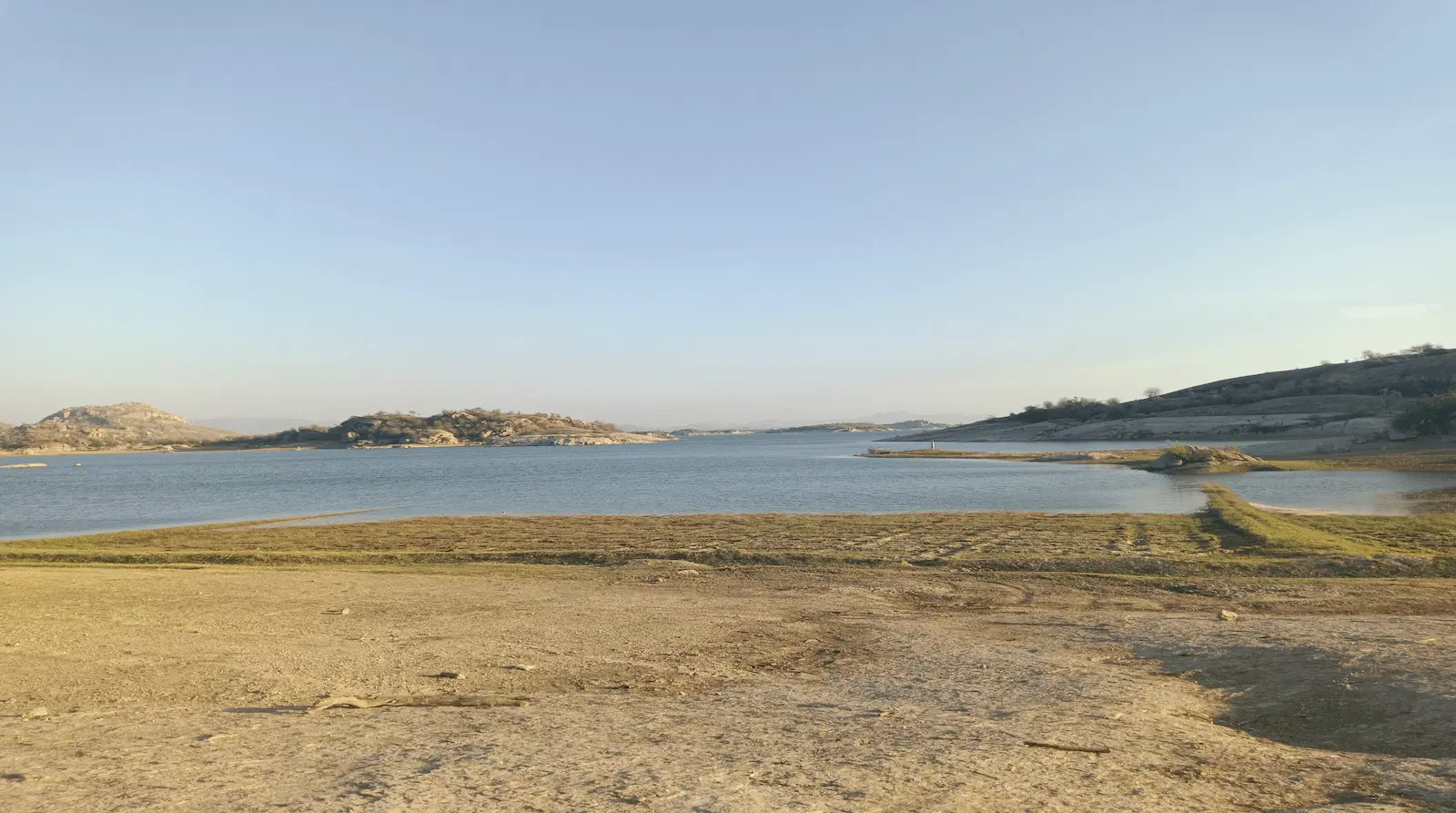
A visitor does not need specialist knowledge to make a rough read of where the dam stands in its annual cycle. A wide band of cracked, dry mud extending well back from the current waterline, with old high-water marks visible on rocks or embankments well above the present level, indicates a dam that has receded substantially from its post-monsoon peak — generally good news for crocodile basking and, if the timing lines up, for wading birds working the exposed margins. A dam with water lapping close to vegetation and embankments, with little exposed shoreline visible, suggests a fuller reservoir closer to its post-monsoon state, which tends to favor open-water bird species over baskers and waders. Guides and drivers who spend time at the dam regularly develop an intuitive sense of where the current level sits relative to a typical year, and asking directly is a reasonable and useful question rather than an intrusive one.
Why Consecutive Weak Monsoons Compound the Effect
Because the dam depends almost entirely on monsoon inflow, a single weak monsoon year has consequences that can extend beyond that year alone if it is followed by another below-average season. A dam that enters the dry months already lower than usual, and then receives another disappointing monsoon, can reach considerably lower levels by the following summer than a single bad year would produce in isolation. This compounding effect means the water level in any given month is genuinely not predictable from a fixed calendar entry alone, and is better understood as a running total shaped by however many recent monsoons have over- or under-performed, rather than a number that resets cleanly every single year.
Using This to Plan a Visit
None of this means a visitor needs to track rainfall data before booking a trip. What it does mean is that asking a simple, current question — roughly how full the dam is right now, relative to a typical year — is far more useful than relying on a generic seasonal chart alone. A guide or operator working the region day to day will usually have a good, current sense of this, and factoring it in alongside the standard seasonal guidance gives a much sharper picture of what a specific trip is likely to offer, whether the priority is leopards on open granite, crocodiles basking on newly exposed mud, or the migratory flamingos and cranes that depend on exactly the right band of shallow water to feed in. The water level is, in a real sense, the single variable that ties every other wildlife thread in Jawai together, and it rewards anyone willing to ask about it directly rather than planning purely by month.
Message us on WhatsApp for current pricing and a quote tailored to your dates and group size.