Jawai’s Leopards: How Many There Are and Why They Are So Visible
Every guest asks the same question on the drive out from pickup, usually somewhere around the second granite ridge: how many leopards actually live here? It is a fair question, and it deserves a more careful answer than either the inflated number some operators like to quote or the vague shrug that avoids the topic entirely. The honest answer is that the wider Bera-Jawai landscape supports a resident population best described as several dozen leopards, spread unevenly across a large stretch of granite hill country that spans multiple villages, grazing tracts, and the three commonly referenced safari zones — Bera, Sena, and Devgiri. No credible, current census gives a precise headcount, and any operator quoting an exact figure with confidence is quoting marketing, not field data.
Why There Is No Precise Number
Leopards are notoriously difficult to census accurately anywhere, and Jawai’s specific conditions make the job harder rather than easier despite the open terrain. The population is not confined to a fenced reserve with a fixed boundary and controlled entry points, which is how forest departments typically conduct rigorous camera-trap censuses in tiger reserves. Jawai’s leopards range across private and community grazing land, agricultural fields, and village peripheries that sprawl well beyond any formal protected boundary, and their territories shift with prey availability, water access, and the presence of other leopards competing for the same ground.
Camera-trap studies and forest department estimates conducted over the years in the Bera-Jawai landscape have produced numbers that cluster in the several-dozen range for the wider landscape, but these studies vary in the exact area surveyed, the season in which they were conducted, and the methodology used to avoid double-counting individuals that move between camera stations. A leopard photographed on a granite outcrop near Sena one week can plausibly be the same individual photographed near Devgiri the following week, and distinguishing individuals reliably requires consistent rosette-pattern matching across a large image dataset — work that takes years of sustained effort to do properly, not a single survey season.
What can be said with confidence is the trend, not the figure: the population has been broadly stable to slowly increasing over the past couple of decades, in contrast to the decline leopards have faced in many other parts of India where habitat is fragmented and human tolerance is lower. That trend is the more meaningful number for a traveler to understand than any single census figure, because it reflects the underlying health of the coexistence system that makes Jawai’s leopards visible in the first place.
Density, Not Just Headcount
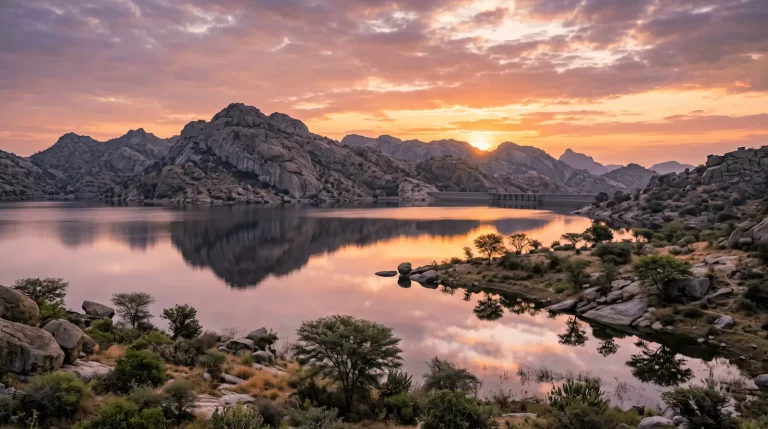
A more useful way to think about Jawai’s leopard population than a raw total is density — how many leopards occupy a given stretch of hill country relative to the prey base and water available to support them. Jawai’s granite hills, despite looking sparse and dry to a first-time visitor, support what wildlife biologists would consider a genuinely high density of leopards for an unprotected, non-forested landscape. The reason comes back to the dam. Jawai Bandh concentrates prey species — nilgai, chinkara, and free-ranging livestock — within a relatively compact radius of reliable water, and that concentration of prey supports a correspondingly concentrated leopard population in the hills immediately surrounding it. Move further from the dam’s zone of influence and leopard density drops noticeably, because the prey base thins out with it.
This is also why the three commonly discussed safari zones are not interchangeable in character. Bera, generally considered the zone with the longest safari history and the most consistently documented resident territories, tends to have well-established leopard families whose ranges are relatively well known to experienced trackers. Sena and Devgiri carry their own resident leopards and their own particular rock formations and vegetation patterns, and activity in any given zone on any given week depends on which territories are currently active, where a female may be denning, and where recent kills have drawn attention. No zone is reliably “better” in an absolute sense; each has periods of higher and lower activity that shift through the season.
Why Visibility Is a Separate Question From Population
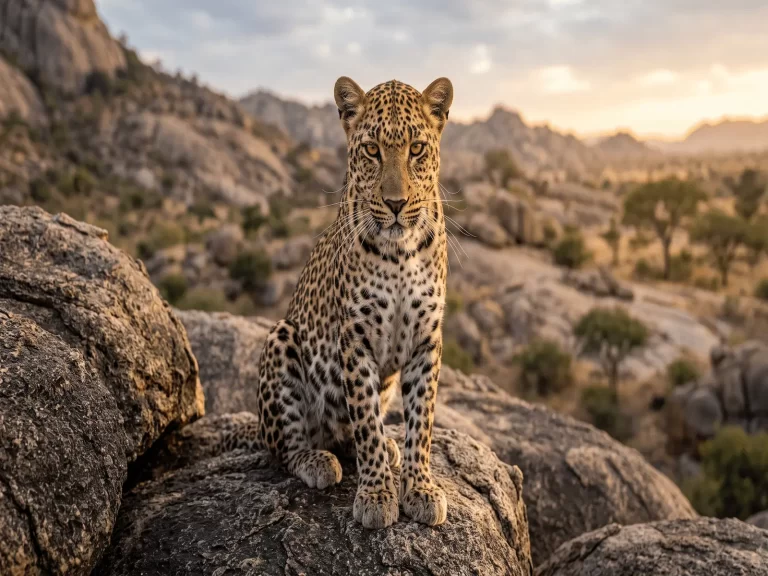
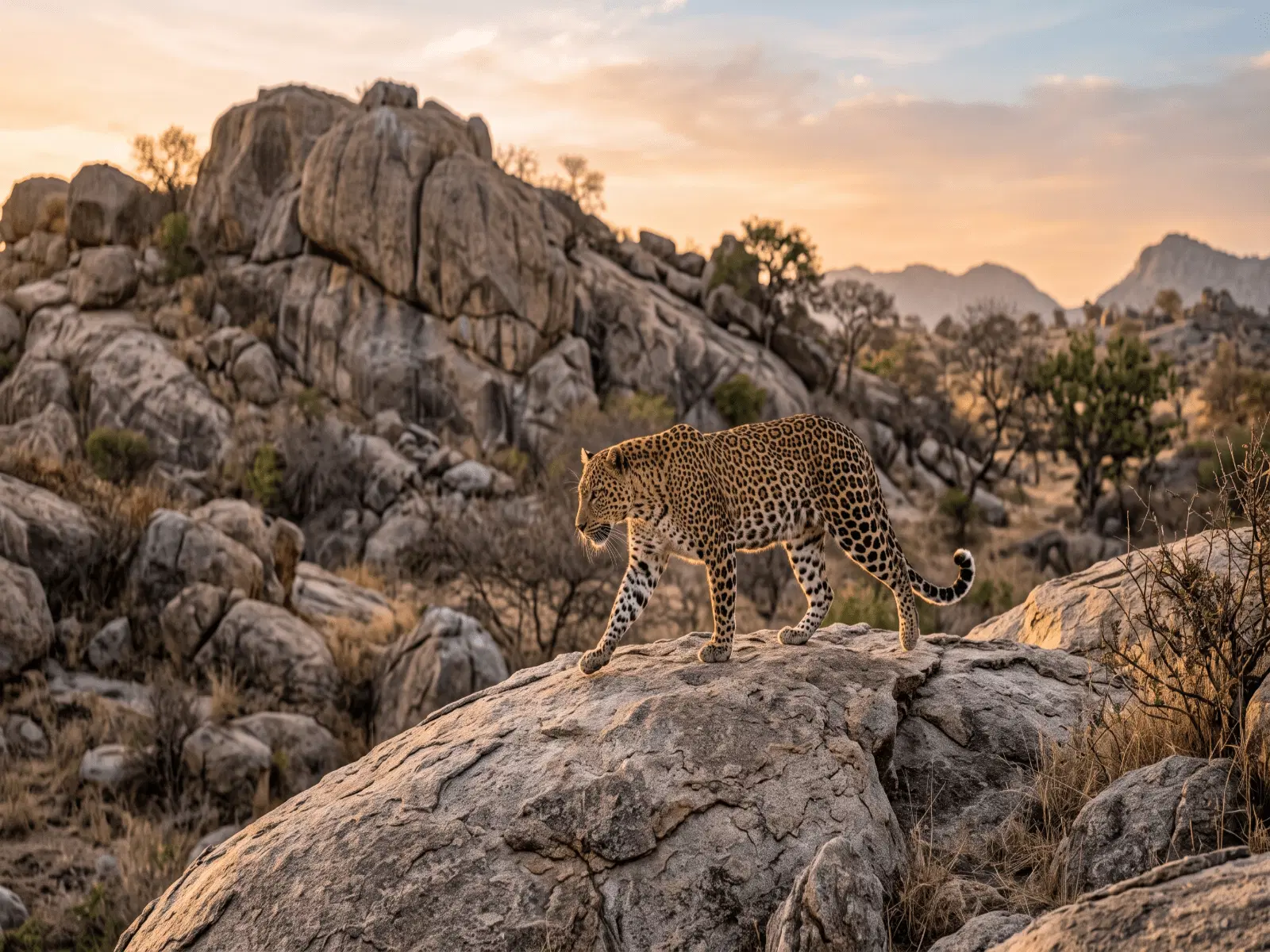
Here is the point most first-time visitors miss: Jawai’s leopards are not remarkable because there are unusually many of them. Plenty of Indian forests hold leopard densities as high or higher. What makes Jawai’s leopards famous is not their number but their visibility — the fact that they can be watched resting and moving in daylight, on exposed granite, rather than glimpsed for three seconds through dense cover before vanishing.
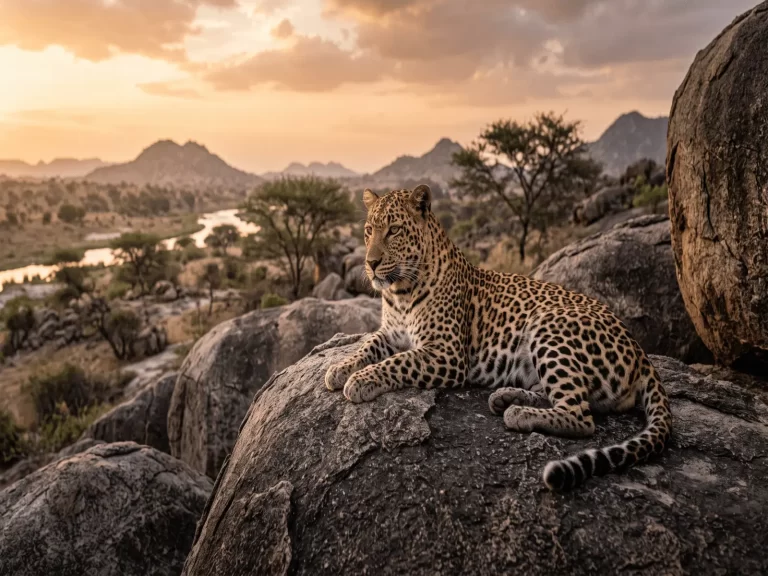
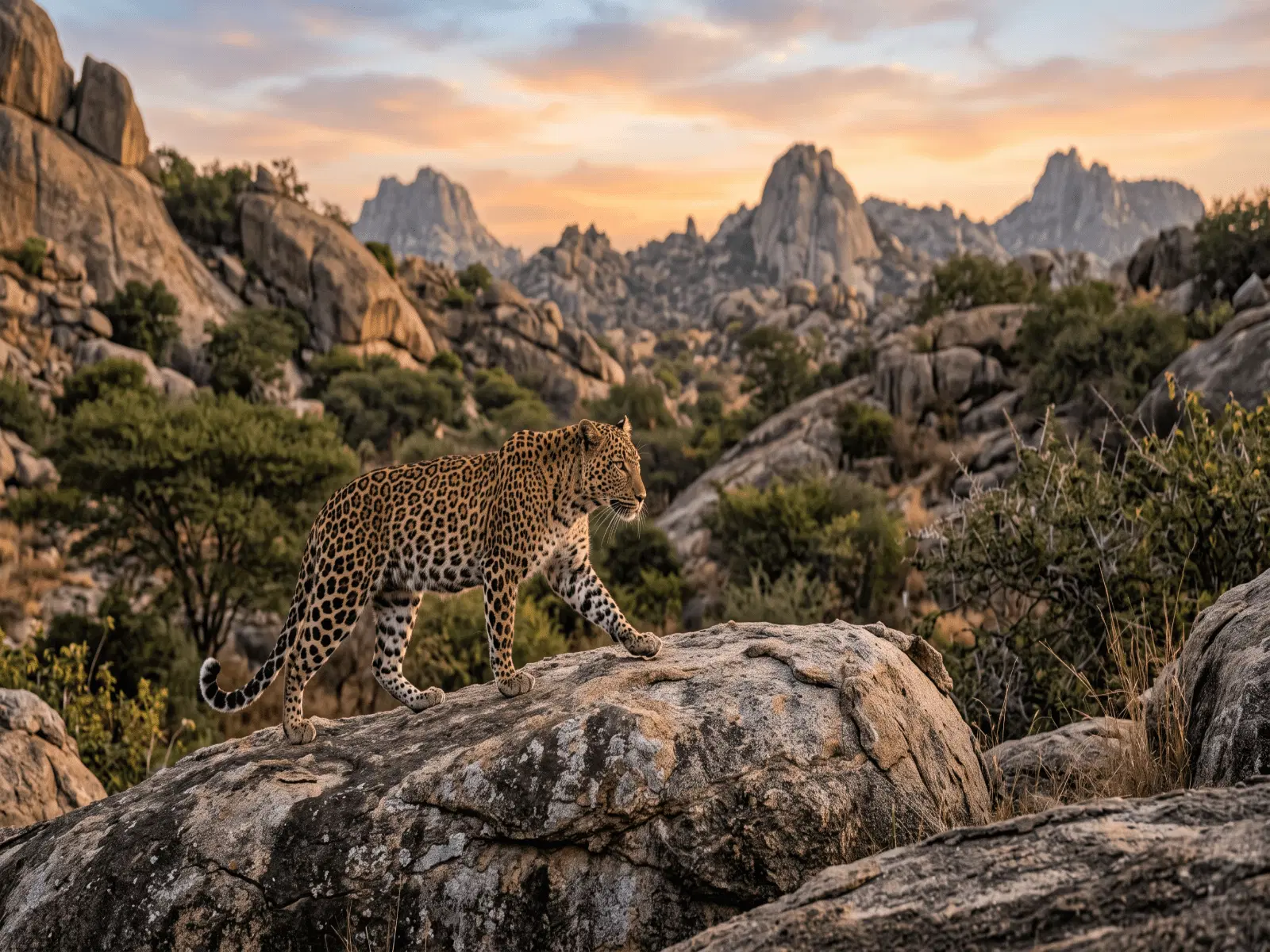
That visibility comes down almost entirely to terrain, not population size. The Aravalli hills around Jawai are ancient, heavily weathered granite formations — rounded domes, boulder piles, and shallow caves known as kopjes, the same term used for similar rock outcrops in East Africa. Millions of years of erosion have stripped away the kind of dense vegetation that gives leopards elsewhere in India somewhere to hide during daylight hours. In a forest reserve, a leopard’s survival strategy depends on concealment: lying up in thick cover through the heat of the day and moving only at the fringes of dawn and dusk when visibility is low and human activity is minimal. In Jawai, that strategy is largely unavailable, because there is comparatively little dense cover to retreat into.
Instead, the granite itself provides the leopards’ security. A rock crevice fifteen or twenty feet up a smooth granite face is not hidden from a jeep track below — it is often in plain sight — but it is functionally unreachable to anything that cannot climb, which removes most of the pressure that would otherwise push a leopard into nocturnal habits. Elevation substitutes for concealment. The result is a population that behaves less like the skittish, purely nocturnal leopards of central India and more like a population comfortable resting and moving in daylight, because the terrain itself does most of the protective work that dense cover does elsewhere.
The Coexistence Factor Behind the Visibility
Terrain alone does not fully explain why Jawai’s leopards tolerate daylight visibility so readily. An animal under constant threat of persecution, however good its rock cover, tends to become warier and more nocturnal over time regardless of habitat, simply because the individuals bold enough to remain visible in daylight are the ones most likely to be killed. Jawai’s leopards have not undergone that selection pressure, because the Rabari pastoralist community that shares this landscape with them has, within living memory, not responded to livestock predation with retaliatory killing.
This is not a minor footnote. It is arguably as important to the visibility story as the granite itself. Leopards that have never learned to associate human presence with lethal danger behave with a relative ease around jeep tracks, villages, and grazing herds that would be unthinkable in most other parts of rural India where leopard-human conflict routinely ends in poisoning, trapping, or organized hunts. The granite hills gave the leopards physical security; generations of Rabari tolerance gave them behavioral security. Both had to be present for the daylight visibility Jawai is known for to develop and persist.
What This Means for a Safari
Understanding the population honestly changes how a sensible traveler should approach expectations. A several-dozen population spread across a large, unfenced landscape does not translate into a leopard on every drive, and any operator who implies otherwise is setting up a disappointment rather than managing an expectation. What it does mean is that, on any given morning or evening drive, an experienced guide working current information about which territories have been active recently has a genuinely reasonable chance of finding fresh sign — pug marks, scent markings, alarm calls from langurs or peacocks — and, with some patience, an actual sighting.
The daylight-only safari rules introduced in 2026 following the Rajasthan High Court order have not changed the leopard population or its distribution, but they have changed the hours during which sightings are possible, cutting out the very early pre-dawn and full night windows that some operators previously used more loosely. In practice this pushes sightings toward the mid-morning and late-afternoon windows, which — given how comfortably Jawai’s leopards already move in daylight compared to leopards elsewhere — has not meaningfully reduced sighting quality, even if it has changed the shape of the safari day.
Reading a Sighting Report Honestly
Because population figures cannot be verified precinct by precinct, the more useful thing a traveler can ask a prospective operator is not “how many leopards do you have” but “what has this specific zone shown in the past week.” Recent activity is a far better predictor of a good drive than population totals, and any guide who has actually been out on the ground recently should be able to answer that question specifically rather than in generalities. That is also a reasonable way to distinguish an operator with genuine, current field knowledge from one recycling old marketing copy.
None of this adds up to a guarantee, and it should not be read as one. Jawai’s leopards are wild animals moving through an unfenced, working landscape, not a managed population performing on a schedule. What can be said honestly is that the combination of a genuinely healthy, stable population, a landscape that removes the leopards’ usual reason to hide, and a community that has never given them cause to fear people, adds up to some of the best realistic daylight leopard-viewing odds anywhere in India — expressed as odds, not promises.
Message us on WhatsApp for current pricing and a quote tailored to your dates and group size.