Jawai Leopard Safari: What We Tell Every Guest Before Their First Drive
For most of Jawai’s history as a safari destination, “etiquette” meant common sense and community goodwill. Keep your voice down near a sighting. Don’t ask the driver to get closer than felt right. Be polite to the Rabari families whose land you were driving through. None of that has gone away, but since the 2026 Rajasthan High Court order and the Forest Department’s new Standard Operating Procedure, a meaningful part of what used to be etiquette is now enforceable rule, backed by a registration system that can suspend or permanently blacklist a vehicle for breaking it. This piece is a practical rundown of what those rules actually are, why each one exists, and what happens when they’re broken, so you know both how to behave on safari and what a responsible operator is protecting you from being part of.
The Shift From Convention to Consequence
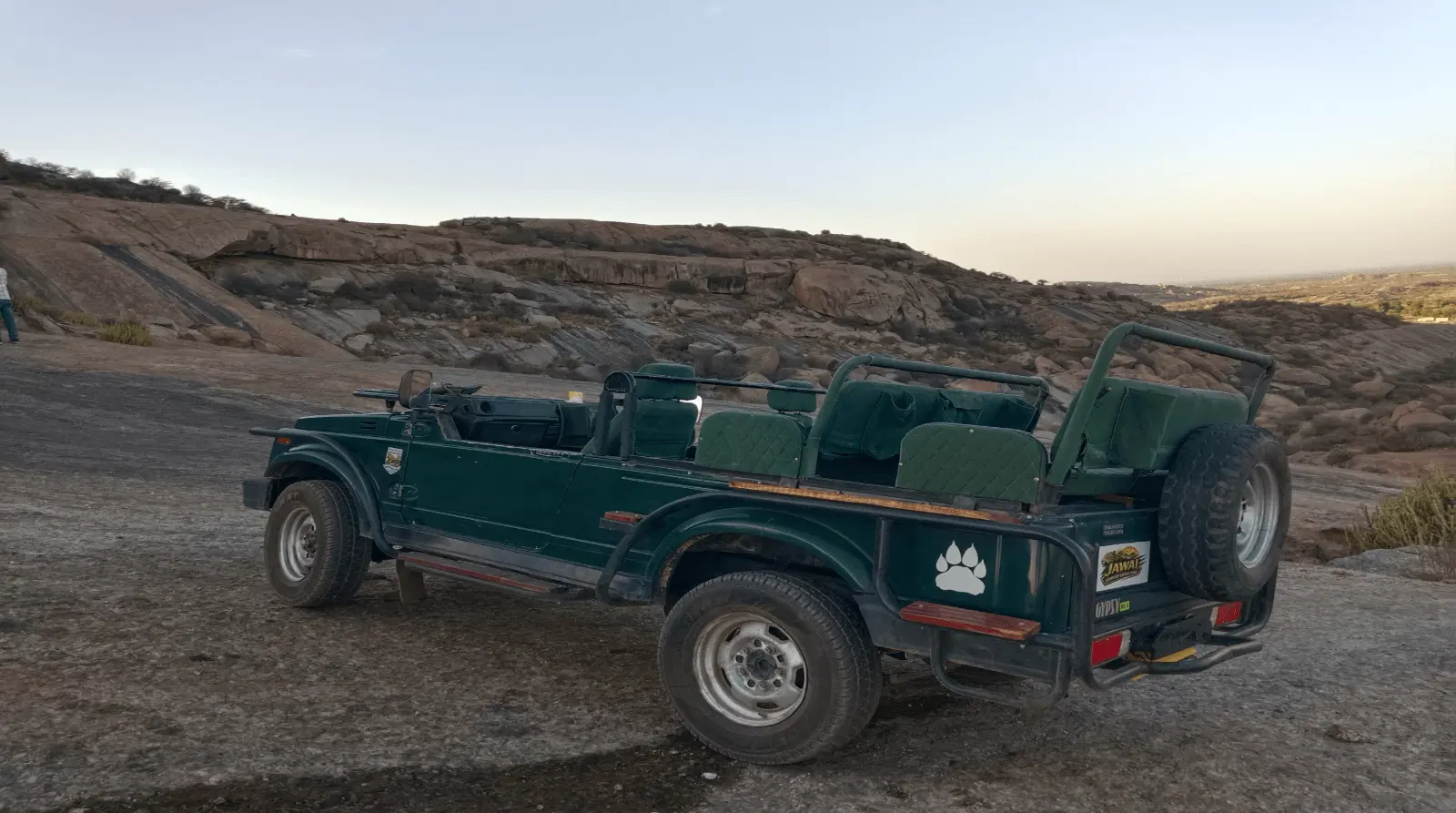
Before 2026, if a driver decided to push a jeep off-track to get closer to a resting leopard, the worst outcome was usually reputational, a bad review, word getting around among other operators, maybe a quiet word from the Rabari family whose field got driven across. There was no formal body tracking vehicle behaviour, no registry to be removed from, no external enforcement mechanism beyond community pressure. That changed when the Jawai Safari & Eco Tourism Coordination Committee was established as part of the court order. Every commercial vehicle now has to be registered with the committee to operate legally, every registered vehicle carries a mandatory GPS tracker, and the committee has the power to suspend or blacklist a vehicle’s registration for documented violations. That single structural change is what turns etiquette into enforceable rule, because now there is a body that can actually see where a vehicle went, cross-reference it against permitted routes and hours, and act on it.
The Rules With Real Penalties
A handful of specific behaviours are now explicitly banned for any committee-registered vehicle, and violating them risks the operator’s ability to run safaris at all.
Operating Outside Daylight Hours
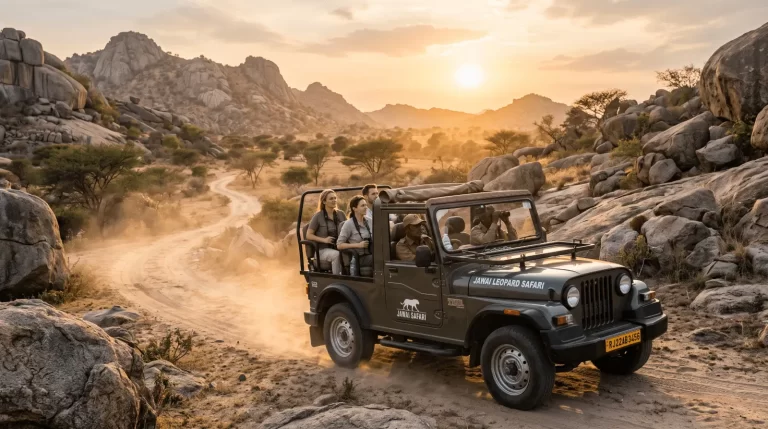
Safaris are restricted to a daylight window, roughly 6am to 7pm. Night safaris are banned outright. This means no drive can legally start before roughly 6am or continue past roughly 7pm, regardless of how good the light is getting or how close a sighting feels. A guide who suggests extending your drive into darkness because “the leopard is right there” is asking you to be complicit in a violation that could cost them their registration. The honest answer, every time, is to turn back.
Spotlighting
Using artificial light, handheld torches, vehicle-mounted spotlights, phone flashlights, to illuminate an animal after dusk or before dawn is banned. This rule exists because sudden bright light disorients nocturnal and crepuscular animals, disrupts natural hunting and denning behaviour, and was one of the more common ways operators used to manufacture a “guaranteed” sighting for paying guests before the rules tightened. If you see a torch come out on a legitimate morning or evening drive within legal hours for anything other than checking a map or reading a radio, that is itself worth noting and questioning.
Drone Use
Flying a drone over the safari area, whether to capture aerial footage or to help spot wildlife from above, is prohibited. Drones are disruptive to wildlife in ways that are easy to underestimate from the ground, the sound and shadow of a low-flying drone can startle animals that would otherwise ignore a slow-moving jeep entirely, and repeated overflight pressure in denning areas is a genuine welfare concern. If you’re a photographer hoping to bring a drone for landscape shots, leave it at your accommodation for the safari itself.
Baiting
Placing food to lure a leopard or any other animal into view for tourists is banned. This one might seem obviously wrong, but it was a real practice in parts of the informal safari market before 2026, because it reliably produced a sighting on demand. Baiting alters natural behaviour, creates dangerous associations between vehicles and food for wild predators, and undermines the entire premise of an honest wildlife encounter. A guide who can produce a sighting at will, every single time, on a wild and unfenced leopard population, should raise your suspicion rather than your confidence.
Call Playback
Broadcasting recorded animal calls, distress calls, mating calls, territorial calls, to provoke a response from wildlife is banned. This is a well-known and long-criticised practice in wildlife tourism generally, and Jawai’s SOP explicitly closes it off. It stresses the animal, can interfere with genuine communication between individuals in the area, and again exists purely to manufacture certainty in a situation that is supposed to be genuinely uncertain.
What Happens When These Rules Are Broken
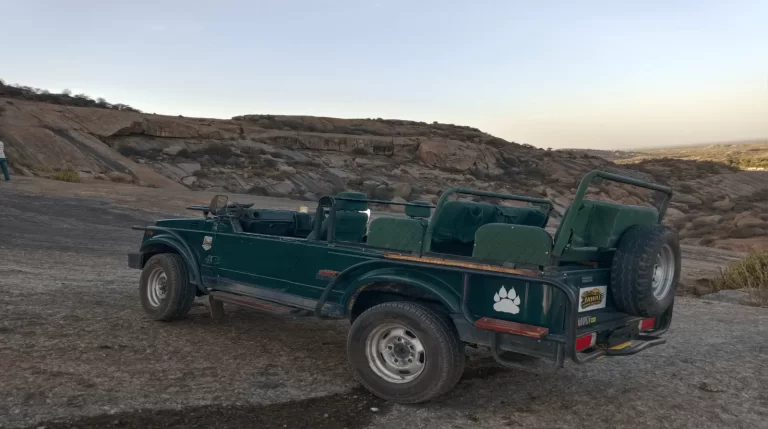
The committee’s enforcement structure has two main levers: suspension and blacklisting. A suspension is typically the response to a first or less severe violation, temporarily removing a vehicle’s ability to operate commercially while the case is reviewed. Blacklisting is permanent removal from the registry, reserved for serious or repeated violations, and it means that vehicle cannot legally run a commercial safari in Jawai again under that registration. Because every registered vehicle carries a GPS tracker, verifying whether a vehicle left the permitted hours, deviated from an approved route, or entered a restricted area is no longer a matter of guesswork or hearsay, it’s a matter of pulling the tracking data.
This matters to you directly as a visitor for a very practical reason: if the operator you’ve booked gets suspended or blacklisted mid-season, your safari can be cancelled or disrupted with little warning. This is one of the strongest arguments for booking only through channels that actively vet registration status, rather than booking whichever vehicle happens to be available at a roadside stand near the dam.
Etiquette That Isn’t Written Into Law, But Should Still Guide You
Alongside the legally enforceable rules, there’s a layer of etiquette that remains a matter of courtesy and common sense rather than committee policy, but that matters just as much to the experience, both yours and the community’s.
- Keep your voice low once a sighting begins. Leopards are not disturbed by a stationary, quiet vehicle in the way they are by noise and sudden movement.
- Never ask your driver to leave the track to get closer. A good guide will decline anyway, but the ask itself puts pressure on someone whose livelihood depends on staying compliant.
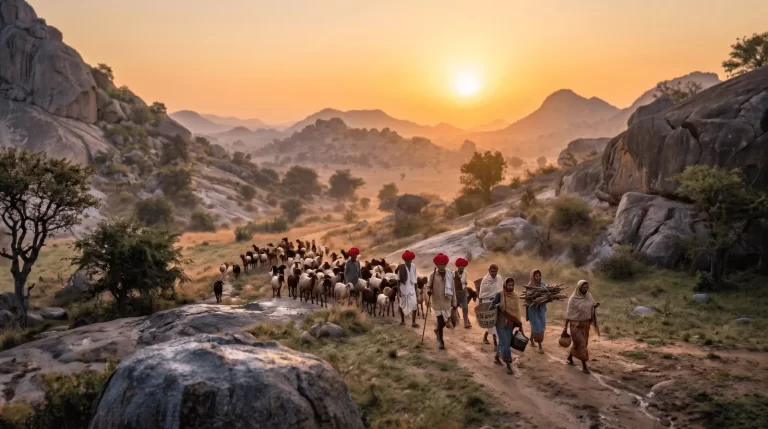
- Photograph Rabari families and their settlements only with visible willingness, not because a shepherd walking his herd makes a good background. A quick, genuine greeting goes further than a long lens pointed without acknowledgment.
- Don’t feed or attempt to touch any wildlife, including the langurs and peacocks that are common and often approachable near villages and dam edges.
- Carry out anything you carry in. There is no ranger station picking up litter behind you here.
- Resist the urge to pressure your guide for “just five more minutes” past the return time. The hours exist for reasons beyond your own morning’s satisfaction.
Why This Actually Protects the Thing You Came For
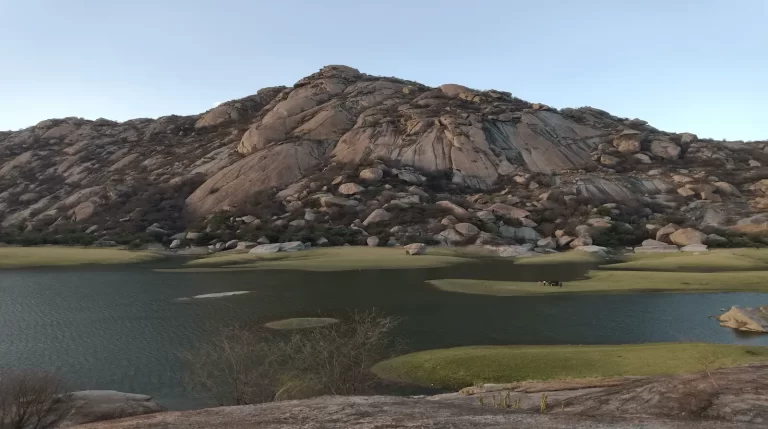
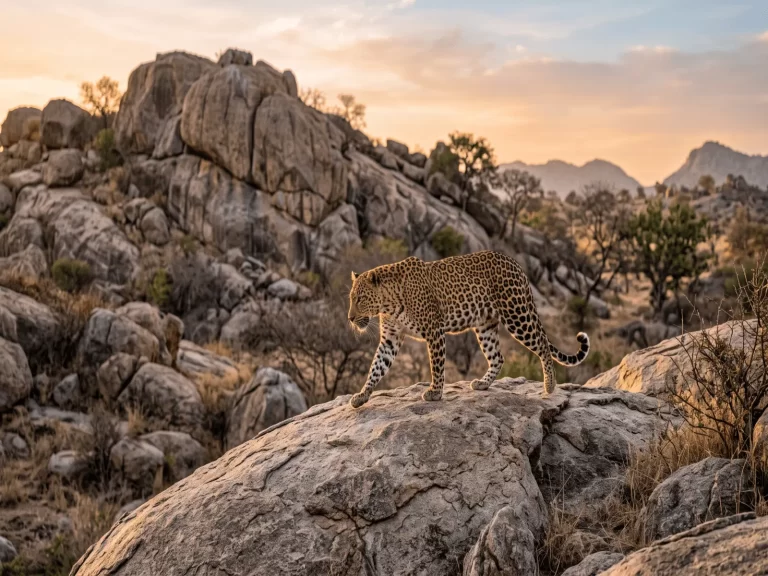
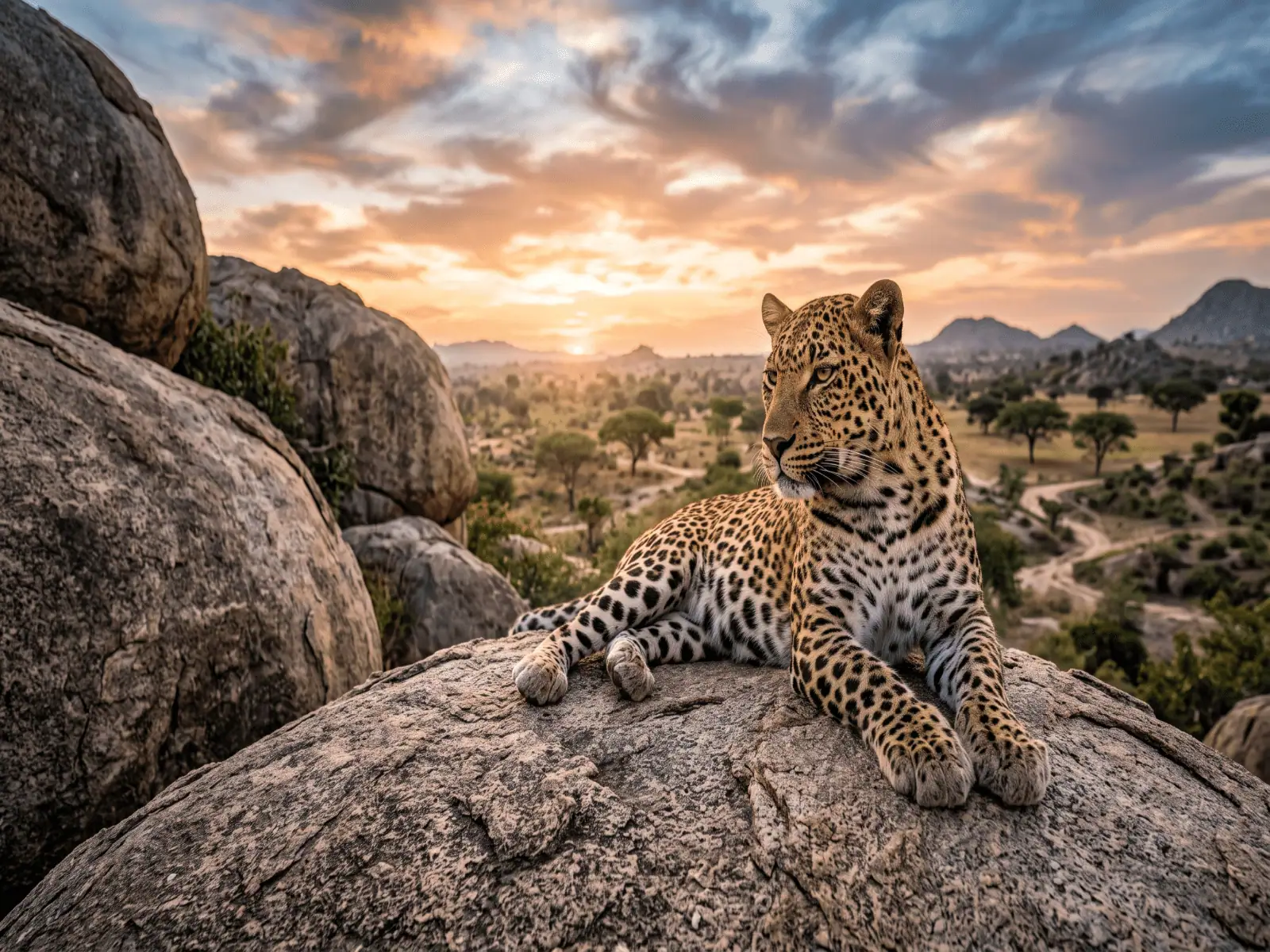
It’s worth connecting these rules back to the reason Jawai is worth visiting at all: a wild leopard population living openly, in daylight, alongside a pastoralist community that has coexisted with them without conflict for generations. That coexistence is fragile in ways that aren’t always obvious to a first-time visitor. Every vehicle that spotlights, baits, or drives off-track for a better shot chips away at the conditions that keep leopards relaxed enough to be visible in the first place. The rules that now carry penalties aren’t bureaucratic overreach imposed on a previously perfect system, they’re a direct response to specific practices that were putting real pressure on the leopards, the habitat, and the relationship between tourism and the Rabari community that tourism ultimately depends on.
When you book through an operator who takes these rules seriously without needing a GPS tracker looking over their shoulder to do so, you’re not just staying on the right side of the law. You’re supporting the version of Jawai tourism that has a future, rather than the version that trades a short-term guaranteed photo for a long-term decline in what makes this place worth photographing at all.
What This Means for How You Book
We work only with committee-registered, GPS-tracked operators, and we treat compliance with these specific rules as non-negotiable when we vet who we work with. If an operator’s pitch to you includes anything that sounds like a guaranteed sighting, a willingness to bend the hours “just this once,” or a suggestion that a little off-track driving won’t hurt, that’s a signal worth taking seriously before you commit. Message us on WhatsApp for current pricing and a quote tailored to your dates and group size, and we’ll walk you through exactly what a compliant safari with us looks like before you book anything.
A Few Questions Worth Asking Before You Book
If you want a quick way to gauge whether an operator takes these rules seriously before you commit to a booking, a few direct questions tend to surface the answer fast. Ask what time the drive starts and ends, and see whether the answer falls cleanly within the legal daylight window without hedging. Ask what happens if no sighting occurs during the drive, an operator who talks in terms of realistic odds and honest possibility is a better sign than one who promises a result. Ask whether the vehicle is registered with the coordination committee and whether it carries a GPS tracker, and see how quickly and specifically the answer comes back. A legitimate, compliant operator will not hesitate on any of these, because the answers are simply true and easy to state. An operator who gets vague, defensive, or starts talking about “special arrangements” is telling you something important before you’ve even stepped into the jeep.