Jawai Safari Cost in 2026: Real Prices, What’s Included and What’s Not
Most first-time visitors to Jawai arrive with an idea of a safari borrowed from somewhere else, a national park gate, a numbered permit, a fixed three-hour loop through a fenced reserve. Jawai’s safaris share some of that shape but feel meaningfully different in practice, because the landscape is open granite hill country rather than dense forest, the drives move through a mix of community land, dry riverbed, and rocky outcrop rather than a demarcated park boundary, and the entire experience is now shaped by the 2026 rules that fix the legal hours and the conduct allowed inside them. This is a real, honest walkthrough of what actually happens between the moment your alarm goes off and the moment the jeep drops you back, based on how a compliant, well-run drive unfolds.
Before Dawn: The Pickup
Morning safaris in Jawai start early, well before sunrise, because the earliest hour of daylight is when leopards are most likely to still be active from their nocturnal hunting before settling onto a sunlit rock to rest for the day. Expect a pickup somewhere in the range of 5:30 to 6am depending on the season, since sunrise itself shifts by close to an hour and a half between the depths of winter and the peak of summer. Your driver or naturalist will usually already know, from radio contact with other registered vehicles overnight or that morning, roughly where recent activity has been reported, though this is a starting point for the drive rather than a promise of where it will end.
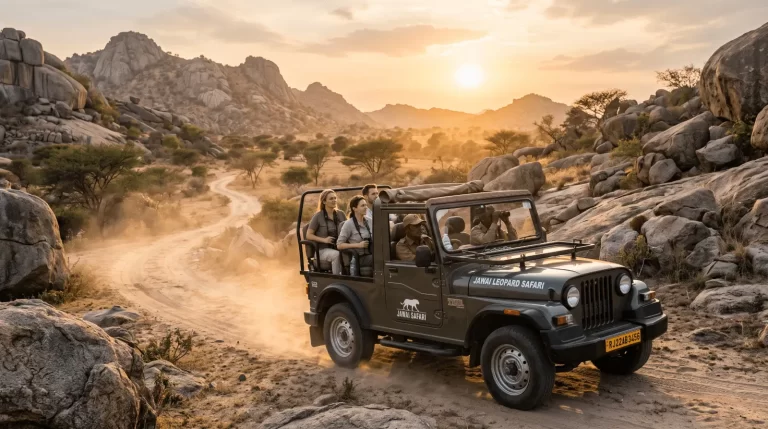
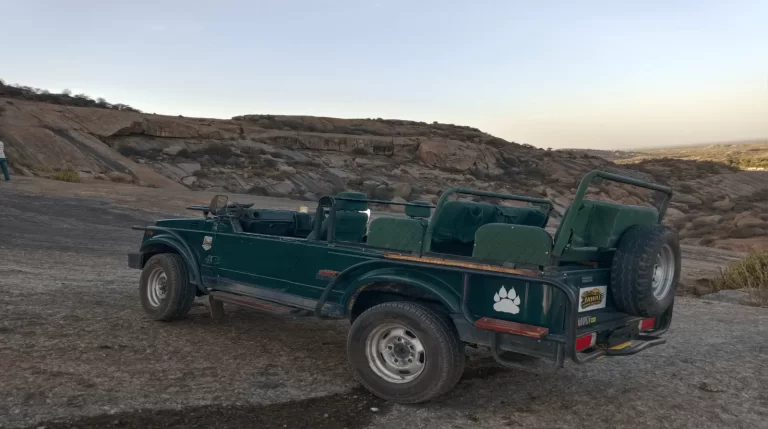
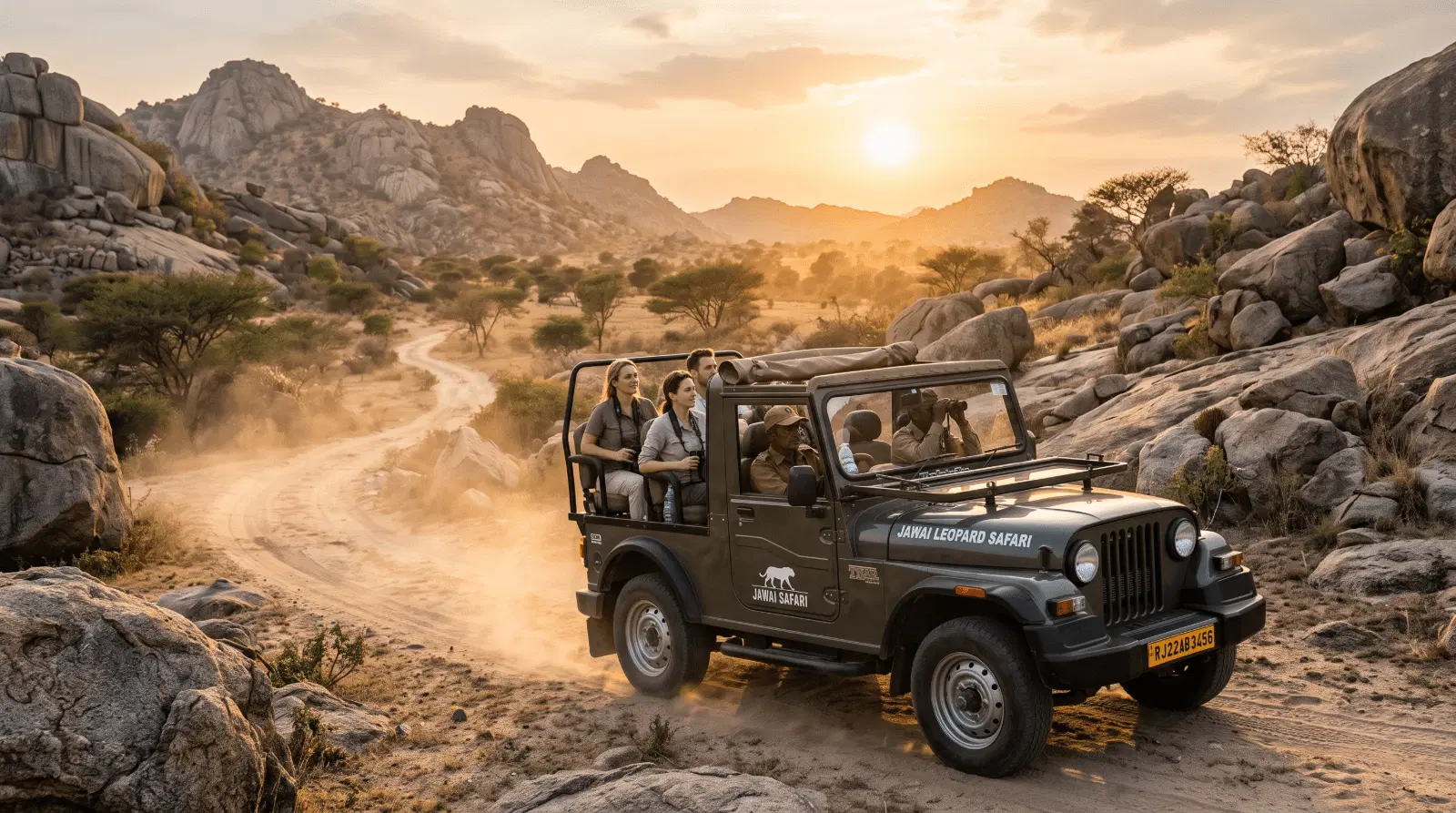
You’ll be handed into a jeep that, if everything is as it should be, carries visible registration signage tied to the Jawai Safari & Eco Tourism Coordination Committee and a GPS tracker mounted somewhere on the dashboard or under it. This is worth glancing at, not out of suspicion, but because it’s a small, concrete sign that you’re inside the legitimate, regulated version of this experience rather than an informal arrangement operating outside the new rules.
The First Half Hour: Reading the Light and the Land
The drive out of your pickup point typically moves through a mix of village road, dry riverbed track, and the base of the granite hills before the terrain opens into the kind of rocky, scrub-covered landscape Jawai is known for. This early stretch is where an experienced naturalist starts reading the morning, not for the leopard itself yet, but for the signs that precede a sighting: alarm calls from langurs or peacocks, the direction grazing goats are moving or avoiding, fresh pugmarks in soft ground near a track, the position of the sun relative to the rock faces that leopards favour for morning basking.
This is also when radio contact with other vehicles in the zone becomes active. Registered operators use a shared communication system, radios or a dedicated phone network, to relay sighting information across the zone without every vehicle piling onto the same spot. If another vehicle reports activity nearby, your driver may adjust the route; if nothing has come in yet, the drive continues along the naturalist’s own read of the terrain.
Mid-Morning: The Hills Themselves
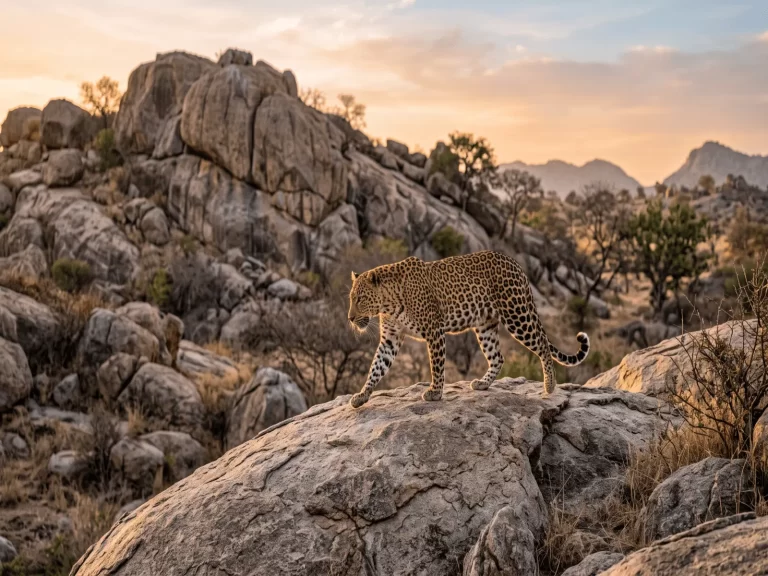
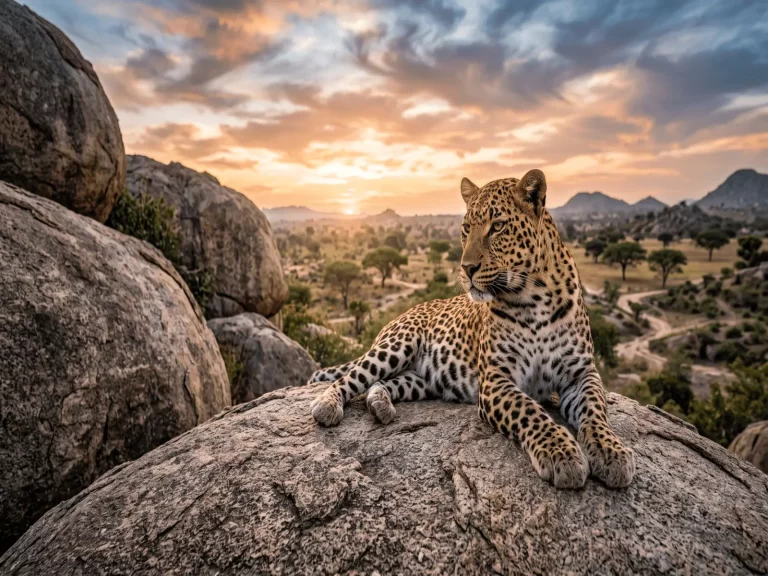
By the time the sun is fully up, the jeep is usually moving through the heart of one of the safari zones, Bera, Sena, or Devgiri, weaving along tracks that skirt the base of the granite outcrops. This is the part of the drive that rewards patience over speed. A good guide will slow deliberately near known den areas and likely resting spots, scanning rock ledges and cave mouths rather than simply driving a fixed loop at a fixed pace. Sightings, when they happen, are often not dramatic movement but stillness, a leopard already settled on a sunlit rock, visible from a genuine distance because the open terrain offers no cover to disappear into the way dense forest would.
If a sighting occurs, the etiquette that governs it matters as much as the sighting itself. The vehicle stays on track, keeps a respectful distance, and the group stays quiet. A responsible guide will not push closer even if a better photograph feels within reach, both because of the legally binding rules against disturbing wildlife and because a habituated but genuinely wild leopard that is pressed too closely will simply move off, ending the sighting for everyone.
What a Non-Sighting Morning Actually Looks Like
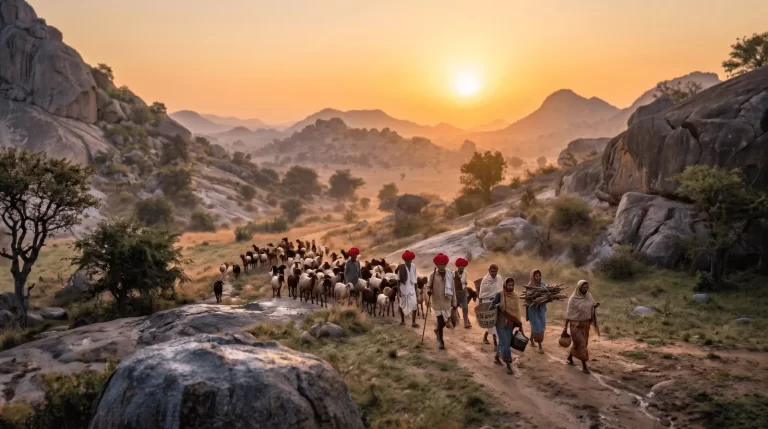
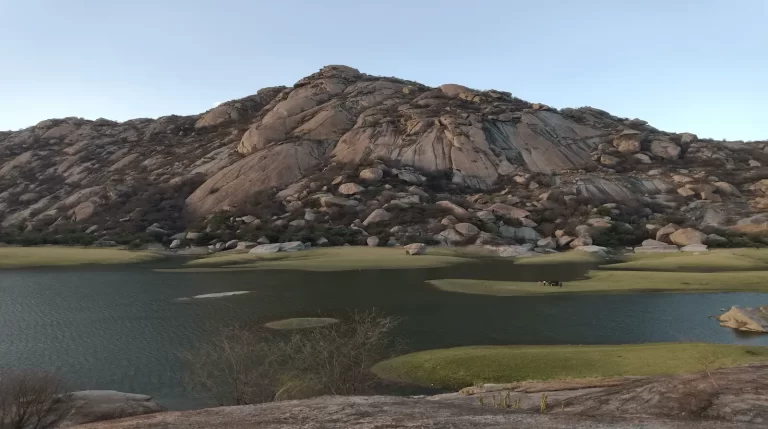
It’s worth being honest about this, because overpromising is exactly what responsible Jawai operators try to avoid: a meaningful number of drives end without a leopard sighting, and a good morning safari is still worthwhile on those terms. You’ll likely see langurs moving through the rocks, peacocks displaying or calling from ridge lines, possibly a striped hyena or jackal if you’re fortunate and the season is right, and almost certainly Rabari shepherds already out with their herds, moving camels and goats along the same tracks your jeep uses. The landscape itself, dawn light on granite, the dam shimmering in the distance if your route passes near it, is a substantial part of what the morning offers even on days when the leopard doesn’t show.
Late Morning: The Return
Morning drives typically wind down as the light hardens and temperatures rise, since leopards that were active at dawn have usually settled into shaded rest by mid-morning, reducing the odds of further movement. Your guide will begin working back toward the pickup point with enough margin to return comfortably within the legal window. This isn’t a rushed retreat, the return leg often passes through different terrain than the outbound drive, giving you a second look at the landscape and sometimes a second, quieter chance at wildlife along the way.
The Evening Shift: A Different Rhythm
Evening safaris follow a mirrored but distinct rhythm. Pickup is typically mid-to-late afternoon, timed so the drive is active through the golden hour before sunset, when temperatures cool and leopards that have rested through the heat of the day begin to stir again. The light itself is different, warmer, lower, casting long shadows across the granite that can make a resting or moving leopard easier to spot against the rock. Evening drives must still end within the legal window, roughly 7pm, which means the return leg is timed carefully against the sunset rather than allowed to drift into the after-dark hours the rules explicitly prohibit.
Back at the Pickup Point
A compliant drive always returns on time, regardless of what happened, or didn’t happen, in the hours before. This is one of the clearest tells of a properly run, committee-registered operation: no lingering past the legal hours in hopes of one more sighting, no argument from the driver about pushing the return back. If your guide treats the end time as a firm boundary rather than a suggestion, that’s a strong, practical sign you were in a legitimately operated vehicle for the whole drive.
What Determines Whether Your Morning Goes Well
Beyond the basic shape of the drive, three variables do most of the work in determining how good a particular safari turns out to be: the season, since leopard activity and visibility shift meaningfully across the year; the skill and experience of your specific naturalist, since reading terrain and recent activity is a genuine, compounding skill rather than a generic job description; and simple chance, since this is a wild, unfenced population behaving exactly as wild animals do. A well-run operator can maximise your odds through zone selection, timing, and genuine expertise, but cannot and should never claim to guarantee the outcome.
Booking a Drive Shaped Like This One
We curate safaris exclusively through committee-registered, GPS-tracked operators who run drives in the pattern described here, honest pacing, real terrain-reading, respectful conduct around any sighting, and a firm return within legal hours. Message us on WhatsApp for current pricing and a quote tailored to your dates and group size, and we’ll help you plan a morning or evening drive that fits how you actually want to experience Jawai.
What to Have Ready Before Pickup
Because mornings start early and the cold can be genuinely sharp before sunrise even in a desert state, layering matters more than most visitors expect. A fleece or warm jacket over a t-shirt works better than a single heavy layer, since temperatures climb quickly once the sun clears the hills and you’ll want to shed layers through the drive rather than swelter in one. Binoculars, if you have a pair, are worth bringing even if your naturalist carries their own, since a personal set lets you follow a distant sighting at your own pace rather than passing a shared pair around the vehicle. A camera with a longer lens helps enormously given the distances involved in genuine wildlife photography here, though a phone camera will still capture the landscape and closer sightings perfectly well. Water, a hat for the return leg once the sun is high, and sunscreen round out what you actually need, since there are no shops or stalls along the safari routes themselves.
Shared Jeeps and Group Dynamics
If you’re in a shared jeep rather than a private one, the rhythm of the morning shifts slightly to accommodate the group. Sightings are shared moments, quiet, collective attention rather than individual direction of the vehicle, and a good naturalist manages this well, positioning the jeep so everyone gets a reasonable view rather than favouring whoever asks loudest. Conversation naturally quiets once the terrain starts producing signs of activity, and most groups fall into an easy, attentive silence without needing to be told, simply because the landscape itself tends to encourage it. Whether you’re travelling with strangers assigned to the same vehicle or a group you arrived with, the shared experience of watching the same stretch of granite for a shape that may or may not appear tends to build a specific, unhurried camaraderie that’s part of what people who return to Jawai say they remember.