Private vs Shared Jeep in Jawai: What You Give Up to Save Money
One of the first practical decisions anyone booking a Jawai safari has to make is whether to take a private jeep or join a shared one. It sounds like a simple budget-versus-comfort trade-off, and on the surface it is, but the actual differences run deeper than most quick comparisons let on, touching pacing, route flexibility, how sightings get handled, and even how the etiquette of the drive plays out. This is an honest look at what you get and what you give up either way, without pretending one option is simply the upgraded version of the other.
What “Private” Actually Means in Jawai
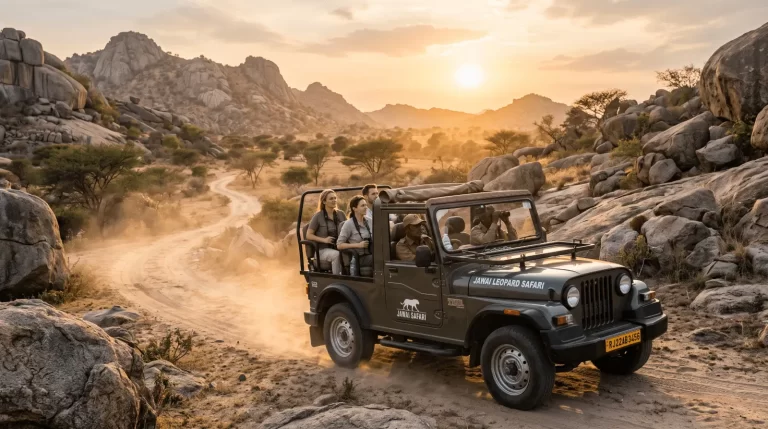
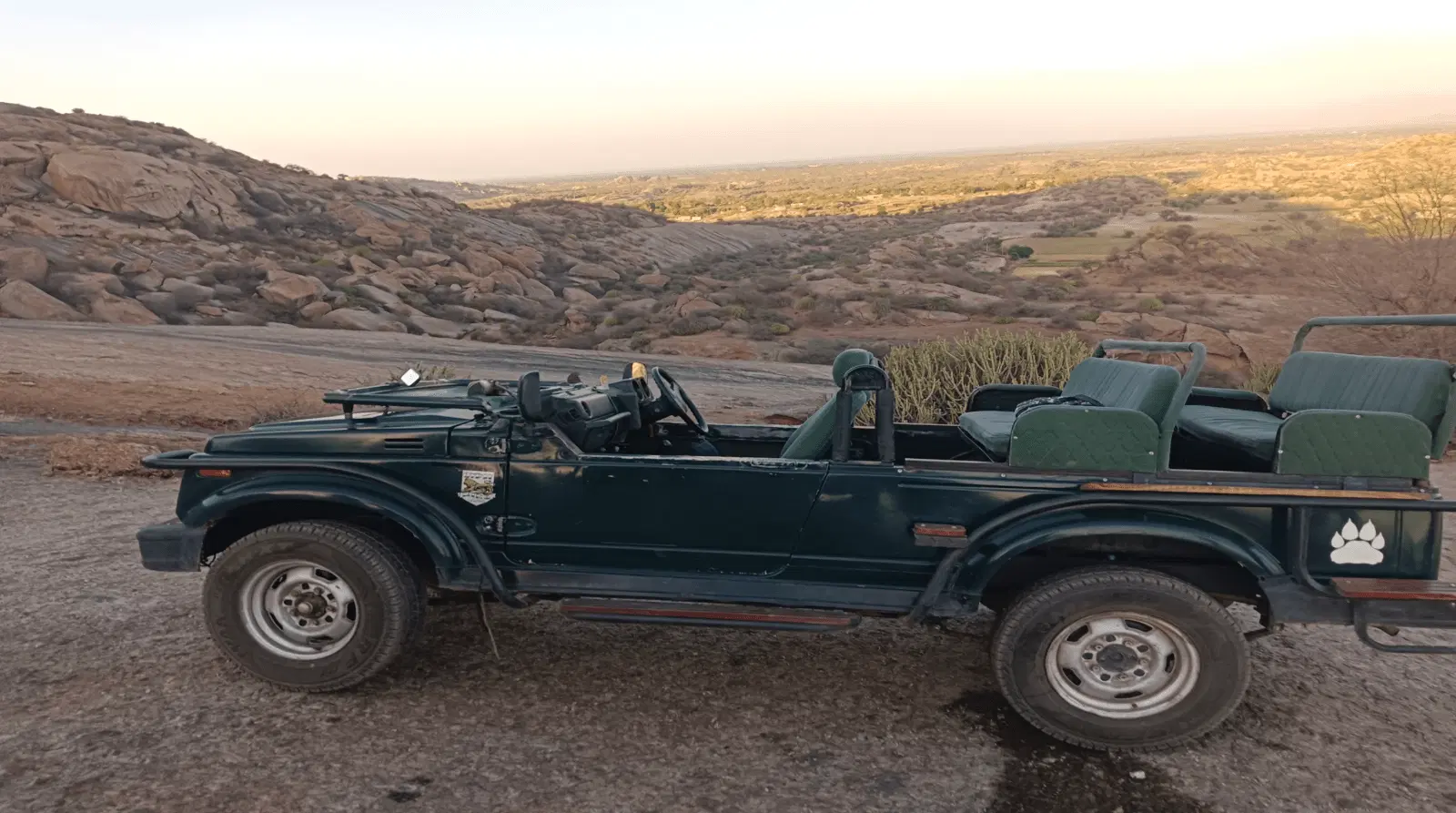
A private jeep means the vehicle, driver, and typically a dedicated naturalist are booked exclusively for your group, whether that’s two people or six, which tends to be the practical capacity ceiling for a single vehicle. Nobody outside your party is in the jeep, and the route, pace, and duration of the drive are shaped entirely around your preferences within the bounds of what’s legally and practically possible. If you want to linger fifteen extra minutes at a quiet spot with good birdlife, a private jeep can do that. If you want to prioritise photography over covering more ground, the naturalist can adjust the pace and positioning specifically for camera angles and light.
What “Shared” Actually Means in Jawai
A shared jeep pools you with other travellers, sometimes a family, sometimes solo travellers or couples booked separately, up to the vehicle’s capacity, and the route and pacing are set by the operator to reasonably serve the whole group rather than any one party’s specific preferences. This is typically the lower-cost option, since the vehicle and driver costs are split across more people, and it’s a perfectly reasonable way to experience Jawai if your priorities are the general experience and the cost efficiency rather than fine control over the morning’s specifics.
What You Give Up With Shared
The most obvious trade-off is control over pacing. If another member of the shared group wants to move on from a sighting sooner than you would, or wants to spend longer at a stop that doesn’t interest you, the vehicle generally serves the group’s general interest rather than any one traveller’s. Photography is the area where this matters most in practice: serious photographers often find shared jeeps frustrating, because getting the ideal angle or waiting out better light on a specific subject isn’t compatible with a vehicle that also needs to keep other guests satisfied on a fixed schedule.
There’s also a social dimension. A shared jeep puts you with people you didn’t choose to travel with, which is either a pleasant, unplanned part of the experience or a mild friction point, depending on the group and your own preferences for a quiet, private morning versus a more communal one.
What You Give Up With Private
The obvious trade-off here is cost, a private vehicle is priced for exclusive use rather than split across a group, so per-person the private option runs higher. There’s a less obvious trade-off too: a private jeep removes the built-in social element some travellers actually enjoy, the shared excitement of a group spotting something together, conversation with strangers who become temporary safari companions, the specific texture of experiencing Jawai alongside people you didn’t already know. Solo travellers in particular sometimes find a shared jeep more enjoyable precisely because of this, rather than sitting through a quiet morning with only a driver and naturalist for company.
Where Private Clearly Wins
Certain circumstances make the case for private jeeps fairly clear-cut. Serious photographers who need control over positioning, timing, and duration at a sighting are almost always better served privately, since the naturalist can dedicate the whole drive to working the light and angle rather than balancing multiple guests’ interests. Families with young children benefit from the flexibility to adjust pacing, take breaks, or head back early if needed, without affecting other travellers. Couples looking for a quieter, more intimate morning, and travellers with mobility considerations who need a more predictable, adjustable pace, also tend to find private jeeps meaningfully better suited to what they actually want from the experience.
Where Shared Is a Perfectly Reasonable Choice
Solo travellers on a budget, groups who genuinely enjoy the social texture of a shared vehicle, and anyone whose primary goal is simply experiencing Jawai’s landscape and wildlife without needing fine control over pacing all tend to do well with shared jeeps. The core experience, the terrain, the naturalist’s expertise, the actual wildlife encountered, doesn’t fundamentally change based on whether the jeep is shared or private. What changes is the degree of control you have over how the morning unfolds around that core experience.
How Etiquette and Rules Apply the Same Way to Both
It’s worth being clear that the 2026 rules, the daylight hours, the ban on night driving, spotlighting, drone use, baiting, and call playback, apply identically to private and shared vehicles. A private booking is not a loophole around any of these restrictions, and a legitimate operator will hold the same standards regardless of which option you choose. If anything, a private jeep occasionally tempts guests into pushing harder for exceptions, “just us, just this once,” precisely because there’s no other group to object, and a responsible naturalist has to hold the line the same way either way.
How Naturalist Quality Interacts With This Choice
The quality of your naturalist matters more than whether the jeep is shared or private, and it’s worth not letting the private-versus-shared decision distract from vetting who’s actually doing the guiding. A mediocre naturalist in a private jeep will still produce a mediocre morning, just with more room to stretch it out. An excellent naturalist in a shared jeep can still deliver a genuinely rewarding drive, because the terrain-reading and wildlife knowledge that drives a good sighting don’t depend on exclusivity. If you have to choose between paying more for a private jeep with an unknown guide, or a shared jeep with a naturalist who has strong, verified experience in the zone you’re visiting, the naturalist’s expertise is usually the better thing to prioritise.
A Practical Way to Decide
If photography, flexible pacing, or a quieter, more controlled experience matter to you, lean private. If cost efficiency, a more social atmosphere, or simply wanting a straightforward, well-run safari without needing fine control over the details matter more, shared is a genuinely good option rather than a compromise. Group size also plays into this practically, a family or group of four to six often finds that a private jeep costs comparably to what several shared seats would, making the choice less about trade-offs and more straightforward.
How We Help You Choose
When you reach out to us, we ask about your priorities, photography interest, group composition, budget considerations, before recommending private or shared, rather than defaulting to whichever option carries a larger margin. Both options, when booked through committee-registered, GPS-tracked operators, deliver a legitimate, well-run Jawai safari, the difference is entirely in the shape of your morning, not the legality or safety of it. Message us on WhatsApp for current pricing and a quote tailored to your dates and group size, and tell us what you’re actually hoping to get out of the drive, we’ll steer you toward whichever option genuinely fits.
How the Two Options Actually Compare
- Pacing: Private gives you full control over how long you linger at a sighting or a scenic stop; shared moves at a pace that reasonably serves the whole group.
- Cost structure: Private is priced for exclusive use of the vehicle; shared splits the cost across the group, generally making it the lower per-person option.
- Photography: Private allows a naturalist to dedicate positioning and timing to your camera work; shared requires balancing multiple guests’ interests, which can mean less time at an ideal angle.
- Social experience: Shared puts you alongside other travellers, which some people enjoy and others prefer to avoid; private is quieter and more self-contained.
- Flexibility for families or accessibility needs: Private allows breaks, early returns, or adjusted pacing without affecting anyone else; shared is less accommodating of individual needs.
- Compliance: Identical either way. Both must run within legal hours, on a committee-registered, GPS-tracked vehicle, with the same restrictions on spotlighting, baiting, drones, and playback.
A Note on Group Bookings
Travelling groups sometimes assume shared jeeps are the only option below a certain group size, or that private jeeps are only sensible for couples, but the actual capacity of a typical Jawai safari vehicle usually accommodates a small family or friend group comfortably as an effectively private booking, without needing to share with strangers. If you’re travelling as a group of four to six, it’s worth asking specifically whether a private vehicle at that size compares reasonably to shared per-seat pricing, since the two can end up closer than expected once you’re filling most of the jeep’s capacity yourselves.
What Doesn’t Change Regardless of Which You Choose
Whichever option you pick, the fundamentals of a legitimate Jawai safari stay constant: a registered, GPS-tracked vehicle, a naturalist reading the terrain rather than relying on shortcuts, a drive confined to legal daylight hours, and an honest approach to what the morning might or might not produce in terms of sightings. Neither private nor shared bookings should ever come with a promise of a guaranteed leopard sighting, and any operator who makes that promise for either option is telling you more about their honesty than about the actual odds of the day. The choice between private and shared is genuinely about how you want to experience the morning, not about which one gets you a better guarantee of wildlife, because no legitimate operator offers that guarantee at all.