Jawai’s Safari Zones: Bera, Sena, Devgiri and How a Route Actually Gets Chosen
One of the most common questions we get from travellers researching a Jawai trip is why night safaris aren’t available, especially from those who’ve read that leopards are largely nocturnal or crepuscular hunters and assume the best viewing must happen after dark. The short answer is that night safaris are explicitly banned under the 2026 Rajasthan High Court order and the Forest Department’s Standard Operating Procedure governing Jawai. The longer, more useful answer is why that ban exists, what it was responding to, and why it doesn’t actually cost you as much in sighting quality as it might seem to on paper.
What the Ban Actually Covers
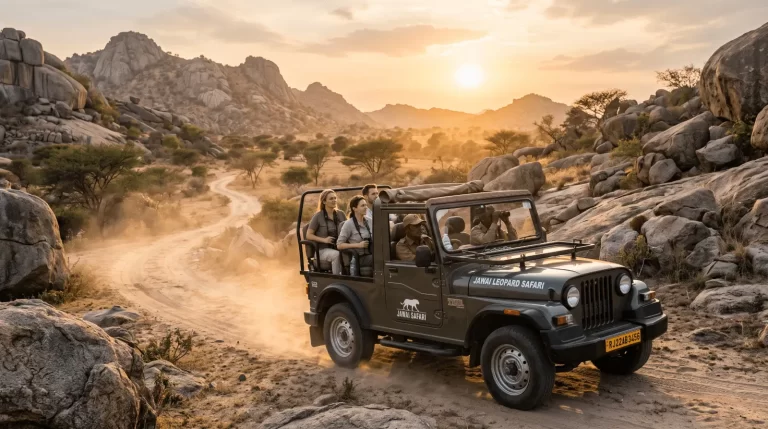
Safaris in Jawai are restricted to a daylight window, roughly 6am to 7pm, and spotlighting, using artificial light such as handheld torches or vehicle-mounted spotlights to illuminate wildlife after dark, is explicitly prohibited alongside the hours restriction itself. Together, these two provisions close off the practice of driving through the safari area after sunset using artificial light to pick out animals that would otherwise be invisible in the dark, which is what a “night safari” in the pre-2026 informal market generally meant in practice.
What Was Actually Happening Before the Ban
Before the 2026 order, some operators in Jawai’s less regulated market offered night drives specifically because they could produce a near-guaranteed sighting. A leopard picked out by a spotlight against dark rock is considerably easier to locate and hold in view than one glimpsed briefly at dusk or dawn, and this made night safaris an attractive product for operators competing on sighting odds rather than on genuine expertise or ethical practice. The problem is that this near-guarantee came at a real cost to the animals involved, and to the broader ecosystem the safari depends on.
Why Spotlighting Harms Wildlife
Sudden bright artificial light is genuinely disorienting to nocturnal and crepuscular animals, whose eyes and behaviour are adapted to low light rather than sudden illumination. Repeated exposure to spotlighting can disrupt natural hunting behaviour, since a leopard’s approach to prey depends on stealth and low visibility that a spotlight directly undermines. It can also interfere with denning behaviour, a female leopard with cubs is considerably more sensitive to disturbance than a solitary adult, and repeated vehicle presence and artificial light near a den site at night is a real welfare concern rather than a hypothetical one. Beyond leopards specifically, night driving disturbs the broader nocturnal ecosystem, smaller mammals, owls and other nocturnal birds, and the general rhythm of an area that, for most of its resident wildlife, treats human activity as something that stops at dusk.
Why the Rabari Coexistence Makes This Especially Important
Jawai’s defining feature is not just its leopard population but the specific, low-conflict coexistence between leopards and the Rabari pastoralist community who graze camels, goats, and sheep across the same hills. This coexistence has held for generations without recorded retaliatory killing, a genuinely rare outcome globally for a large predator living openly alongside livestock-keeping communities. That balance depends partly on leopards behaving in fairly predictable ways, generally resting during the day and moving more freely at dusk, dawn, and into the night without the added pressure of tourist vehicles and artificial light following them into those hours. Night safaris introduce exactly the kind of disturbance that risks destabilising this balance over time, pushing leopards toward less predictable behaviour patterns that could increase the odds of the kind of conflict that has been remarkably absent here.
The Safety Dimension
Beyond the ecological reasoning, there’s a straightforward safety case against night driving in this terrain. Jawai’s safari routes cross a mix of rocky, uneven ground, dry riverbeds, and narrow tracks that are challenging enough to navigate safely in daylight. Doing the same in darkness, even with vehicle headlights, meaningfully increases the risk of an accident, both to the vehicle’s occupants and to any wildlife or livestock that might be on or near the track. This isn’t a dominant factor in the ban compared to the ecological reasoning, but it’s a real, additional consideration that reinforces the case for daylight-only operation.
Why Daylight Sightings in Jawai Are Already Genuinely Good
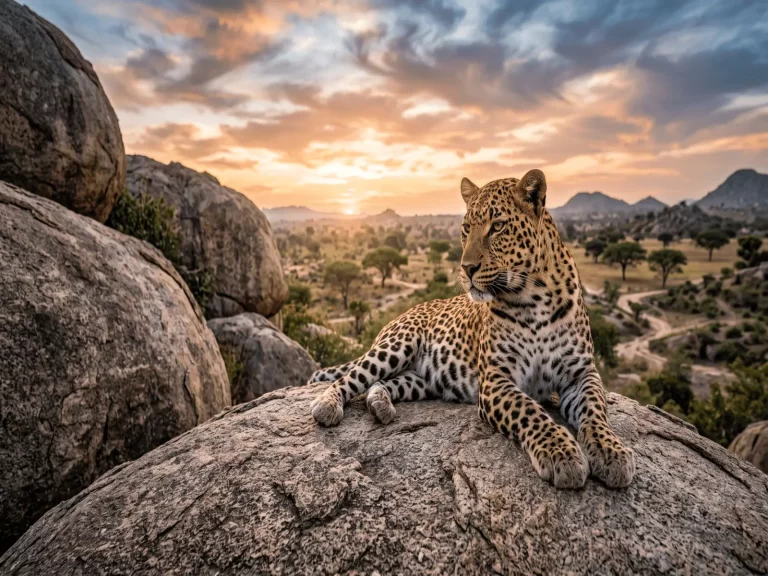
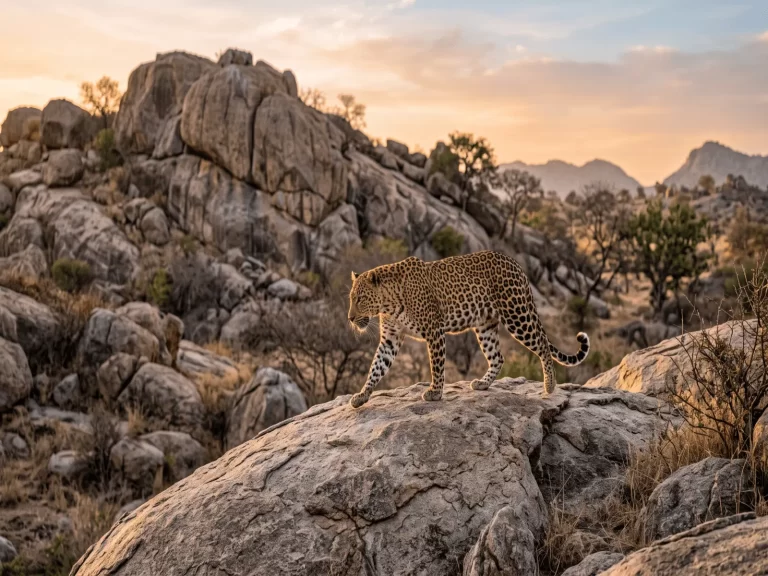
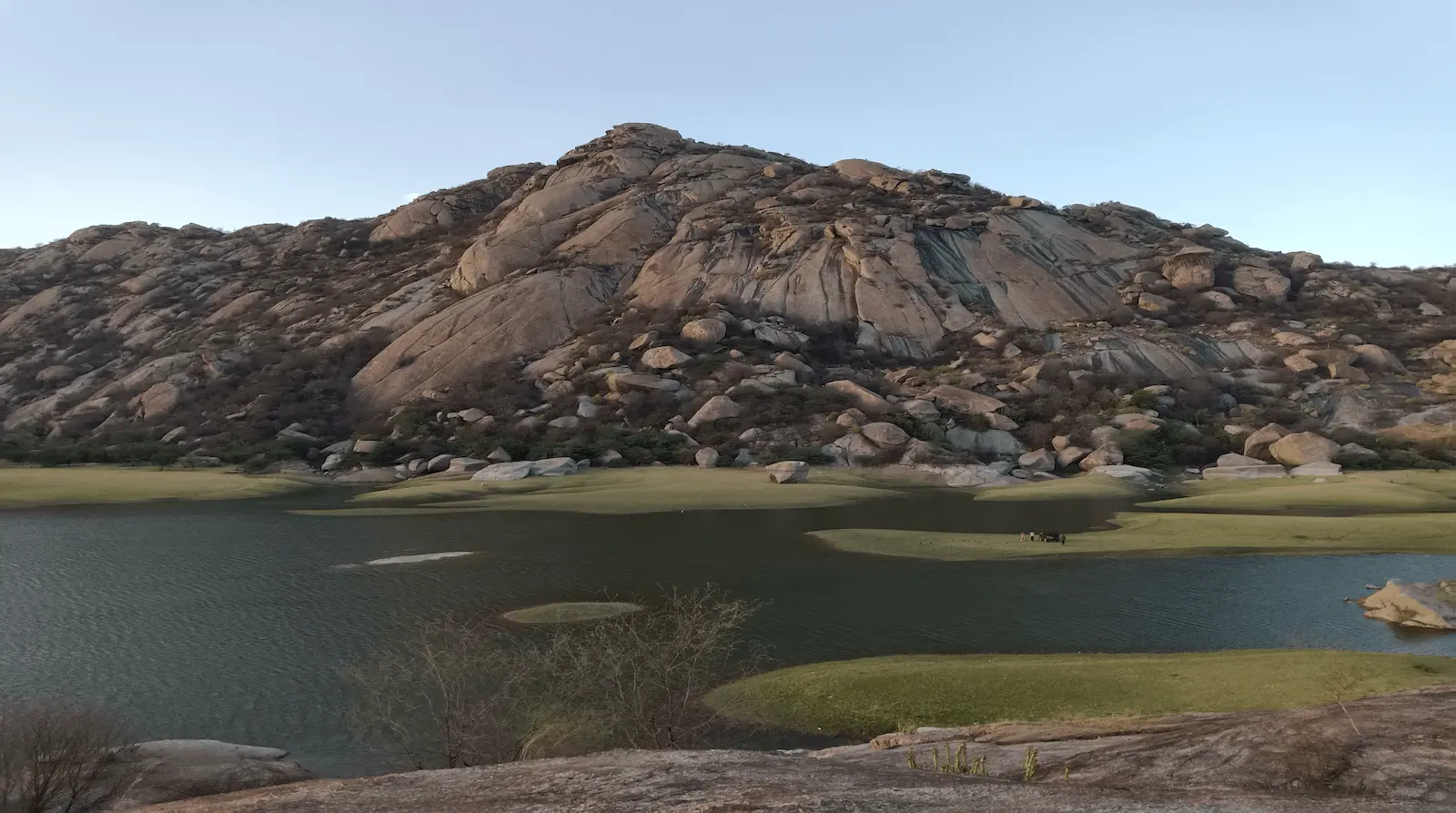
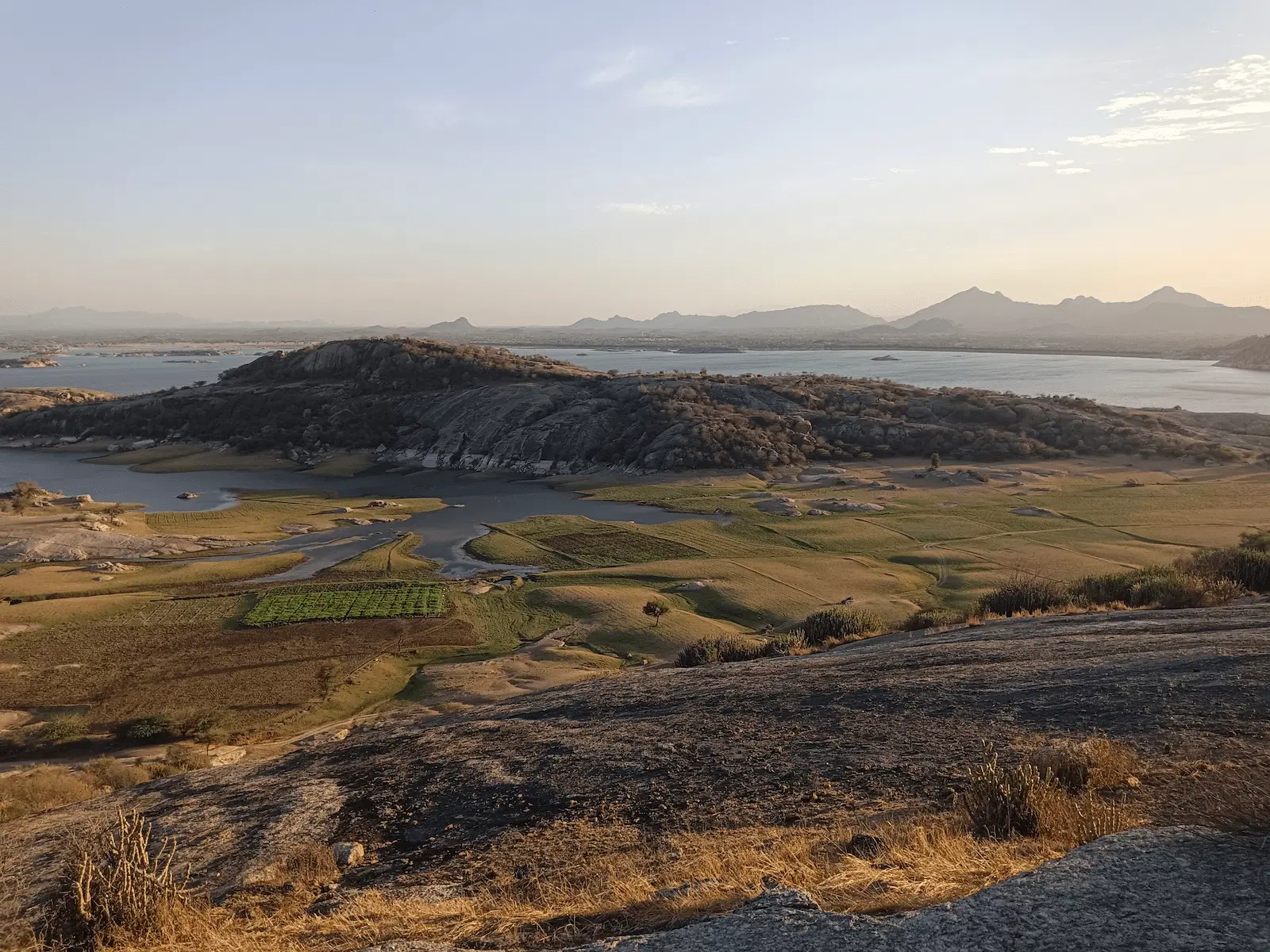
Here’s the part that tends to surprise people who assume a night ban must mean a real loss in sighting quality: Jawai’s daylight sightings are unusually good by the standards of leopard safaris generally, precisely because of the terrain. Most leopard habitats are dense forest, where a resting or moving leopard can disappear into cover within moments of being spotted, making sightings brief and often at real distance. Jawai’s granite hill terrain is the opposite: open, exposed rock faces with limited vegetation cover mean a leopard resting on a boulder or ledge is often visible from a genuine distance, for an extended period, in good light, without needing artificial illumination to pick it out.
The prime viewing windows, the first hour or so after sunrise and the hour or two before sunset, are exactly when leopards here tend to be most active, moving between resting spots, patrolling territory, or beginning an evening hunt. These windows fall comfortably within the legal daylight hours, which means the ban isn’t cutting off the best viewing time at all, it’s cutting off the after-dark hours when sightings, absent artificial light, would be difficult regardless and when any sighting achieved would depend on the very spotlighting practice the rules now prohibit.
What This Means for Planning Your Safari
Because the best sighting windows already fall inside the legal hours, the practical planning implication is straightforward: prioritise the early morning and late afternoon slots rather than treating the ban as a loss to work around. A well-timed dawn or dusk drive, run by an experienced naturalist who knows the current den sites and recent activity patterns, gives you a genuinely strong chance at the kind of extended, well-lit sighting that Jawai is known for, without needing anything the new rules prohibit.
What to Be Wary Of
Any operator who offers or hints at a night safari, whether framed as a special add-on, an off-the-record arrangement, or a premium experience, is offering something flatly illegal under the current rules, regardless of how it’s marketed. This is one of the clearest, simplest red flags in the current Jawai safari market, and it’s worth treating it as disqualifying on its own when evaluating an operator, since a willingness to break this specific rule tells you a great deal about how seriously that operator takes the rest of the compliance framework too.
How This Shapes What We Recommend
We work exclusively with committee-registered operators who run within the legal daylight hours and don’t use spotlighting, and we’re upfront with every guest about why this isn’t a limitation to work around but actually aligns with when the best sightings genuinely happen. Message us on WhatsApp for current pricing and a quote tailored to your dates and group size, and we’ll help you plan the morning or evening timing that gives you the best realistic chance at a memorable sighting, entirely within the current rules.
How Jawai’s Ban Compares to Other Wildlife Destinations
Night drives remain legal and common in some other parts of the world, certain private reserves in southern Africa, for instance, run spotlight-assisted night drives as a standard product, often citing controlled conditions and trained guides as mitigating factors. Comparing Jawai to these examples misses an important structural difference: those reserves are typically fenced, privately managed properties where the operator has direct control over an enclosed area and its wildlife density, and the ecological trade-offs of night viewing have been assessed specifically for that closed system. Jawai is the opposite, an open, unfenced landscape shared with a resident human community and their livestock, where added disturbance doesn’t stay contained to a controlled area, it ripples into land people actually live and work on. The regulatory response accordingly looks different, and the comparison to fenced-reserve night drives elsewhere isn’t a fair basis for arguing Jawai’s ban is overly cautious.
What Guides Say About the Change
Naturalists who have worked in Jawai across the transition tend to describe the shift in similar terms: the ban removed a source of unpredictability that had been creeping into the safari market, since a guide competing against night-safari operators offering artificial-light guarantees felt pressure to match that certainty somehow, even if it meant pushing daylight drives closer to the edges of good practice to compensate. Removing night safaris from the market entirely levels this pressure, letting daylight-only operators compete on genuine skill, patience, and terrain knowledge rather than on who can produce the most reliable spotlight-assisted sighting after dark.
The Broader Pattern: Rules That Protect the Product
It’s worth stepping back and noticing a pattern across the 2026 rules generally: the daylight restriction, the spotlighting ban, the prohibition on baiting and call playback, all of them target practices that manufactured short-term certainty at the cost of the long-term, sustainable version of what makes Jawai worth visiting in the first place. A wild leopard population that remains genuinely wild, undisturbed by artificial light and false food cues, is what continues to make daylight sightings possible and meaningful. The night-safari ban fits this same logic exactly: trading a narrow, artificial form of certainty for the preservation of the actual, honest experience that draws people to Jawai in the first place.