
A Jawai Safari Hour by Hour: From Pickup to the Last Boulder
Since the 2026 Rajasthan High Court order and the Forest Department’s new Standard Operating Procedure, “committee-registered” has become the single phrase that separates a legitimate Jawai safari from one operating outside the law. It’s also a phrase that’s easy for any operator to claim and considerably harder for a visitor to verify on their own, especially if you’re booking from abroad or arriving with limited time to investigate before your safari slot. This article explains exactly what committee registration means, what it actually requires of an operator, and the specific, practical steps you can take to check it yourself before you hand over any money.
What the Jawai Safari and Eco Tourism Coordination Committee Actually Does
The committee was established as part of the 2026 court order to bring formal structure to what had been, until then, a largely informal safari market. Its core responsibilities include maintaining a registry of vehicles authorised to run commercial safaris in the Jawai area, setting and enforcing the daylight operating hours, mandating GPS tracking on every registered vehicle, and holding the authority to suspend or permanently blacklist a vehicle’s registration for documented violations of the rules governing conduct, hours, and prohibited practices like spotlighting, baiting, drone use, and call playback.
This is a meaningfully different structure from what existed before. Previously, any vehicle and driver willing to take tourists onto village tracks and hill paths could describe themselves as running a Jawai safari, with no external body verifying anything about their conduct, safety practices, or impact on the wildlife and community they were driving through. The committee doesn’t replace the informal skill and local knowledge that has always defined a good Jawai naturalist, but it does add a formal layer of accountability that simply didn’t exist before.
What Registration Actually Requires
To become and remain committee-registered, an operator’s vehicle needs to meet the requirements set out in the Forest Department SOP, most importantly the installation and continuous operation of a GPS tracker, and a demonstrated commitment to operating only within the permitted daylight hours and conduct rules. Registration is not a one-time formality, it’s an ongoing status that can be suspended or revoked, which means a vehicle that was legitimately registered last season isn’t necessarily still in good standing this season if it has since been flagged for violations.
Vehicle Types You Will Actually See
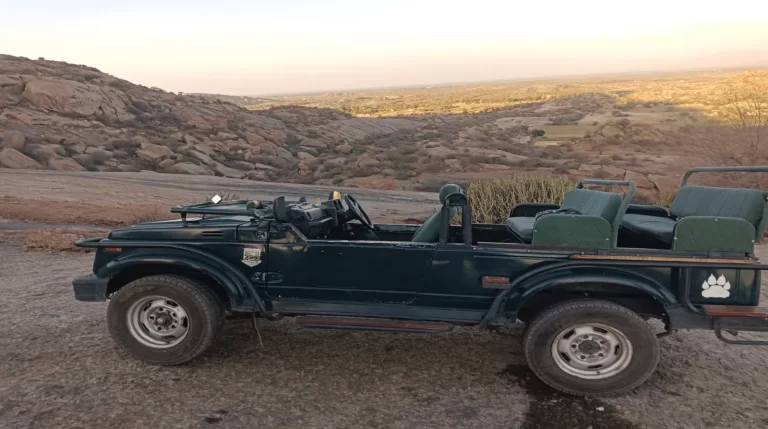
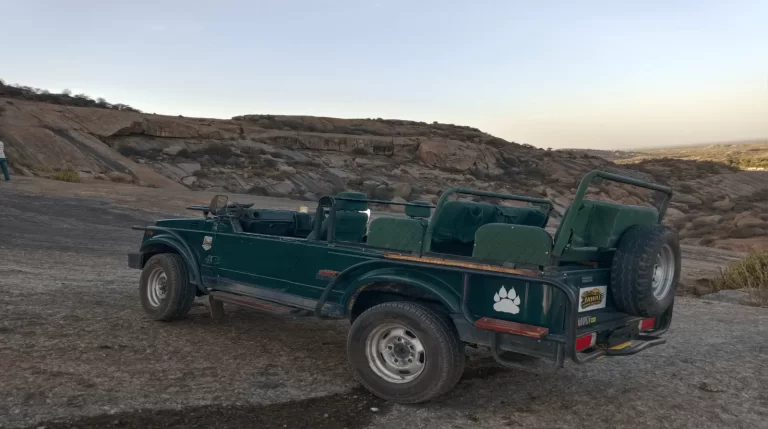
Most registered Jawai safari vehicles are open, modified four-wheel-drive vehicles, generally similar in general shape to what’s used across Indian wildlife tourism more broadly, tiered forward-facing seating, open sides for visibility and photography, and a rugged drivetrain suited to the mix of rocky track, dry riverbed, and village road a typical drive covers. You may occasionally encounter closed vehicles being used informally by unregistered operators, particularly those targeting budget travellers who haven’t yet learned to ask the right questions, and a closed vehicle with limited visibility is itself a mild warning sign worth noting, since it’s poorly suited to genuine wildlife viewing and photography regardless of the registration question.
How to Actually Verify Registration Yourself
This is the practical core of this article, since knowing that registration matters is only useful if you can actually check it. A few concrete approaches:
Ask to See the Registration Directly
A legitimately registered vehicle should have visible registration documentation or signage tied to the coordination committee. Don’t hesitate to ask your driver or the operator you’re booking through to show this before you commit, a legitimate operator will not be offended by the request, since it’s a completely reasonable question in the current regulatory environment, and a hesitant or evasive response is itself informative.
Look for the GPS Unit
Every registered vehicle carries a mandatory GPS tracker, usually a small device mounted on or near the dashboard. Its presence alone isn’t a complete guarantee, since compliance requires more than just having the hardware installed, but its absence is a clear red flag. If you’re already in the vehicle and don’t see one, it’s worth asking directly rather than assuming it’s simply out of view.
Ask Specific, Hard-to-Fake Questions
Beyond asking whether the vehicle is registered, which invites a simple yes regardless of truth, ask more specific questions: which zone the vehicle is registered to operate in, what the exact legal operating hours are, what happens if the drive doesn’t produce a sighting. A genuinely compliant, experienced operator answers these fluently and consistently, because the answers are simply true and familiar to them. Vague, inconsistent, or overly reassuring answers, particularly anything suggesting flexibility around the legal hours, are worth treating with real suspicion.
Book Through a Vetting Intermediary
If you’re not confident verifying registration status yourself, particularly as an international traveller unfamiliar with the local market, booking through a service that has already done this vetting removes much of the burden from you directly. This is a meaningful part of what a legitimate curation and booking service should be doing on your behalf, checking registration and compliance status before ever recommending an operator to a guest, rather than simply passing along whichever operator offers the best commission.
Be Wary of Prices That Seem Unusually Low
While we don’t publish specific figures here, it’s worth knowing in general terms that operators cutting corners on registration, GPS compliance, or basic safety and vehicle maintenance sometimes offer noticeably lower rates than compliant operators, since they’re not carrying the same costs. An unusually cheap offer, especially from an unfamiliar source with no verifiable registration, deserves more scrutiny rather than less.
Red Flags Worth Taking Seriously
- An operator who offers or hints at a night safari, since this is flatly illegal under the current rules regardless of how it’s framed
- Vague or shifting answers about which committee the vehicle is registered with
- No visible GPS unit and no clear explanation when asked
- Promises of a guaranteed sighting, which no honest, compliant operator working with a wild, unfenced leopard population will make
- Reluctance to provide any documentation or specifics when asked directly and politely
- Booking arrangements that feel deliberately informal or off-the-record, cash-only with no paper trail, contact only through personal numbers with no business presence
Why This Verification Effort Is Worth It
Beyond the straightforward legal and ethical reasons to book compliant, an unregistered or non-compliant operator carries real practical risk to you as a guest. A vehicle that gets suspended or blacklisted mid-season can leave you without a safari at all, sometimes with little notice, and there’s limited recourse if something goes wrong with an operator who was never part of the accountable, registered system in the first place. The extra effort of verifying registration status, or simply booking through a service that has already done so, is a genuinely practical safeguard, not just a compliance formality.
How the Impersonation Problem Makes This Worse
Jawai’s safari market has, in recent years, developed a real impersonation problem, operators and even websites using names, logos, or claims designed to sound official or affiliated with government bodies when they are not. This isn’t unique to Jawai, it’s a common pattern in tourism markets where a regulatory change suddenly makes compliance a valuable claim to make, whether or not it’s true. Be specifically wary of any operator whose branding invokes official-sounding language without a clear, checkable connection to the actual coordination committee. The committee itself is the only body whose registration currently confers legal standing to run a commercial safari, and any other certification-sounding language is, at best, marketing and at worst a deliberate attempt to mislead.
How We Handle This For You
We verify registration and GPS compliance status directly with every operator we work with before recommending them to any guest, and we treat this as a non-negotiable baseline rather than a nice-to-have. This means when you book through us, the verification work described in this article has already been done on your behalf. Message us on WhatsApp for current pricing and a quote tailored to your dates and group size, and ask us directly about the registration status of whichever operator we recommend, we’re glad to walk through it with you.
The Licence Freeze and What It Means for New Operators
Part of the 2026 court order included a freeze on new tourism licences and new construction in the Jawai area pending further judicial review. Practically, this means the current pool of committee-registered operators is close to a fixed set for the foreseeable future, rather than an expanding market where new entrants are regularly being added and verified. If you encounter an operator claiming to be newly registered or newly licensed since the freeze took effect, that claim itself is worth extra scrutiny, since it runs against the grain of what the freeze is designed to do. Established operators who were already registered before the order, and who have maintained clean compliance records since, represent the more reliable and easily verifiable end of the market.
What a Sanctuary Declaration Would Change
The court has separately asked the state government to examine whether Jawai should be formally declared a wildlife sanctuary, a bigger structural change that has not yet happened but is worth knowing about if you’re planning a trip further into the future. A sanctuary declaration would likely bring an even more formal permit and zoning system, closer to what exists at India’s tiger reserves, with implications for how vehicles are registered, how many are allowed to operate, and how zones are managed. This hasn’t happened yet, and the committee-registration system described throughout this article remains the current, operative standard, but it’s a reasonable thing to ask about if you’re booking a trip more than a season or two out, since the rules could shift again before you travel.