Jawai Photography Safari: What a Full Day Costs and What It Gets You
The Window Everything Is Built Around
Ask any photographer who has shot Jawai more than once what actually determines whether a trip produces strong images, and the answer converges quickly on one thing: light, not luck. Jawai’s leopards are visible often enough, resting and moving across open granite rather than hidden in dense cover, that the sighting itself is rarely the rarest part of the experience. What is genuinely rare, and what separates an average frame from the image that ends up printed large or shared widely, is whether that sighting happens inside the narrow window of usable low-angle light at either end of the day. Vehicle timing, positioning, and even which zone gets prioritized on a given morning all exist, in a well-run photography operation, to put you in front of a leopard during that window rather than outside it.
Why the Golden Hour Is Shorter Here Than You Might Expect
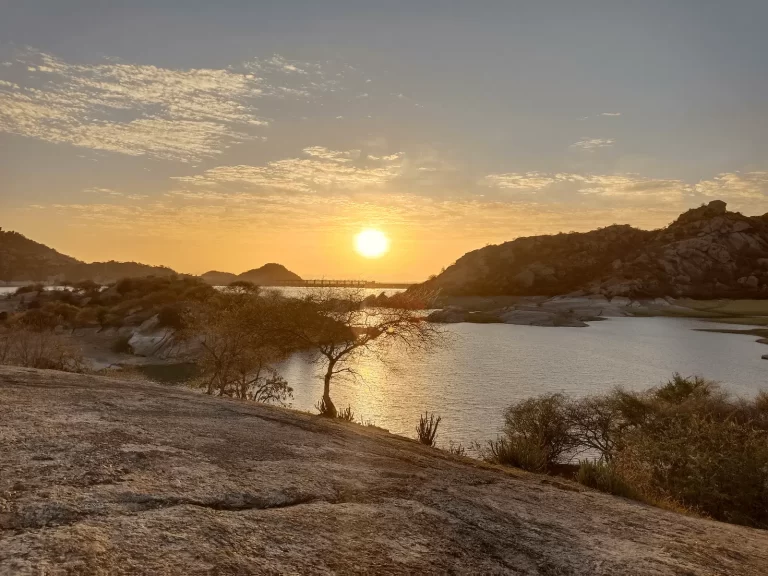
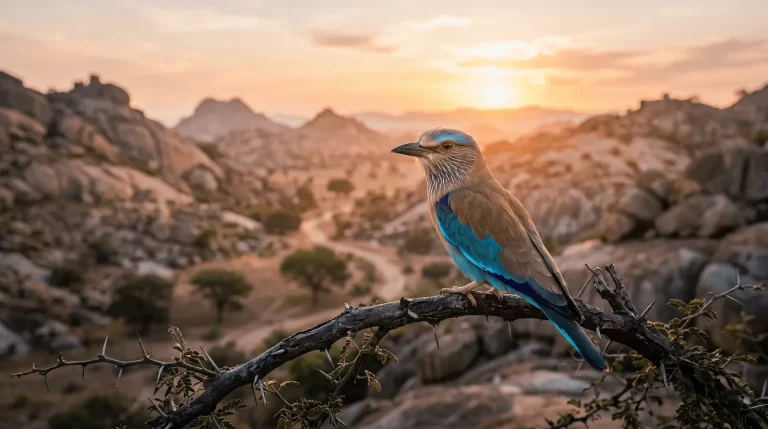
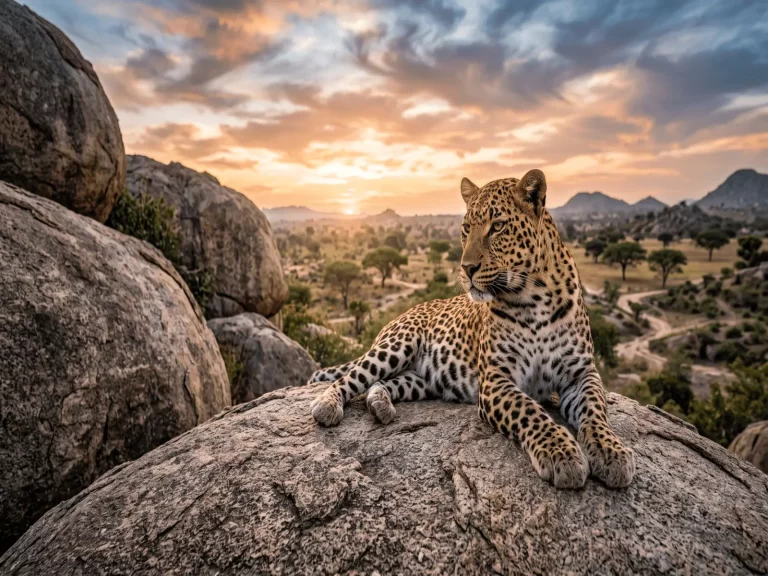
Jawai safaris run within Forest Department hours of roughly 6am to 7pm, but the light that produces this destination’s signature images is concentrated into a much smaller slice of that day. In the thirty to forty minutes immediately after sunrise, and the mirrored window before sunset, the sun sits low enough that its light rakes across the granite at a shallow angle rather than falling straight down from overhead. This does two things simultaneously. It warms the color temperature toward gold and amber, so that both the rock and a leopard’s coat pick up a similar warm cast, and it throws long, raking shadows that carve texture, shape and depth into a rock surface that looks comparatively flat and featureless under a high sun. A leopard photographed inside this window seems to glow against its background rather than simply being lit by it. The same leopard, on the same rock, photographed forty-five minutes later under harsher, higher sunlight, produces a noticeably flatter, less distinctive image.
This is worth being specific about because a lot of visitors, arriving from destinations with more forgiving light, underestimate how quickly this window closes in Jawai. There is no lingering, soft, hour-long golden hour here in the way overcast temperate climates sometimes offer. Rajasthan sits at a latitude and in a climate where the sun climbs fast once it clears the horizon, particularly in the drier months, and the transition from workable low-angle light to harsher midday light happens within well under an hour. Photographers who treat the first hour after sunrise as leisurely, coffee first, camera later, routinely miss the best of it.
Morning Versus Evening Light on the Granite
Both ends of the day produce strong images, but they are not identical, and knowing the difference helps with planning rather than simply showing up whenever a safari slot happens to be available. Morning light in Jawai tends to be cleaner and cooler in its first few minutes, then warms quickly. Granite that faces east catches this light directly and lights up first, while west-facing rock faces stay in shadow or reflected light longer, producing a more graduated, painterly effect across a single ridgeline. Morning air is also typically calmer and less dust-laden than later in the day, particularly in the dry season, which means clearer atmosphere and better contrast in distant shots.
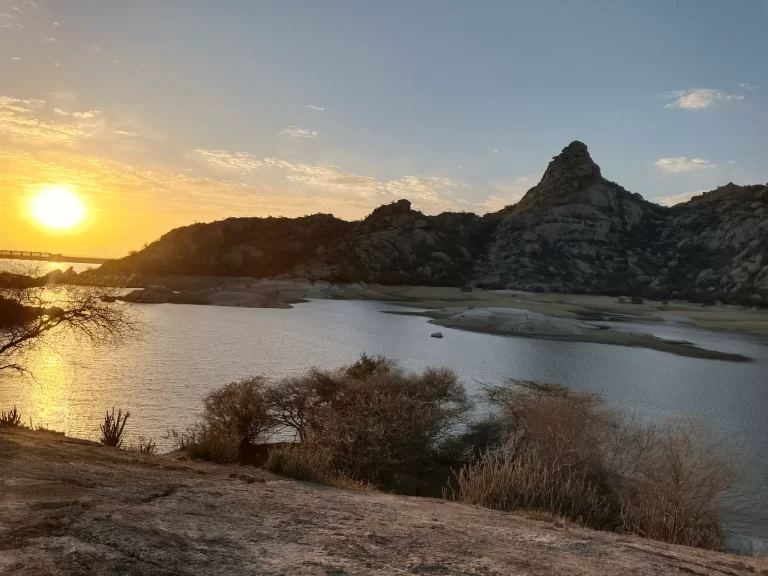
Evening light works the geometry in reverse. West-facing granite catches the last direct sun, often with a deeper, more saturated orange-red cast than the morning produces, especially in the final ten to fifteen minutes before the sun actually dips below the horizon line formed by the hills. Dust kicked up over the course of the day, from vehicles, livestock, and general dry-season conditions, can actually work in a photographer’s favor at this hour, scattering light and deepening the color of the sky behind a ridgeline silhouette. Evening safaris also tend to end with a short but valuable stretch of blue hour immediately after sunset, when the sky holds color and the landscape reads in silhouette, useful for a different, more atmospheric style of image than the direct golden-hour shot.
Neither session is objectively better than the other, and serious photographers who spend multiple days in Jawai generally work both rather than assuming one is superior. What matters more than morning versus evening is matching the specific zone and rock orientation to the specific time of day, which is exactly the kind of local knowledge a good ground team provides.
How Light Behaves Differently Across the Three Zones
Bera, Sena and Devgiri each have a distinct character, not just in terms of leopard territory but in how their granite catches light. Bera’s outcrops tend to be broader and more exposed, producing dramatic wide-open compositions when the light is right but also more washed-out results if a shoot happens even slightly outside the golden-hour window. Sena’s terrain includes more varied elevation and rock clustering, which creates natural framing opportunities, a leopard glimpsed through a gap between two boulders, that a flatter landscape does not offer as easily. Devgiri, further from the dam, has its own temple-adjacent rock formations that add an architectural element to a composition that the other two zones generally lack. A ground team that knows which zone is likely to be active on a given morning, and how the light will fall across that specific zone’s rock at that specific hour, is doing something a generic safari booking cannot replicate.
Reading the Sky Before the Ground
Cloud cover changes everything about how granite light behaves, and it is worth training yourself to check the sky before assuming a given morning will produce classic hard-edged golden-hour images. A clear sky, common through the winter dry season, produces the sharp, defined light and shadow that Jawai’s most famous images are built on. Partial cloud, more common in the shoulder seasons, diffuses that same light into something softer and more even, which can actually suit a portrait-style leopard image better than harsh direct sun, even though it sacrifices some of the dramatic shadow texture on the rock itself. Heavy cloud, most common during the monsoon months, removes the golden-hour effect almost entirely but replaces it with a completely different visual opportunity: dramatic, layered skies and a much longer window of soft, even light that extends well past the tight thirty-minute slot that defines dry-season shooting. None of these conditions are objectively worse than another for photography. They simply call for different expectations and different compositional choices, which is one more reason a single-day safari plan built around only the classic dry-season golden hour undersells what Jawai can offer across a longer trip or a different season.
Midday and the Case for Patience
Between the morning and evening windows, Jawai’s light turns hard, high and largely unflattering for wildlife photography, particularly on open granite where there is no forest canopy to soften or filter it. This is not typically when serious photography happens, and most operators plan around it rather than through it, using the middle of the day for rest, review, and repositioning rather than active shooting. Photographers new to Jawai sometimes push to keep shooting through midday out of a sense that more time in the field must mean more opportunity. In practice, the flat, contrasty light of midday produces images that rarely hold up next to golden-hour work from the same trip, and the better use of that time is almost always patience: reviewing the morning’s images, resting, and preparing properly for the evening session rather than forcing additional midday hours that the light itself does not reward.
Practical Timing Advice
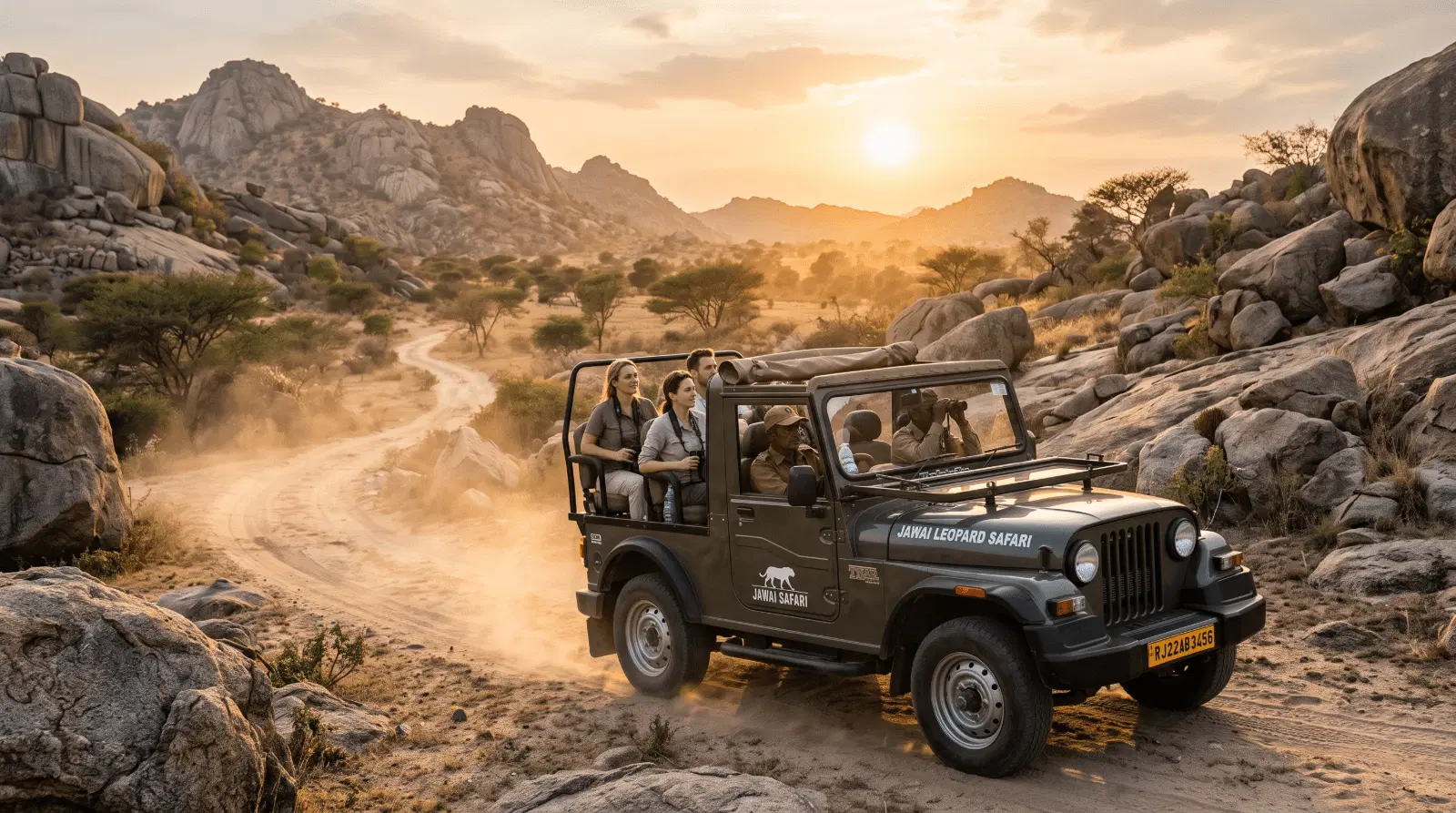
Arrive at the safari gate with enough margin to be inside the zone and positioned before the light actually turns, not after. Because the safari day is bounded by the 6am to 7pm rule now in effect across the region, a morning safari beginning right at opening gives you the best chance of being in position for first light rather than arriving after the window has already started to close. In the evening, plan to be at a likely location with enough time to wait quietly rather than arriving as the light is already fading, since repositioning during the final ten minutes of usable light usually costs more than it gains. Across a multi-day visit, treat the golden-hour windows as the fixed points around which the rest of the schedule is built, meals, rest, travel between zones, rather than treating photography as one activity slotted in among several others.
Seasonal Shifts in the Quality of Light
The character of golden hour itself changes across the year, not just its length. In the driest part of winter, December through February, the air carries very little moisture or particulate haze, and the light at both ends of the day tends to be crisp, high-contrast and intensely warm-toned against the granite. By contrast, the weeks immediately before the monsoon, typically April through June, often carry more suspended dust, which scatters light in a way that produces a softer, hazier, sometimes almost sepia-toned golden hour, still workable and often quite beautiful, but visually distinct from the sharper winter version. Recognizing that these are different looks rather than one being a degraded version of the other helps photographers plan a trip’s expectations honestly rather than assuming every visit should replicate a single postcard image seen online.
Understanding how light moves across Jawai’s granite is, more than any single piece of equipment, the actual skill that separates photographers who come home with images that stand out from those who come home with a competent but unremarkable record of a leopard sighting. The rock, the season, and the hour all interact, and the destination rewards photographers who plan around that interaction rather than around convenience.
Message us on WhatsApp for current pricing and a quote tailored to your dates and group size.