Multi-Day Photography Circuits in Jawai: How the Serious Shoots Are Planned
Packing for a Landscape That Isn’t What Most Visitors Expect
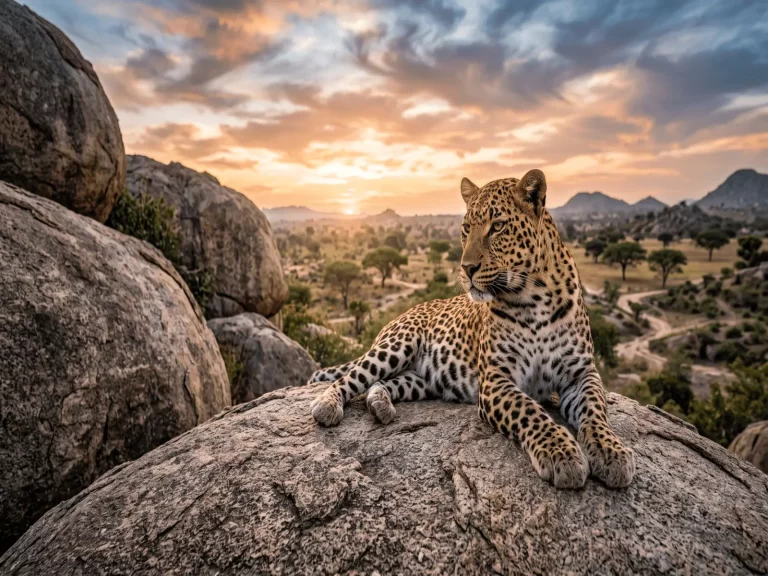
Photographers arriving in Jawai for the first time frequently bring a kit built for forest photography, on the reasonable assumption that a leopard safari in India generally means shooting through foliage at moderate range, the way it typically works across central India’s national parks. Jawai does not work that way. Leopards here spend much of their visible time out on open granite, often at a distance greater than a typical forest sighting but with nothing obstructing the view between the lens and the animal. That single difference changes almost everything about what is actually worth carrying into the field here, and a kit optimized for Bandhavgarh or Kanha is not automatically the right kit for Jawai.
Focal Length: What Actually Gets Used
The workhorse range for Jawai leopard photography is a telephoto zoom somewhere between roughly 100-400mm and 150-600mm. This single range covers the large majority of sightings, which tend to happen at a respectful distance across open rock rather than at the close range some forest parks occasionally allow when a cat walks directly alongside a vehicle track. A zoom in this range lets you react to a leopard that turns out to be farther away than expected without needing to swap lenses mid-sighting, a real risk when a leopard might only hold a given position for a few minutes, and it also lets you pull back for a wider, more environmental shot, leopard small in the frame against a huge granite face, without changing glass at all, simply by zooming out.
A fixed super-telephoto prime, a 500mm or 600mm lens, can produce excellent results if a sighting happens at real distance, and professional wildlife photographers with this glass already in their kit will certainly use it here. But it is a specialist choice rather than a first lens for Jawai, and it is genuinely unnecessary weight and cost if you do not already own and regularly shoot with one. Unlike a forest safari where extreme reach is almost always the deciding factor in whether a shot is usable at all, Jawai’s open sightlines mean a well-handled zoom in the 400-600mm equivalent range is frequently enough to fill the frame respectably.
Why a Wide Lens Matters More Here Than Elsewhere
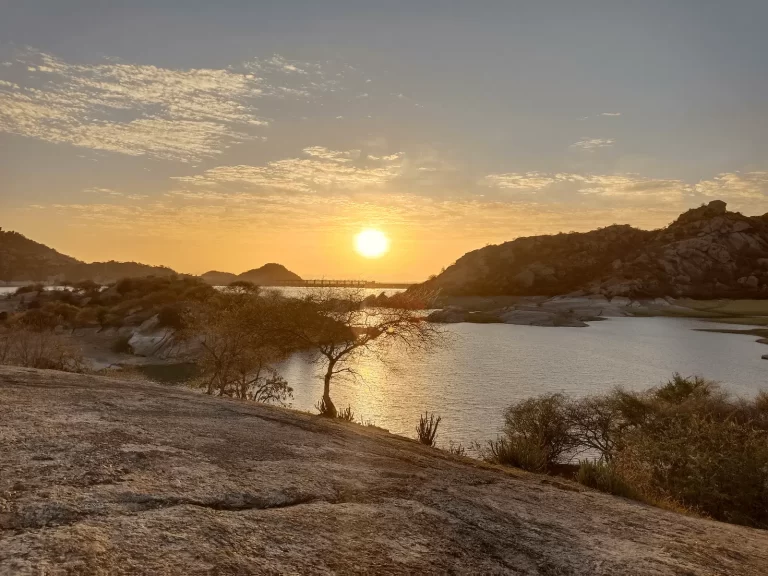
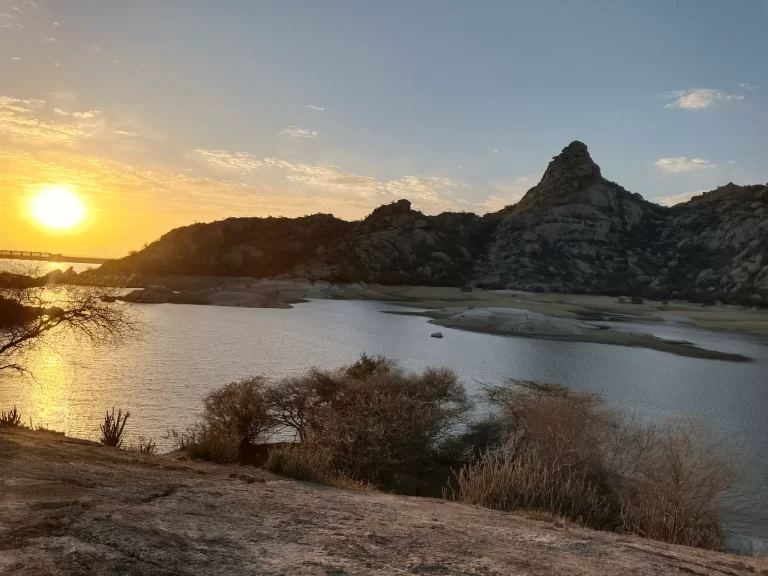
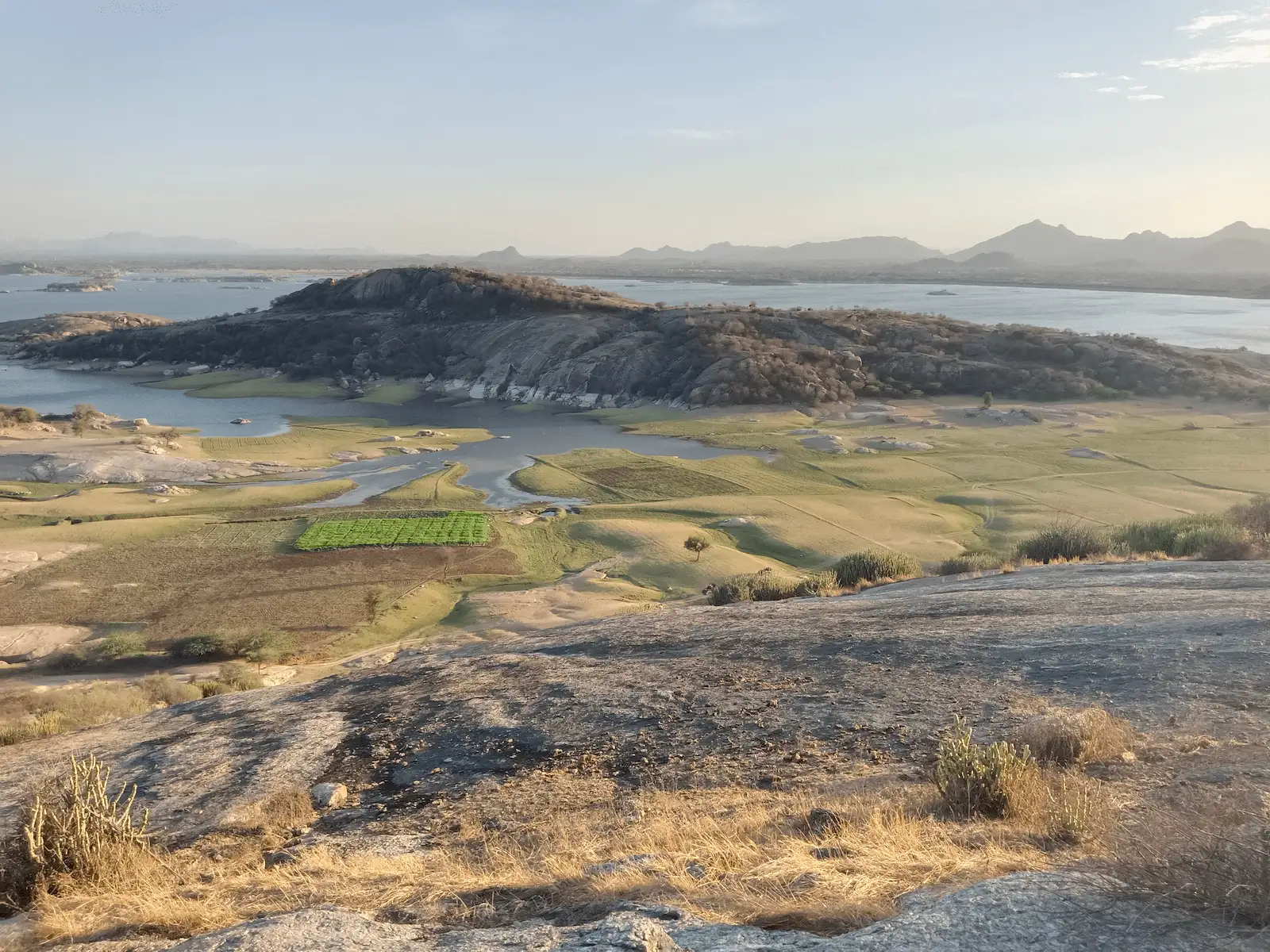
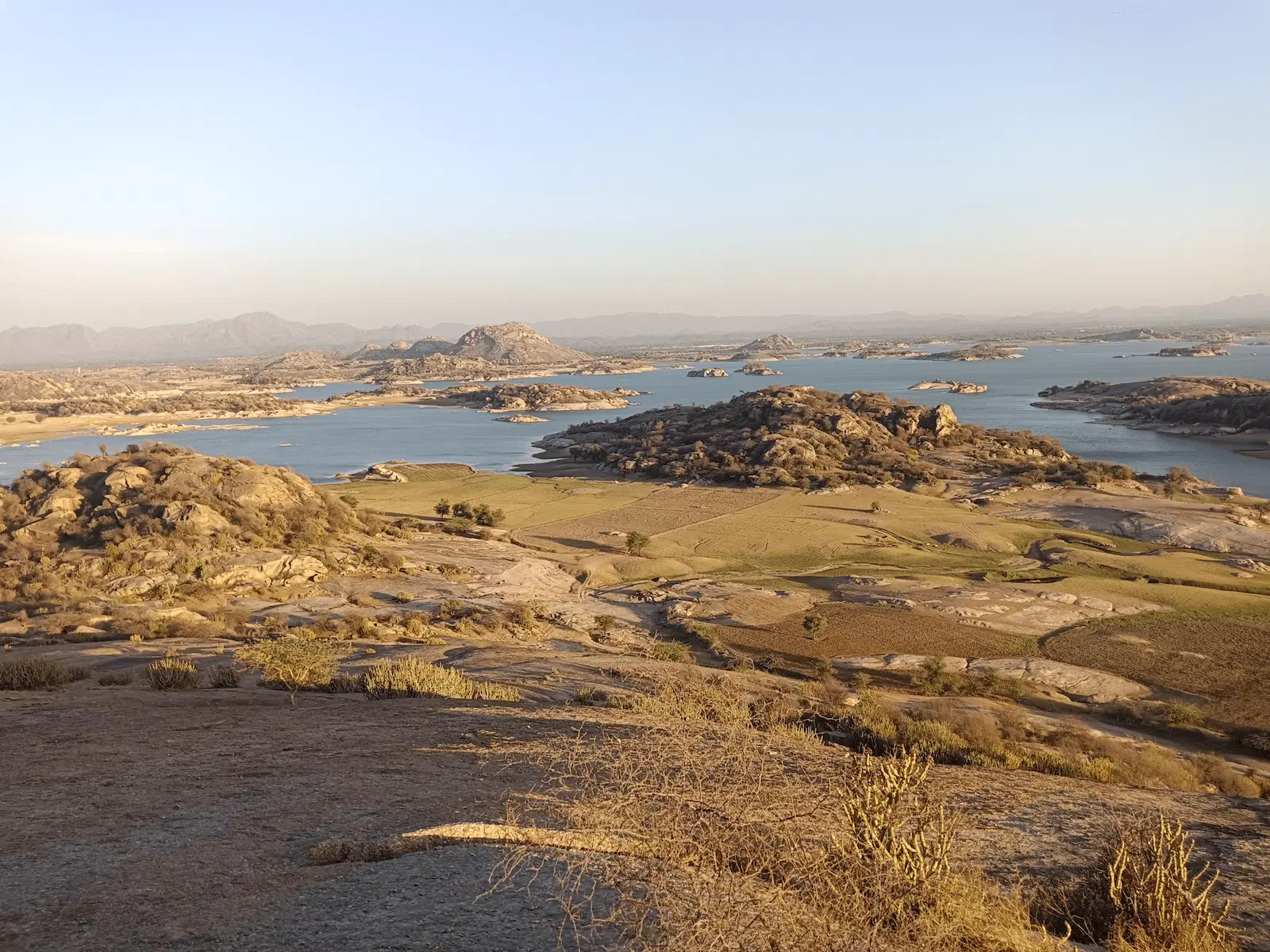
A second lens in the 24-70mm or 24-105mm range earns its place in a Jawai kit in a way it rarely does on a dense-forest safari. Because the landscape itself, granite ridgelines, the dam, Rabari shepherds moving with their herds against open hills, is such a significant part of what makes Jawai visually distinct, a photographer working only with a long telephoto will miss a large share of what the destination actually offers. Some of the strongest Jawai images are not tight leopard portraits at all but wider environmental frames that show the animal small within its granite surroundings, or the human and animal coexistence that defines this landscape more than any single wildlife shot could. Leaving a wide-to-normal zoom at the stay because it seems unnecessary for a “leopard trip” is one of the more common regrets photographers report after a first Jawai visit.
Camera Bodies and Settings That Matter
Because the critical light window at both ends of the day is short, and because leopards here can move quickly across open rock once they decide to, autofocus speed and tracking reliability matter more in Jawai than raw resolution. A camera body with strong continuous autofocus and a usable burst rate will serve a photographer better here than a higher-megapixel body with slower or less confident tracking. Given the compressed golden-hour window, a body that also performs acceptably at moderately elevated ISO settings, without excessive noise, gives more flexibility as the light drops quickly in the final minutes before or after the sun clears the horizon formed by the hills.
In terms of settings, a fast shutter speed remains important for a leopard in motion, but because so much of Jawai’s photography happens with the subject relatively still on open rock, there is often more room than in a forest setting to prioritize a wider aperture for background separation, or a slightly slower shutter for a deliberate, static portrait with clean detail in the coat and the granite texture. Photographers who shoot Jawai well tend to adjust their settings actively through a single safari, moving between action-ready settings when a leopard is walking and more considered portrait settings once it settles, rather than locking in one configuration for the whole outing.
Supports and Stabilization From a Moving Vehicle
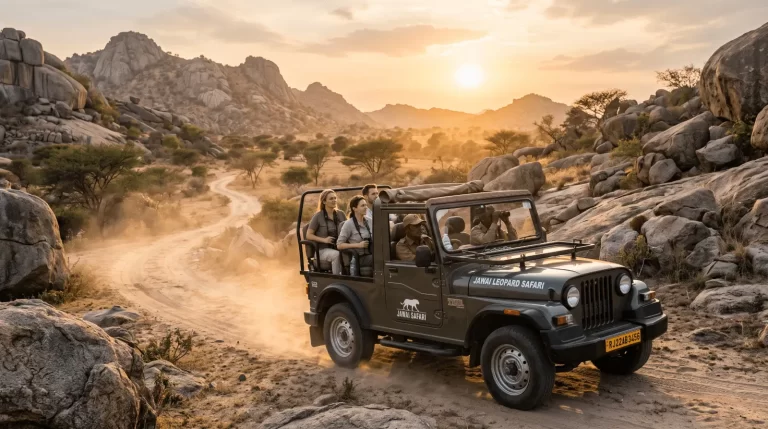
Nearly all photography in Jawai happens from inside a registered safari vehicle, since all safaris here now run through committee-registered, GPS-tracked jeeps under the current regulations, and walking safaris are not part of how this destination operates. A full tripod is awkward at best and often simply impossible to deploy properly from inside a jeep. A beanbag resting across the vehicle’s frame or window ledge, or a monopod braced against the body or seat, gives meaningfully more stability than handholding a long lens for an extended sighting, particularly in the low-light conditions common at both ends of the day. Image-stabilized lenses and in-body stabilization help considerably here as well, given how much shooting happens handheld or semi-supported rather than from a fixed platform.
Dust, Heat and Practical Field Care
Dust is a constant and serious consideration across the drier months in Jawai, kicked up by vehicle movement on unpaved tracks, by livestock, and by the general aridity of the terrain. A basic sensor and lens cleaning kit is not optional gear here, and changing lenses in the field should be done carefully, ideally with the vehicle stationary and engine off, and with some cover from wind wherever possible. A simple rain cover or dust cover for the camera body earns its place in the bag even outside the monsoon months, since dust exposure during a multi-day safari adds up. Heat is a secondary consideration, particularly across the summer months, and batteries drain faster in high ambient temperature, so carrying more spare batteries than you think you will need, and keeping them out of direct sun between sightings, avoids the common problem of a battery failing right as a sighting develops.
What Jawai Does Not Require
It is worth being direct about what a visiting photographer does not need to bring, since over-packing for the wrong scenario is as common a mistake as under-packing. Drones are not usable here at all under the current 2026 regulations, which ban drone use across the safari zones entirely, so there is no reason to bring one. Flash and other artificial lighting equipment has essentially no legitimate use case on a legal daytime safari and no use case at all after dark, since night safaris and spotlighting are both banned outright under the same rules. Extremely heavy, tripod-dependent super-telephoto setups built for a fixed hide or blind are a poor fit for a vehicle-based safari where mobility and quick repositioning matter more than maximum possible reach from a stationary position.
Comparing a Jawai Kit to a Typical Forest-Safari Kit
It helps to think about the contrast directly. A photographer heading to a dense-forest reserve elsewhere in India typically prioritizes the longest affordable telephoto available, often a 500mm or 600mm prime or a heavy zoom at the far end of that range, because sightings frequently happen at real distance through gaps in foliage, and a shorter lens simply cannot deliver a usable frame in that situation. Wide lenses are almost an afterthought on that kind of trip, since dense forest rarely produces a landscape image worth the extra weight. Jawai inverts both of those priorities. The open terrain means a mid-range zoom is usually sufficient reach, while the landscape and human elements of the story make a wide lens considerably more useful than it would be in a forest setting. Photographers who simply pack their existing forest kit for a first Jawai trip, without adjusting for this, often find themselves under-equipped for the wide environmental shots and over-equipped, in terms of unnecessary weight, on the long-lens end.
A Practical Checklist for a Jawai Photography Trip
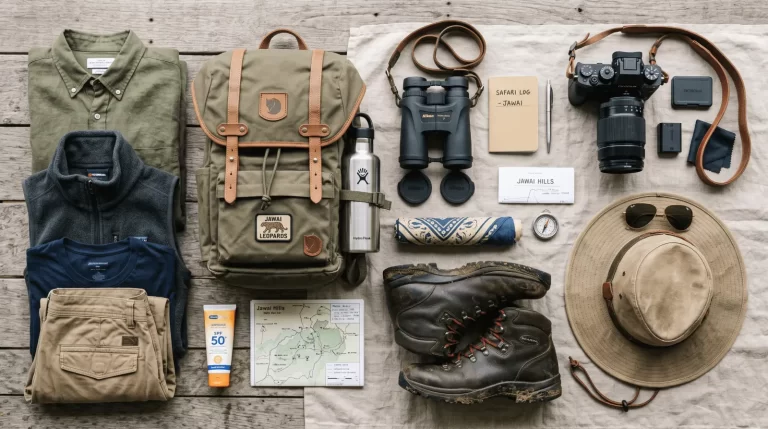
- A telephoto zoom in the 100-400mm to 150-600mm range as the primary lens
- A wide-to-normal zoom, roughly 24-70mm or 24-105mm, for landscape and human-story images
- A beanbag or monopod for support from inside the vehicle, rather than a tripod
- Spare batteries, kept out of direct heat between sightings
- A sensor and lens cleaning kit, given the constant dust across dry months
- A simple dust or rain cover for the camera body
- Extra memory cards, since burst shooting during an active sighting fills cards faster than expected
Building a Kit That Matches How Jawai Actually Works
The single biggest adjustment for photographers coming from forest-safari experience elsewhere in India is trusting that a mid-range telephoto zoom, rather than the longest possible lens available, is usually the right primary tool here. Jawai’s open terrain, daylight visibility and comparatively relaxed leopard behavior around vehicles reward a photographer who can react quickly and reframe rather than one who is locked into a single extreme-reach setup. Pair that zoom with a wide-to-normal lens for the landscape and human elements of the story, support both with a beanbag or monopod rather than a tripod, protect the gear properly against dust, and prioritize autofocus performance and low-light capability over raw resolution. That combination, more than any single expensive piece of equipment, is what actually produces strong results in this specific landscape.
Message us on WhatsApp for current pricing and a quote tailored to your dates and group size.