Camera Gear for Jawai: Focal Lengths, Settings and What to Leave Home
Beyond the Animal Portrait
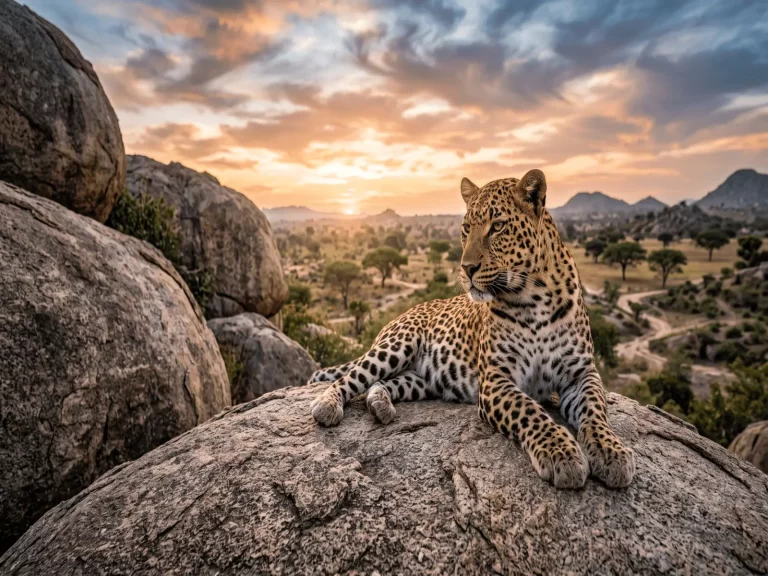
The single leopard-on-granite image is what brought most photographers to Jawai in the first place, and it remains a legitimate and worthwhile goal for any visit here. But photographers who treat that image as the only goal tend to come home with a narrower, more repetitive set of photographs than the destination is actually capable of producing. Jawai offers a landscape, a resident predator, and a human community sharing the same ground in a way that very few places on earth combine, and the strongest bodies of work from this destination usually draw on all three rather than isolating the leopard as though it existed in an empty frame.
Using the Granite as More Than a Backdrop
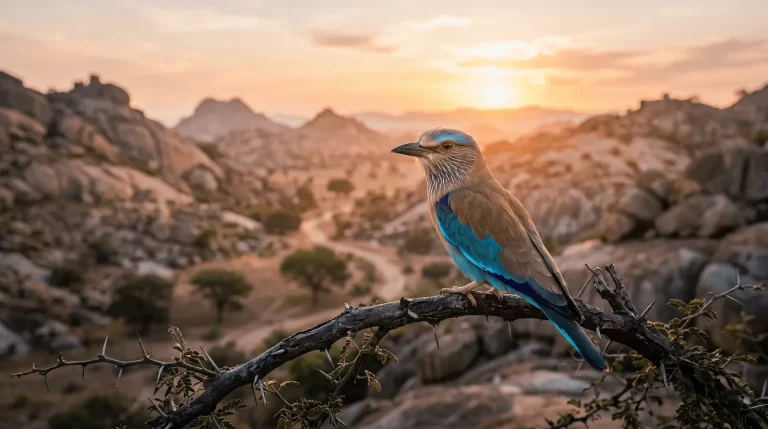
It is tempting to treat Jawai’s granite simply as scenery behind the real subject, the leopard. A more productive approach treats the rock itself as an active compositional element, not passive background. The texture of weathered granite, streaked, cracked, lichen-marked in places, holds detail and interest even in a frame where the leopard is small or partially obscured. Photographing a leopard as a small element within a vast slab of rock, rather than filling the frame with the animal, produces an image that communicates scale and belonging, this is the leopard’s actual habitat, in a way a tight portrait cannot. Look for natural framing within the rock itself: gaps between boulders, overhangs, ledges that create a frame within the frame around a resting or moving animal. These formations are common across Bera, Sena and Devgiri, and a guide who knows the specific outcrops in a given territory can help position a shot to use them deliberately rather than by accident.
Color relationships between the leopard’s coat and the granite are also worth working consciously rather than leaving to chance. At golden hour, when the rock warms toward rust and amber, a leopard’s coat can shift toward matching or contrasting with the stone depending on the exact angle and time of day, and small changes in position, waiting a few minutes for the vehicle or the animal to shift, can meaningfully change how strongly the two elements read together in a final image.
Photographing the Rabari Coexistence With Genuine Respect
The Rabari shepherds who share this landscape with Jawai’s leopards are not a staged attraction, and photographing them well starts from that understanding rather than treating a herder with camels or goats as simply another interesting element to capture opportunistically. Genuine consent matters here in a way it does not for wildlife photography; a Rabari individual is a person with a right to decline being photographed, and a respectful approach means asking, through a guide who can translate and mediate that conversation appropriately, rather than shooting from a distance without any acknowledgment. Many Rabari are entirely comfortable being photographed once approached properly and once it is clear the visitor understands they are looking at daily working life, not a performance staged for tourists.
The coexistence story itself, a shepherd moving livestock across open ground within sight of a resting leopard, neither reacting to the other with the alarm a visitor might expect, is one of the genuinely rare visual stories available in Jawai and largely unavailable anywhere else leopards are found. Capturing it well means understanding that this is not staged or arranged for photographers; it is simply how daily life and daily wildlife movement have coexisted here for generations. A photograph that shows both elements in the same frame, at real distance and without any artificial arrangement, tells a more complete and more honest story about this landscape than either subject alone.
Working the Open Terrain for Environmental Storytelling
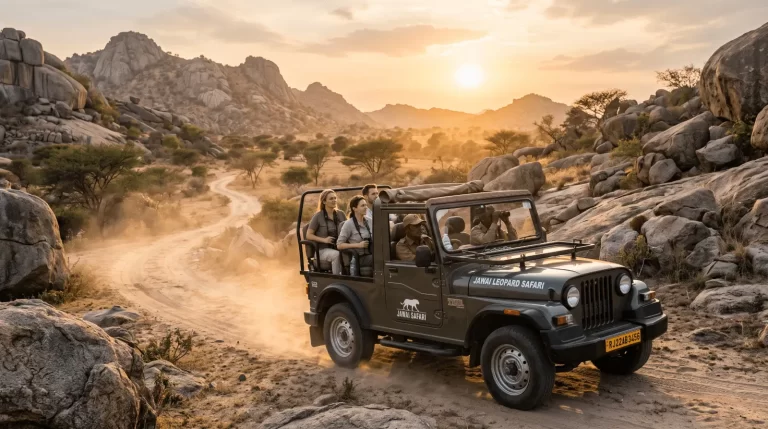
Because Jawai’s safari zones are largely open rather than forested, there is considerably more opportunity here than in a dense-forest safari to build wide environmental images that place a subject, animal or human, within a legible, expansive landscape. A wide shot of the hills at dawn, dust and early light hanging over open scrub, jeep tracks visible in the foreground, communicates the scale and character of this landscape in a way a tight telephoto shot never can. These wider images work particularly well as openers or closers within a photo story or portfolio sequence, establishing place before or after a series of closer wildlife images.
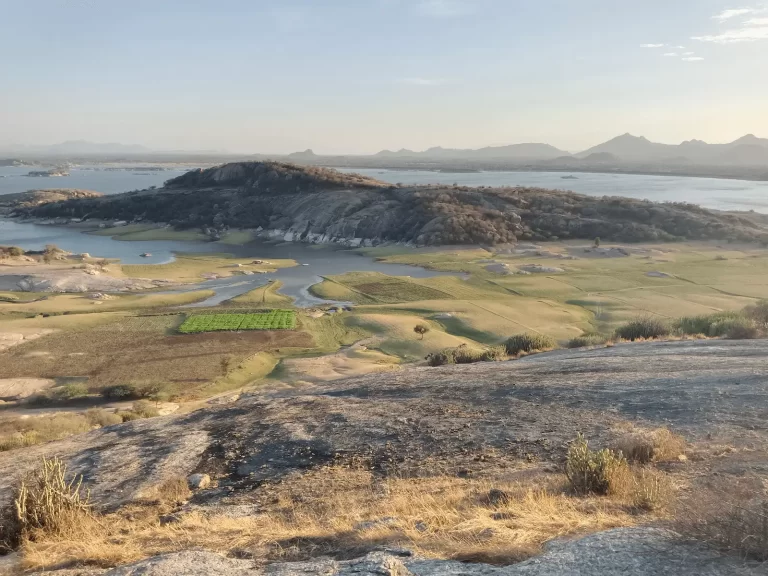
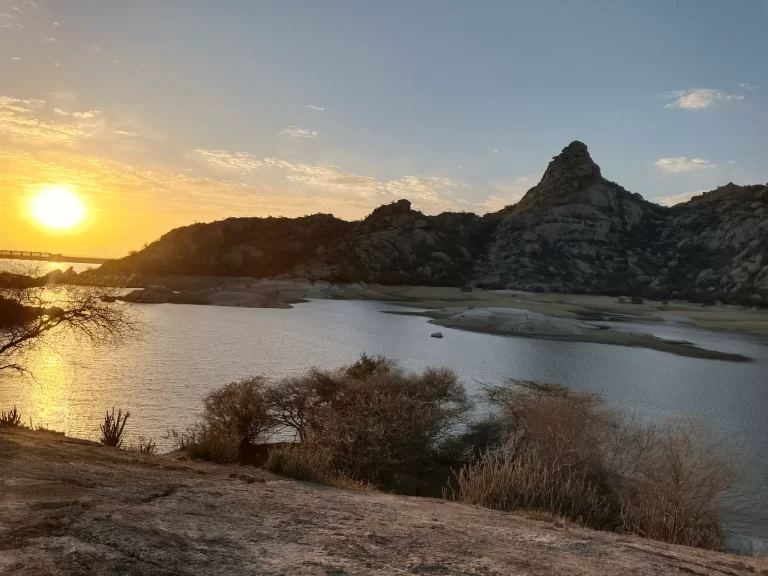
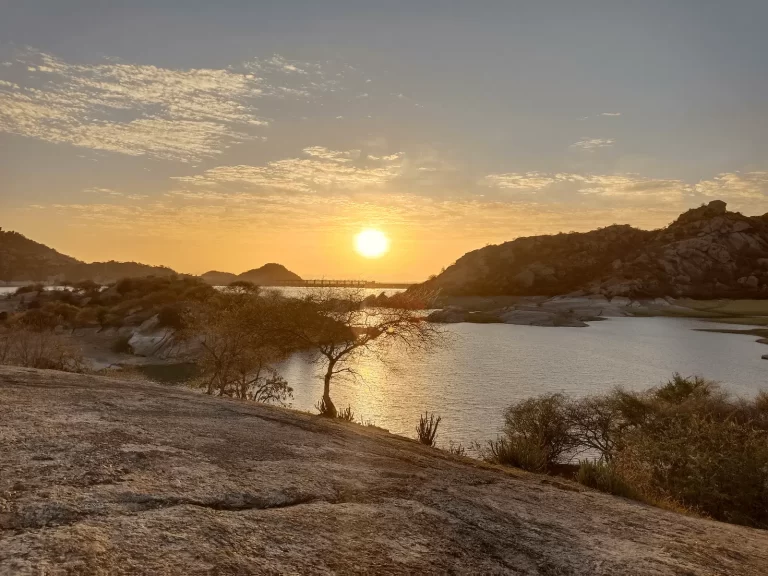
The dam itself, discussed in more depth elsewhere in this series, offers a different but related opportunity: water, reflected sky, distant granite hills and often birds all in the same frame, a landscape image that stands independently of any single subject and adds genuine variety to a body of work built otherwise around dry granite and leopards.
Light, Shadow and the Discipline of Waiting
Strong compositional storytelling in Jawai depends heavily on the discipline of waiting for the right light rather than shooting reactively the moment a subject appears. A leopard photographed the instant it comes into view, regardless of the light at that exact moment, is a documentation shot. The same leopard photographed ten minutes later, once the vehicle has repositioned and the light has settled into a more favorable angle, can be a genuinely different and stronger image. This patience applies as much to landscape and human-story images as it does to leopard photography; a shepherd walking camels across a ridgeline is a stronger image with the sun low and raking across the scene than with the sun high overhead, and being willing to wait, or to return to a promising location at a better hour, is part of what separates considered work from opportunistic snapshots.
Building a Sequence Rather Than a Single Image
Photographers thinking beyond a single strong frame often find it useful to plan toward a small sequence or story rather than one hero image. A Jawai sequence might open with a wide establishing shot of the granite hills at dawn, move through a portrait of a leopard on rock, include a frame of Rabari life sharing the same ground, and close with the dam at last light. Thinking in these terms while still in the field, rather than only during editing afterward, changes what gets photographed; a photographer building a sequence will deliberately seek out the wide establishing shot and the human element that a leopard-only mindset would skip entirely.
Practical Considerations for Storytelling Compositions
Environmental and storytelling images generally benefit from the same wide-to-normal lens, roughly 24-70mm or 24-105mm, discussed in more detail in the gear post in this series, since a long telephoto compresses and isolates a subject in a way that works against the goal of showing landscape context. Timing these images around the same golden-hour windows that govern leopard photography matters just as much, since flat midday light flattens the granite’s texture and color regardless of what is in the frame. And because much of this work depends on a guide’s understanding of where Rabari herders are likely to be moving on a given morning, or which ridgeline offers the strongest wide composition at a given hour, working with a team that understands photography priorities specifically, rather than general wildlife spotting alone, makes a meaningful difference to how much of this broader story a visit actually captures.
Weather and Season as Storytelling Tools
The character of a Jawai composition changes considerably with season, and photographers building a varied portfolio benefit from treating seasonal variation as a storytelling resource rather than an inconvenience to work around. Dry-season images, roughly October through June, tend toward clean lines, sharp shadow and a warm, dusty palette dominated by rust and gold tones in the rock. Monsoon-season images, July through September, introduce green ground cover across the same hills, heavier and more dramatic cloud, and a completely different color relationship between a leopard’s coat and its surroundings than the dry months produce. A photographer who visits only in the classic dry winter season, however strong the resulting images, ends up with a narrower visual record of this landscape than one who has also seen and photographed it green and cloud-heavy. Deliberately including both registers in a body of work, rather than assuming the dry-season look is the only correct one, produces a more complete and more interesting record of the place.
Avoiding the Most Common Compositional Trap
The most common mistake visiting photographers make in Jawai is arriving with a mental template built from images they have already seen online, typically the tight, golden-hour, leopard-filling-the-frame shot, and then spending an entire trip trying to recreate that exact image rather than responding to what the landscape and the animals are actually doing on a given day. This produces frustration when conditions do not cooperate, and it also means missing genuinely strong alternative images available in the moment: a leopard moving through shadow rather than direct light, a shepherd’s silhouette against an overcast sky, a wide shot of rain moving across distant hills during a monsoon-season visit. Treating the classic image as one possible outcome rather than the only acceptable one keeps a photographer working productively even when conditions do not match the postcard version of Jawai, and often produces the more distinctive images in the final edit precisely because they were not simply copies of something already widely photographed.
Message us on WhatsApp for current pricing and a quote tailored to your dates and group size.