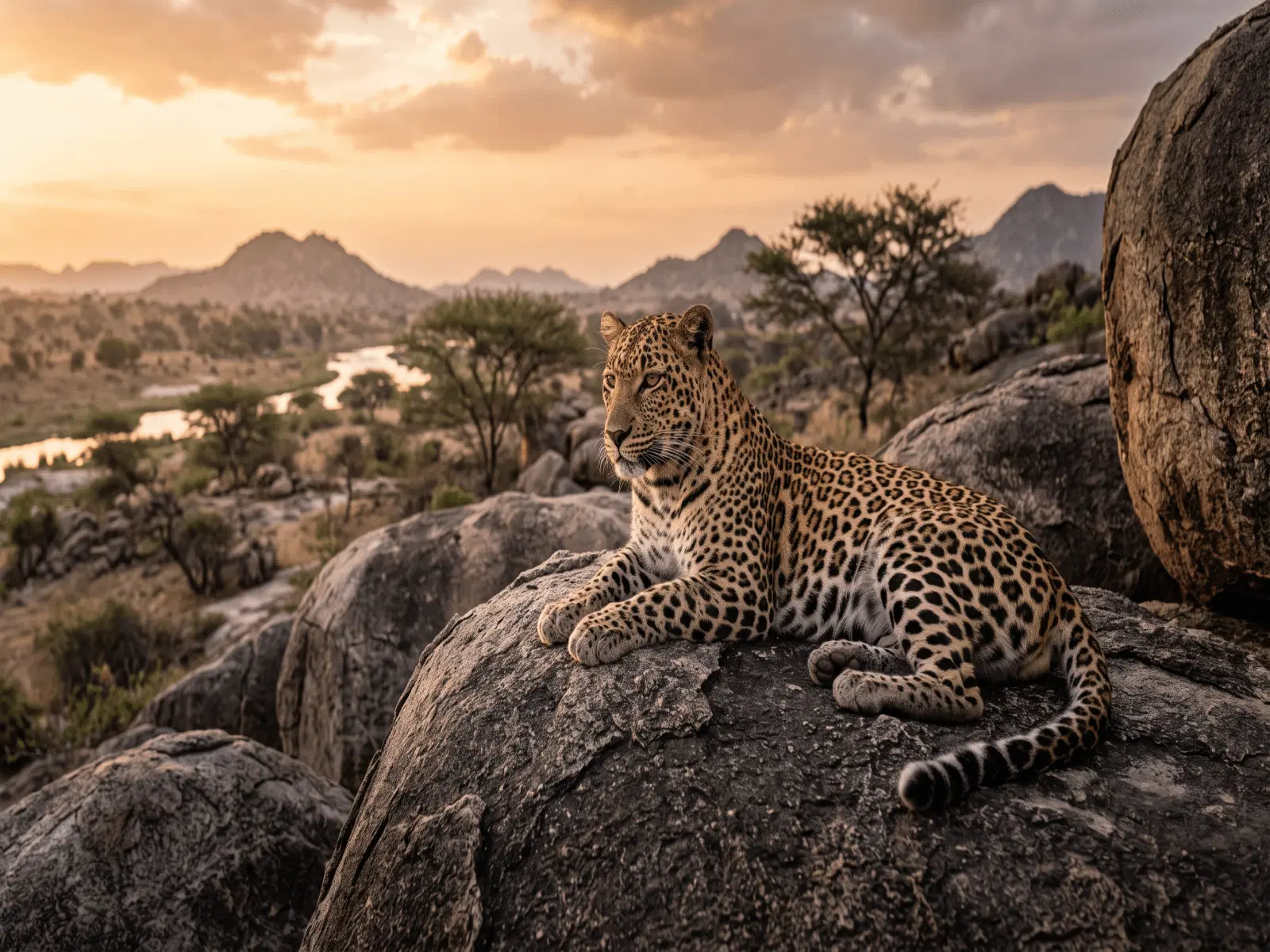
Leopard on Granite: The Shot Jawai Is Known For and How It Happens
What a Full-Day Photography Safari Actually Is
A standard Jawai safari runs as a fixed morning or evening slot, typically three to four hours, timed around one golden-hour window and covering as much ground within a single zone as conditions allow. A full-day dedicated photography safari is a different product built for a different purpose. Rather than one session timed to one light window, it extends across both the morning and evening golden hours in a single continuous booking, with the vehicle and guide remaining available through the middle of the day for repositioning, rest, review, or continued quiet observation at a promising location rather than returning to a stay and re-entering the zone later. The distinction is not simply “more hours.” It is a fundamentally different way of using the time, built around image-making as the primary goal rather than general wildlife viewing.
How It Differs From a Standard Safari, Concretely
On a standard safari, the driver and guide are working to maximize the chance of a good sighting within a fixed window, which usually means covering territory efficiently and moving on from a quiet spot to try elsewhere. On a full-day photography safari, the priority shifts toward positioning and patience. If a leopard is resting in a promising location with workable light, a photography-focused team will often hold position and wait rather than moving on, because the value of a held position with correct light and angle frequently exceeds the value of checking three additional locations in the same span of time. This single difference, patience over coverage, is probably the most consequential distinction between the two products, and it is very difficult to replicate on a standard timed slot shared with non-photography guests.
A full-day safari also allows genuine flexibility around the light itself rather than a fixed departure and return time. If the morning session produces a strong sighting early, the vehicle can reposition for a different angle or a second location rather than ending the session at a predetermined hour. If conditions in one zone are quiet, there is time within a full day to move to a second zone, Bera to Sena or Sena to Devgiri, in a way a standard three-hour slot rarely allows for. And because the booking spans the full legal safari window, from the 6am opening through the 7pm close now in effect under the current regulations, it captures both golden-hour periods in the same day rather than requiring two separate bookings on two separate mornings and evenings.
Who a Full-Day Photography Safari Actually Suits
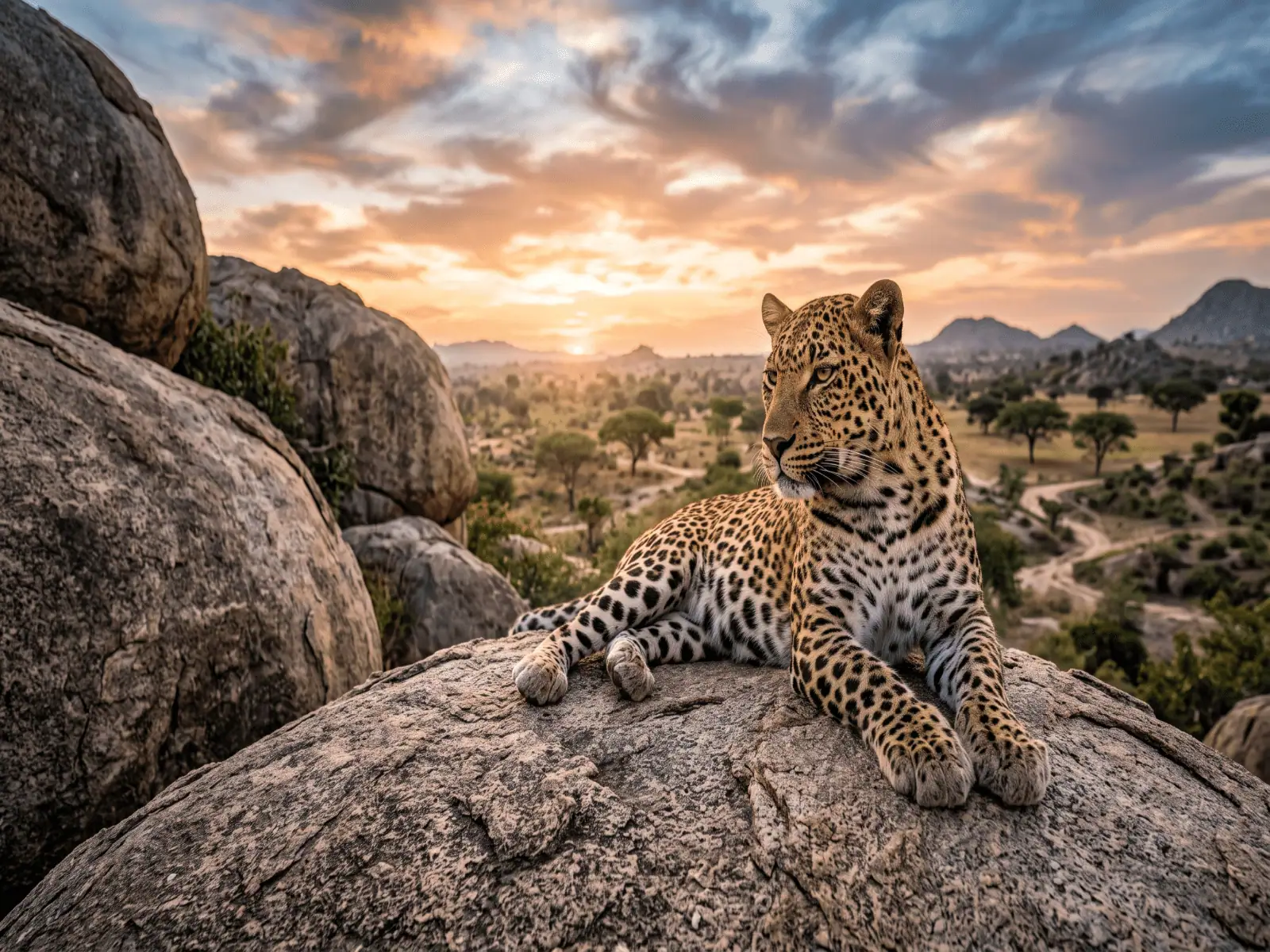
This is a premium product, and it is worth being honest about who gets genuine value from it rather than presenting it as something every visitor should book. Photographers working on a specific project, a portfolio series, a submission for a publication or competition, or personal work intended for large-format printing, benefit from the extended positioning time and the ability to wait out a quiet stretch rather than accepting whatever a fixed window produces. Professional and semi-professional photographers who have already done a standard Jawai safari on a previous trip, and who now understand what the destination offers and want meaningfully more control over how their limited time is used, are a natural fit. Visitors with a specific shot list in mind, a particular kind of light, a specific composition involving the granite and a leopard, or the Rabari coexistence story specifically, also tend to get more out of a dedicated full day than out of a standard slot shared with general wildlife-viewing guests.
By contrast, a first-time visitor without strong photography ambitions, or a family group primarily interested in a general wildlife experience, is usually better served by a standard safari or a sunrise-and-sunset combination, since the extended time and higher cost of a full-day photography booking is not necessary to have a satisfying visit. Being honest about this distinction matters more than upselling every visitor toward the premium option; the right product depends on what a given traveler actually wants out of their time in Jawai.
How the Day Is Typically Structured
A full-day photography safari generally begins before the standard morning slot would, since being positioned and ready as the safari window opens at 6am matters more for photographers than for general wildlife viewers who can afford a slightly later start. The first two to three hours are worked as a focused golden-hour session, with the guide prioritizing positioning over ground coverage. As the light hardens toward midday, the middle hours are typically used for a mix of continued quiet observation at a productive location, a return to a base for rest and a break from the heat, and planning or repositioning ahead of the evening session. The final two to three hours before the 7pm close are worked as a second golden-hour session, often in a different part of the same zone or a different zone entirely if the morning suggested that would be more productive.
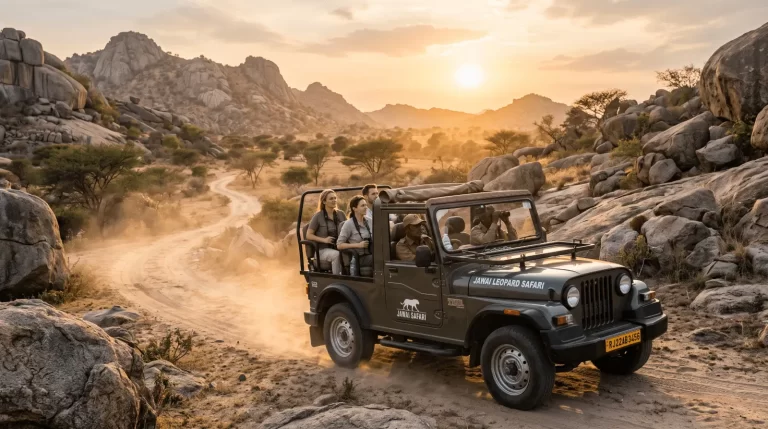
Throughout the day, a guide working a photography-focused booking is doing more than simply spotting leopards. Reading which side of a given rock formation the light will favor at a given hour, anticipating where a resting leopard is likely to move once it becomes active in the evening, and understanding how to position the vehicle so the sun sits behind the photographer rather than behind the subject, are all part of what separates a photography-literate guide from a general safari driver. This is a large part of why the full-day product is generally led by a smaller number of specifically experienced team members rather than being interchangeable with any available registered vehicle.
What a Full-Day Safari Does Not Change
It is worth being clear that extended time does not change the fundamental rules governing safaris in Jawai, and it should not be marketed or understood as a way around them. The vehicle must still be committee-registered and GPS-tracked. The safari still operates only within the roughly 6am to 7pm window; there is no version of a full-day booking that extends into night hours, since night safaris remain banned outright under the current regulations. Spotlighting and drone use remain off-limits regardless of how much is paid for the booking or how serious the photographer’s intent. A full-day safari is a legitimate, compliant way to get more time and better positioning within the existing legal framework, not a workaround for it, and any operator suggesting otherwise should be treated with real caution.
Realistic Expectations
Even a full day dedicated entirely to photography does not guarantee a specific sighting or a specific image. Jawai’s leopards remain wild animals on their own schedule, and the honest value of a full-day booking is in maximizing the number of genuine opportunities and the quality of positioning when an opportunity does occur, not in manufacturing a guaranteed outcome. Photographers who understand this going in tend to have a considerably better experience than those expecting a full day to function as an insurance policy against a quiet trip. What extended time reliably delivers is more attempts at the right conditions, more patience available when a sighting does develop, and access to both golden-hour windows in a single day rather than a single narrow slot, which collectively shift the odds meaningfully in a photographer’s favor without ever promising a specific result.
Combining a Full-Day Safari With a Multi-Day Visit
For photographers building a genuinely serious body of work, a single full-day safari is often paired with additional standard or full-day sessions across a multi-day stay, allowing coverage of more than one zone and more than one set of light conditions across the visit. A three to five day photography-focused trip, combining one or more full-day sessions with standard morning and evening slots across the remaining days, is a common pattern among photographers who have researched the destination properly and want a body of work rather than a single lucky frame. This kind of trip benefits considerably from being planned in advance with an operator who understands photography needs specifically, rather than booked as a series of generic safari slots.
Cost Factors Worth Understanding Before You Ask
A full-day photography safari costs more than a standard slot, for reasons that are worth understanding rather than treating as an arbitrary premium. It typically ties up a registered vehicle, driver and guide for the entire legal safari window rather than a single three to four hour slot, which is the bulk of the cost difference. It often involves a more experienced guide specifically comfortable with photography priorities, positioning, patience, reading light, rather than a general safari driver. And because it may include repositioning between zones or an extended wait at a single productive location, it can involve more fuel and vehicle time than a standard drive covers. None of this is unusual or specific to Jawai; extended, specialist bookings cost more than general ones in almost any wildlife photography destination worldwide, and the difference reflects genuinely different resources and expertise being applied to the booking.
What to Discuss Before Booking
Because a full-day photography safari is a customized product rather than an off-the-shelf slot, it benefits from a real conversation before booking rather than a simple date and headcount. Useful things to discuss in advance include whether you have a specific subject priority, leopards specifically, the migratory birds at the dam, the Rabari coexistence story, or a mix; whether you have a preferred zone based on previous research or a previous visit; how many photographers will be in the vehicle, since a full-day booking with more than two or three photographers can start to compromise everyone’s ability to get clean angles; and whether you want the day structured around two zones or a deeper, more patient focus on one. A curation team that asks these questions before confirming a booking is generally signaling that they understand photography needs specifically, rather than treating the full-day product as simply a longer version of a standard drive.
Message us on WhatsApp for current pricing and a quote tailored to your dates and group size.