What to Pack for Jawai: Season by Season, Including the Winter Dawn Layers
What to Pack for Jawai: A Season-by-Season Approach
Packing for Jawai trips up more first-time visitors than almost any other practical detail, mostly because the region’s climate swings harder within a single day than people expect from a desert-adjacent part of Rajasthan. A cold dawn safari and a warm afternoon can happen on the very same date, and travelers who pack for only one end of that swing tend to spend part of their trip uncomfortable. This guide breaks packing down by season, with specific attention to the layering system that experienced repeat visitors rely on for winter dawn safaris.
The Core Principle: Layer for the Swing, Not the Season
Before getting into season-specific detail, the single most useful mindset shift is this: don’t pack for “Jawai in December” or “Jawai in May” as if it has one temperature. Pack for the coldest hour of your day and the hottest hour of your day, because on a safari-heavy itinerary you will likely experience both within the same 12-hour window. Layering — pieces you can add and remove as the day moves — is the only system that actually works here.
Winter (Roughly November Through February)
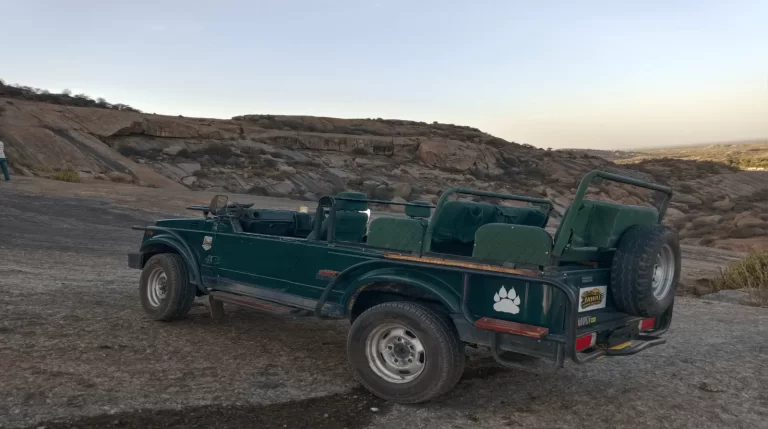
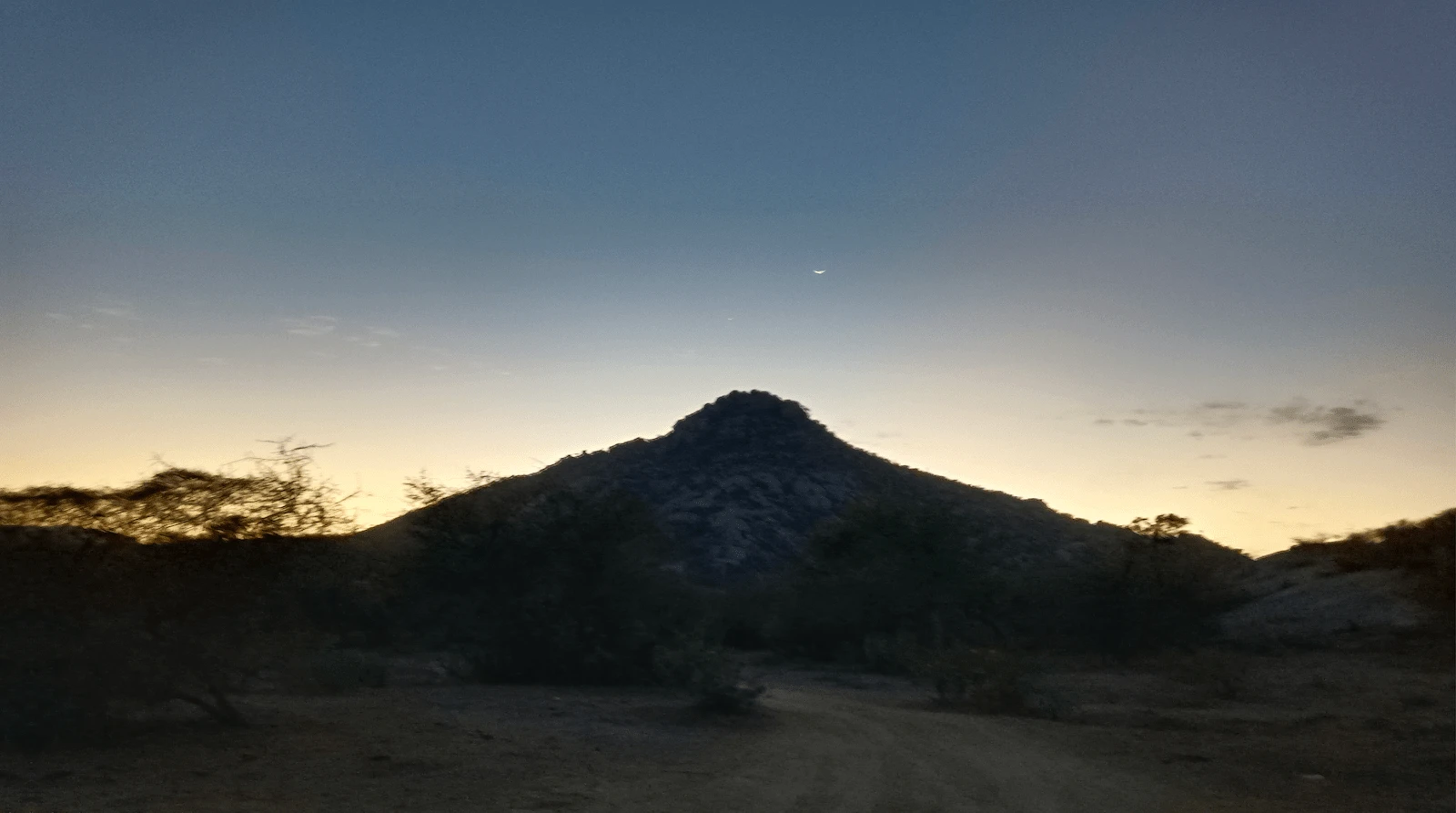
Winter is peak safari season in Jawai, and also the season with the widest daily temperature swing. Dawn safari departures, often before or around sunrise, can be genuinely cold — cold enough that guests unprepared for it end up shivering through the best part of the morning’s wildlife activity instead of enjoying it. By mid-morning, as the sun climbs over the granite hills, temperatures rise substantially, and by afternoon you may be comfortable in a single light layer.
The Winter Dawn Layering System
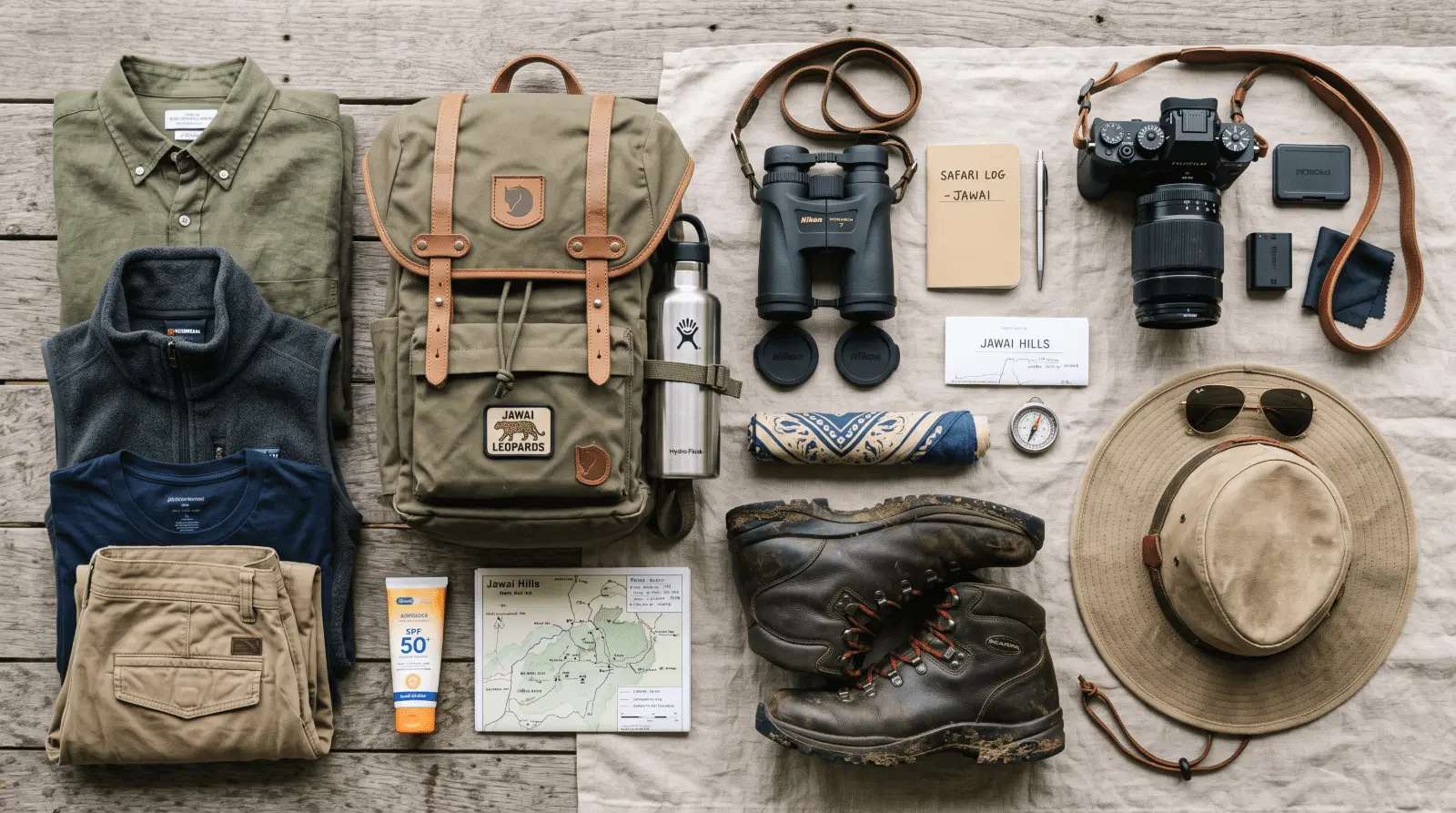
Experienced repeat visitors build their dawn safari outfit in layers that can be removed and stored in the jeep as the morning warms: a base layer (a long-sleeved thermal or moisture-wicking top), a mid layer (a warm fleece or wool sweater), and an outer layer (a proper windproof jacket, since open jeeps moving at speed create wind chill well beyond the ambient temperature). Add a warm hat or beanie, since heat loss through the head is significant in an open vehicle, and a pair of gloves or at minimum pocket hand-warmers for the coldest pre-dawn minutes. A scarf or buff is genuinely useful too, both for warmth and for managing dust on the safari tracks. By the time the safari ends, typically mid-morning, most of these layers come off entirely, so pack them to be easily removable and stowable rather than bulky.
Winter Daytime and Evening
Daytime temperatures in winter are usually pleasant and comfortable in a light layer, similar to a mild spring day elsewhere. Evenings cool down again once the sun sets, so keep a mid-layer accessible for dinner and evening common areas, particularly at camps with open-air dining or seating.
Summer (Roughly March Through June)
Summer in Jawai is dry and can be intensely hot through the middle of the day, which shifts the practical safari rhythm toward very early mornings and later afternoon-into-evening drives, with a long rest period across midday. Packing for summer means prioritizing heat and sun management over cold protection.
What to Prioritize
Lightweight, breathable, loose-fitting clothing in neutral safari colors (khaki, olive, sand tones rather than bright colors, which is standard safari etiquette across seasons), a wide-brimmed hat or cap, high-SPF sunscreen, sunglasses, and a reusable water bottle you can keep topped up are the essentials. Early morning safaris can still be mild enough to want a light layer for the first hour, so don’t discount layering entirely even in summer — just scale it down significantly from the winter system. Breathable, closed-toe shoes remain important for any walking on granite terrain, even though sandals might feel more appealing in the heat.
Monsoon (Roughly July Through September)
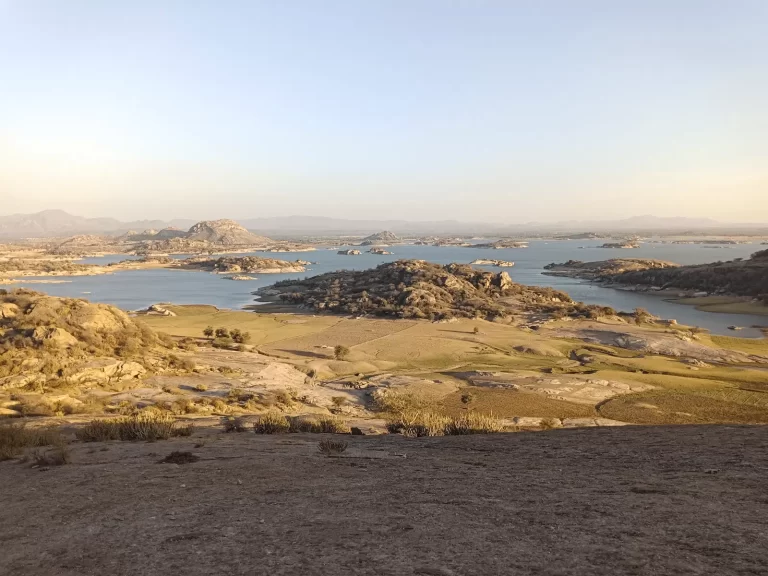
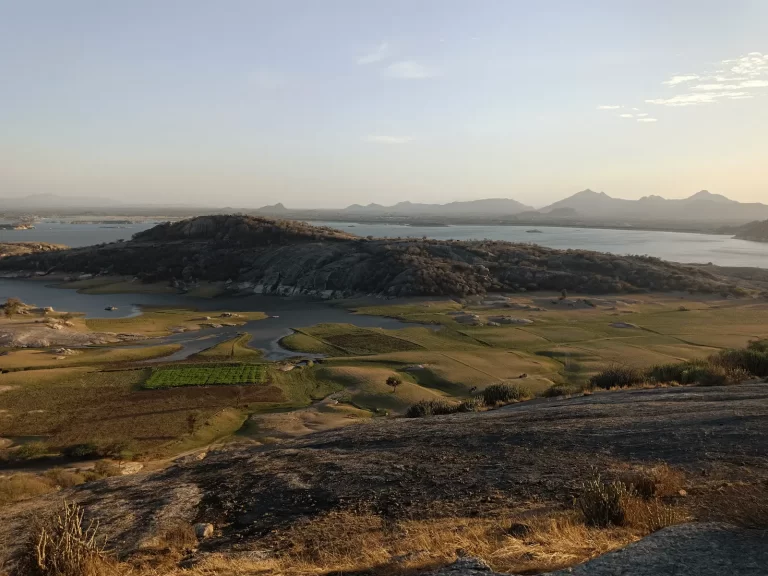
Monsoon transforms Jawai’s landscape, turning the granite hills green and filling the Jawai Bandh dam, which changes both the visual character of a safari and the birdlife you might encounter around the water. Humidity rises, and rain is a real possibility, sometimes affecting safari timing or requiring flexibility in your plans.
What to Prioritize
A lightweight, packable rain jacket or poncho is the single most useful monsoon-specific item, alongside a dry bag or waterproof cover for any camera equipment or electronics. Quick-drying clothing fabrics are more useful than cotton, which stays damp in humidity. Closed shoes with good grip matter even more in this season, since granite surfaces can become slippery when wet. Insect repellent is worth adding to your kit during this period, given the increased moisture and vegetation.
Packing for Families With Children
Families traveling with children should pay particular attention to the winter dawn layering system, since children regulate temperature less efficiently than adults and can get cold faster during an early safari without showing it clearly until they’re already uncomfortable. Pack an extra layer beyond what you think a child needs, along with snacks and water for the gap between an early departure and a later breakfast back at the accommodation. Sun protection matters even more for children in summer, including a hat that will actually stay on in an open jeep and child-appropriate sunscreen reapplied through the day. A basic children’s medical kit — fever reducer, rehydration salts, any regular medication — is worth packing given the distance to serious medical care.
Year-Round Essentials, Regardless of Season
Some items belong in every Jawai packing list no matter when you’re traveling. Neutral-colored clothing for safaris is a year-round standard, not just a winter or summer consideration — bright colors and stark white or black can be more visible and potentially disruptive to wildlife, and most naturalists will ask guests to dress accordingly. A basic personal first-aid kit with any regular medication, clearly labeled and packed with a buffer supply beyond your exact trip length, matters given how far the nearest serious medical facility can be. A physical copy of essential documents, since connectivity can be unreliable, is worth having alongside digital copies. Cash in small denominations is essential given the region’s limited and inconsistent ATM access. A basic power bank is useful given that charging opportunities may be limited during full safari days. Binoculars, while not essential, meaningfully improve the experience for both leopard spotting at distance and the substantial birdlife around the dam.
Photography Equipment Considerations
If photography is a priority for your trip, pack with dust in mind — Jawai’s terrain is dry and dusty for much of the year, and camera equipment benefits from a proper dust-resistant bag or cover, along with lens cleaning cloths packed in an easily accessible place rather than buried in checked luggage. A beanbag or stabilizing support for shooting from a moving or stationary jeep is worth considering if you don’t already travel with one, since traditional tripods are impractical in a vehicle. Spare batteries matter more here than in many destinations, given limited charging opportunities during long safari days away from your accommodation.
Packing for a Multi-Stop Rajasthan Circuit
If your Jawai visit is part of a wider circuit through Udaipur, Jodhpur, Ranakpur, or Kumbhalgarh, remember that Jawai’s practical, rugged, layered packing list sits in real contrast to the more polished, heritage-city stops on a typical circuit. Pack with the understanding that you’ll want city-appropriate clothing for temple visits and heritage sites, alongside the neutral, practical safari layers for the Jawai leg specifically. Separating these into different sections of your luggage, or packing a smaller duffel specifically for the Jawai portion of a longer trip, makes the transition between these very different travel modes considerably easier.
What You Genuinely Don’t Need
Formal clothing has essentially no place on a Jawai trip — even the luxury camps operate on a relaxed, landscape-oriented dress code rather than a formal dinner culture. Heavy, rigid luggage is impractical given rural roads and the loading and unloading involved in transfers and safari pickups; a duffel or soft-sided bag is more practical than a hard-shell suitcase. And despite the temptation, bright or patterned safari-brand clothing marketed as “safari wear” is not necessary — genuinely neutral, comfortable clothing you may already own works just as well.
A Simple Checklist Approach
If you’d rather work from a condensed list than prose, group your packing into four mental buckets before you zip the bag closed: temperature layers for the coldest and hottest hours of your specific season, safari-appropriate neutral clothing and sturdy closed shoes, health and document essentials including medication, cash, and copies of key paperwork, and any photography or connectivity gear with backup power. Running through these four categories against your actual itinerary, rather than a generic list, catches most of the gaps that trip people up.
A Final Word on Preparedness
None of this packing advice is about anxiety or over-preparation — it’s about making sure the practical details don’t distract from what you’re actually there for. A guest who is cold, sunburned, or without a working camera battery at the exact moment a leopard appears on a granite outcrop has a very different memory of that morning than one who came prepared for the specific conditions of the day. Pack in layers, pack for the season honestly rather than optimistically, and the rest of the trip has a much better chance of going the way you pictured it.
If you’d like season-specific advice tailored to your exact travel dates, or want us to flag anything unusual about conditions during your particular week, message us on WhatsApp for current pricing and a quote tailored to your dates and group size.