Jawai’s New Safari Rules (2026): What the Court Order Changes for Visitors
Jawai’s New Safari Rules: Why 2026 Changed Everything
If you last read about Jawai safaris before 2026, or picked up secondhand information from an old blog post or a friend’s trip from a few years back, some of what you know is now out of date. A Rajasthan High Court order, backed by a new Forest Department Standard Operating Procedure, restructured how safaris in the Jawai region operate. This is not a minor administrative tweak. It changes which vehicles can legally run a commercial safari, what hours safaris can operate, what behavior is permitted in the field, and what happens to operators who break the rules. If you are planning a visit, understanding this shift matters as much as understanding the wildlife itself.
What Prompted the Change
Jawai’s popularity as a leopard destination grew substantially over the past decade, and with that growth came an increase in informal, unregistered safari operations — vehicles and drivers running commercial trips without any oversight, consistent safety standards, or accountability to conservation guidelines. Concerns about unregulated tourism pressure on the landscape, inconsistent safety practices, and the risk of harmful interactions with wildlife eventually reached the Rajasthan High Court, which issued an order directing the state to bring structure to how safaris in the region are conducted. The Forest Department responded with a formal Standard Operating Procedure that all commercial safari operations in the Jawai area are now required to follow.
The Core Changes, Explained Plainly
Mandatory Committee Registration
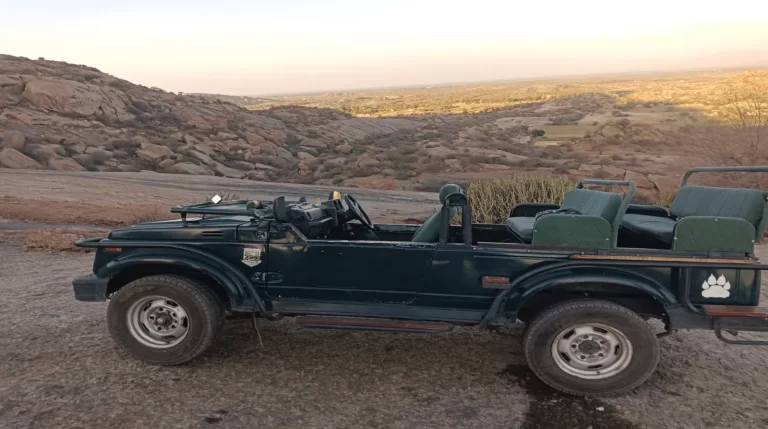
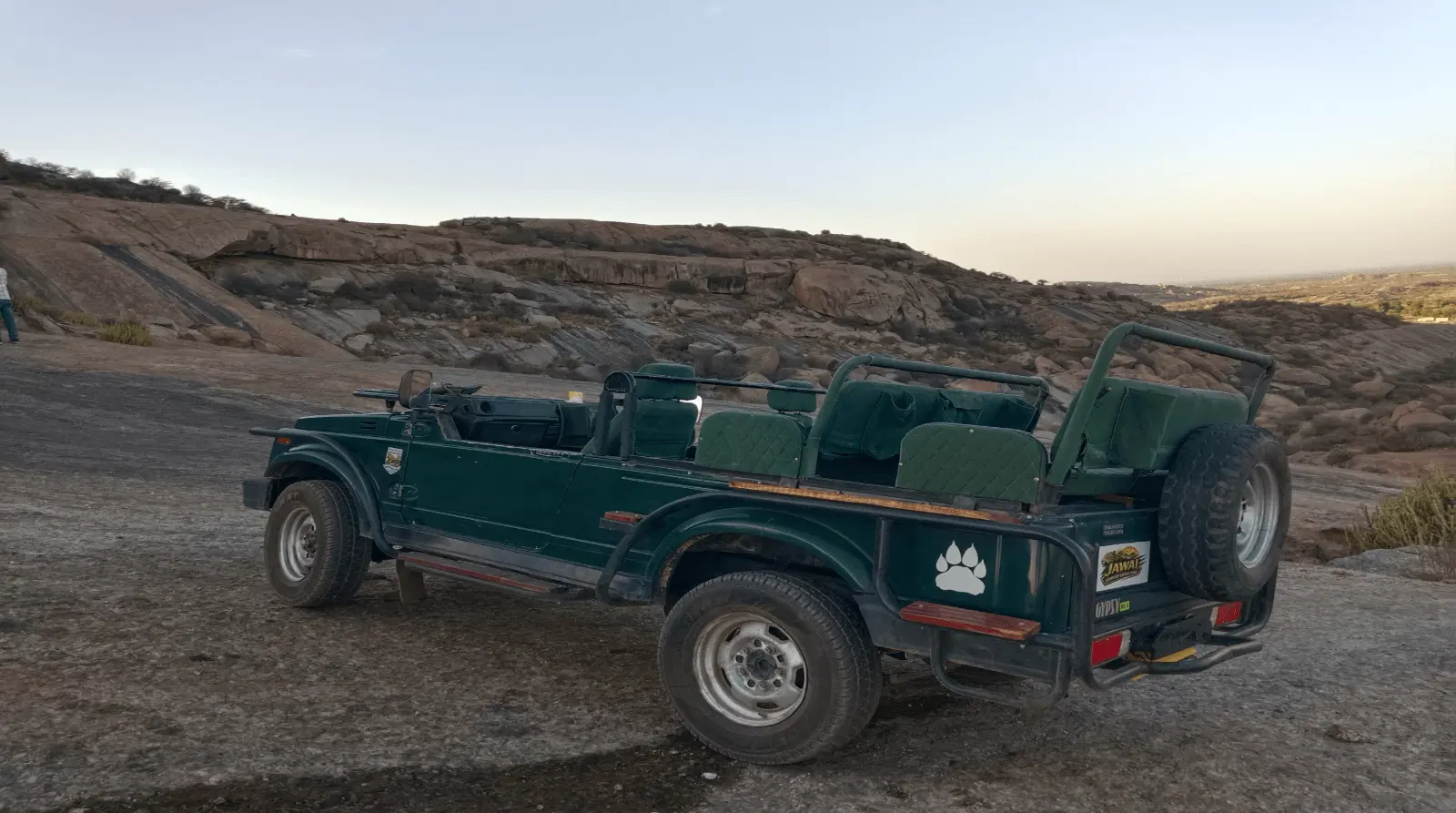
Every vehicle offering commercial safaris in Jawai must now be registered with a coordination committee established specifically to oversee safari and eco-tourism activity in the region. This registration is not a formality — it is the legal basis for a vehicle to operate at all. An unregistered vehicle running a paid safari is now operating outside the law, not simply outside best practice. For travelers, this means the first real question to ask any operator or accommodation arranging your safari is whether their vehicles are currently registered with the committee, not what the price is or what package they’re offering.
Mandatory GPS Tracking
Alongside registration, every authorized safari vehicle must carry GPS tracking equipment. This allows the Forest Department to monitor vehicle movement, verify that vehicles are staying within approved routes and zones, and confirm that safaris are operating within the permitted hours. GPS tracking also creates accountability in the event of a dispute or an incident — there is now a verifiable record of where a vehicle was and when, rather than relying on driver testimony alone.
Fixed Daylight Safari Hours
Safaris are now restricted to a fixed daylight window, running from approximately 6am to 7pm. This eliminates the informal night drives and early pre-dawn departures that some operators previously offered outside any formal oversight. For visitors, this means your safari planning needs to work within this window rather than assuming flexible or extended hours are available, regardless of what an operator might have offered in the past.
A Firm Ban on Night Safaris, Spotlighting, Drones, Baiting, and Call Playback
Perhaps the most significant behavioral change is the explicit ban on a set of practices that had crept into wildlife tourism here and elsewhere in India: night safaris, the use of spotlights to illuminate animals after dark, drone use near wildlife, baiting animals to draw them into view, and playing recorded animal calls to provoke a response. All of these practices disturb natural behavior and can cause genuine harm to wildlife over time, even when they make for a more dramatic tourist encounter in the moment. Their prohibition is a direct, practical improvement for the animals living in this landscape, even though it means visitors can no longer expect the kind of engineered “guaranteed” encounter that some destinations have marketed in the past.
Real Penalties for Violations
Unlike many wildlife tourism guidelines that exist mostly as suggestions, this SOP carries real consequences. Operators found violating the rules face suspension of their registration or permanent blacklisting from operating in the region at all. This gives the registration and GPS tracking system actual teeth — a driver tempted to bend the rules for a better tip or a more dramatic sighting now risks losing their entire livelihood, not just a warning.
A Supply Freeze and Talk of Sanctuary Status
Alongside the operational rules, the court process has also touched on the broader question of how tourism infrastructure in Jawai should be allowed to grow. There has been discussion of pausing new tourism licenses and new construction without specific court permission, and the possibility of the state examining whether Jawai should be formally declared a wildlife sanctuary has been raised. Neither of these represents an immediate change for a visitor planning a trip today, but they signal that the regulatory environment here is actively evolving, and further changes to how the region is managed are plausible in the coming years.
What This Means for You as a Visitor
In practical terms, the new rules change less about what a well-organized trip looks like than you might expect, and more about which operators you should be willing to book with at all. A safari conducted by a committee-registered, GPS-tracked vehicle within daylight hours, without spotlighting or baiting, is not a diminished version of the Jawai experience — it is simply the only legal and ethical version of it now available, and arguably the version that gives you the most honest sense of how these leopards actually live and move across this landscape.
What you should actively avoid is any operator offering you something that sounds like an exception to these rules — a night drive “off the books,” a spotlight to guarantee a better view, a promise that a call playback will “bring the leopard closer.” These are not premium upgrades. They are violations that put the operator’s registration at risk, put pressure on the wildlife, and expose you as a visitor to a legally uncertain and ethically compromised experience. A reputable, compliant operator will simply tell you this isn’t available and explain why, rather than working around it.
How This Changes the Booking Conversation
Before 2026, the questions travelers asked when booking a Jawai safari tended to focus on price, timing, and which zone to visit. Compliance is now just as important a question, and arguably the first one worth asking. When you inquire about a safari, ask directly whether the vehicle is registered with the coordination committee and whether it carries GPS tracking. A legitimate, well-run operator will answer this immediately and without hesitation, because compliance is now their license to operate at all, not an optional selling point.
This is exactly why we work only with committee-registered, GPS-tracked operators, and why we say so plainly rather than treating it as a footnote. In a landscape where the rules have real penalties attached, the operator’s compliance status is not a detail — it is the foundation the rest of your trip is built on.
How Enforcement Actually Works in Practice
Visitors sometimes assume rules like these exist mostly on paper, especially in a rural region where oversight might seem hard to maintain. In this case, the GPS tracking requirement is precisely what makes enforcement practical rather than theoretical. The Forest Department can review vehicle movement data after the fact, cross-check it against permitted zones and hours, and act on discrepancies without relying purely on a ranger physically catching a violation in progress. This is a meaningfully more robust enforcement model than the honor-system approach that existed before, and it is part of why registration and tracking compliance carries real weight rather than being a box-ticking exercise.
What Hasn’t Changed
It’s worth being clear about what the new rules do not affect. The fundamental character of a Jawai safari — an open, unfenced granite landscape, leopards moving across hills shared with Rabari shepherds and their livestock, the patient, quiet nature of tracking and waiting for activity — remains exactly what it has always been. The rules formalize good practice; they don’t reinvent the experience. Sightings remain probable but never guaranteed, dependent on season, timing, weather, and a degree of luck that no rulebook or registration system can change. If anything, removing the pressure that came from unregulated operators chasing dramatic encounters has made for a calmer, more respectful safari environment overall.
Our Position
We view this regulatory shift as a genuinely positive development, not a complication to work around. A landscape this ecologically unusual — where leopards and a pastoralist community have coexisted for generations without conflict — deserves tourism practices that protect rather than erode that balance. We built our approach around working exclusively with registered, compliant operators before this became a legal requirement, because it was already the right way to operate. The court order and SOP simply confirm what should have been standard practice all along, and we think travelers who understand this will trust the destination, and the operators serving it, more rather than less.
If you’re planning a Jawai trip and want to understand exactly how these rules will shape your itinerary, or which operators we work with and why, message us on WhatsApp for current pricing and a quote tailored to your dates and group size.