Jawai in Winter (October–February): The Season That Sells Out and Why
The Season Most Guides Skip – and Why That’s a Mistake
May and June are the hottest months in Pali district, and most generic Rajasthan travel content treats this stretch as a season to avoid entirely. That advice is not wrong about the heat – it is real and it needs to be managed properly – but it is incomplete about what actually happens to Jawai’s wildlife during these months. Summer is when the landscape’s water sources shrink to their smallest footprint of the year, and that concentration effect changes wildlife behaviour in ways that can genuinely work in a well-prepared visitor’s favour. This guide covers the honest version of Jawai summer: what the heat really means day to day, why sightings can hold up better than people expect, and who this season is actually built for.
What the Heat Actually Feels Like
Summer heat in Pali district is serious and needs to be taken seriously. Daytime temperatures climb well into territory that makes any activity outside of shade genuinely draining by mid-morning, and this shapes the entire structure of a summer day far more than in any other season. This is not a comfort-preference issue the way winter cold is – it is a real heat-management problem requiring proper hydration, timing, and shade discipline for anyone spending the day in this region during May or June.
What summer heat does not mean is that safaris become miserable or unsafe when planned correctly. The structure of a summer day is simply built entirely around avoiding the punishing midday hours rather than spreading activity evenly across daylight, the way a winter day can. Early morning and the immediate pre-dusk hours become the only workable windows, and everything else – meals, rest, indoor time – gets scheduled around protecting guests from the hottest stretch of the day.
Why Sightings Can Actually Be Strong in Summer
This is the counter-intuitive part of the summer story, and it is grounded in real ecological logic rather than wishful marketing. As temperatures rise and the dry season reaches its most extreme point, water becomes the single limiting resource across the Jawai landscape. Seasonal pools that exist elsewhere in the hills during cooler, wetter months dry up first, and animals – both leopards and the prey species they depend on – increasingly concentrate around whatever water remains, most notably the shrinking margins of Jawai Bandh dam itself and a handful of reliable points across the Bera, Sena, and Devgiri zones.
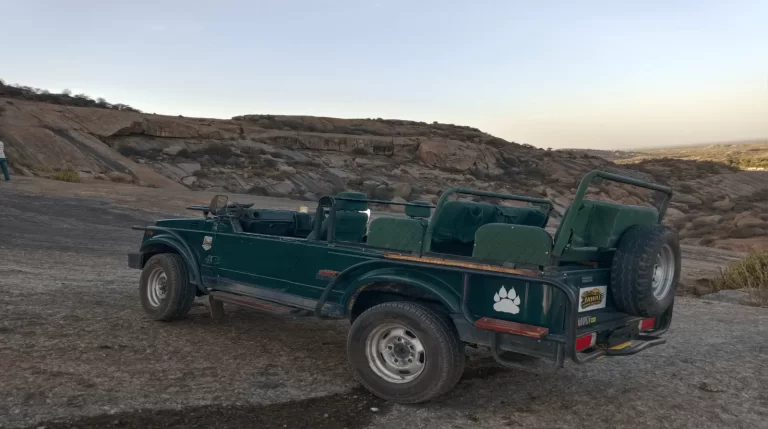
This concentration effect means that, rather than wildlife activity being spread thin and hard to locate across a wide territory, it compresses into a smaller number of predictable locations. Experienced guides who know exactly where the remaining water sources are can often work a tighter, more focused search area in summer than in the wetter months, when animals have far more of the landscape available to them. Leopards do rest more during the punishing midday heat, retreating to shaded rock crevices in the granite, which is exactly why summer safaris are structured around dawn and dusk activity windows rather than all-day drives – those are the hours when the animals themselves are moving, not just when the temperature is bearable for guests.
None of this amounts to a guarantee, and summer sightings remain honestly variable, but the underlying logic – less water means more predictable animal movement – is real, and it is why a meaningful number of experienced wildlife travellers and photographers deliberately choose summer rather than simply tolerating it as an off-season compromise.
A Summer Safari Day, Structured Around the Heat
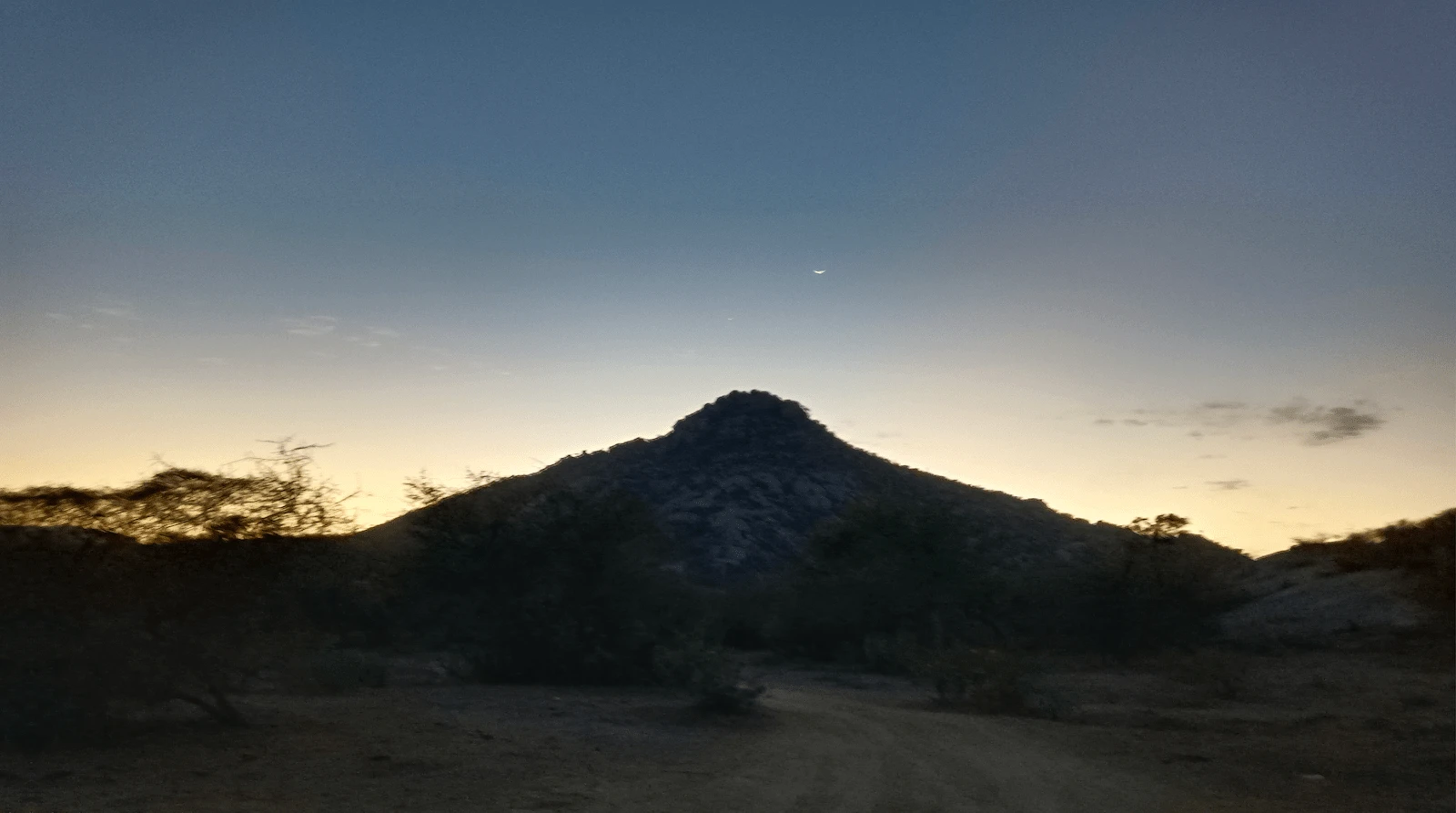
A summer day at Jawai starts very early – often earlier than a winter morning drive – to maximise time in the cool, low-light hours right around sunrise, when both temperature and animal activity are most favourable. This first session typically wraps up well before the late-morning heat becomes intense, and the middle of the day is given over entirely to rest, shade, and hydration, usually back at a camp or homestay with proper cooling. There is no attempt to fill the midday hours with activity the way a winter itinerary might use that time for a dam visit or a relaxed walk – the discipline of a good summer trip is protecting guests from the hardest hours of the day, not working around them.
The second safari session runs late in the afternoon into the beginning of dusk, again timed to the cooler, more active hours for wildlife, and again wrapping within the daylight safari window that applies across all seasons under the current Forest Department rules. Evenings cool down meaningfully after dark even in summer, which comes as a relief after the intensity of the day, though nothing changes about the daylight-only safari restriction – there is no night-safari workaround in any season, summer included.
The Dam in Summer: Lowest Water, Most Exposed Granite
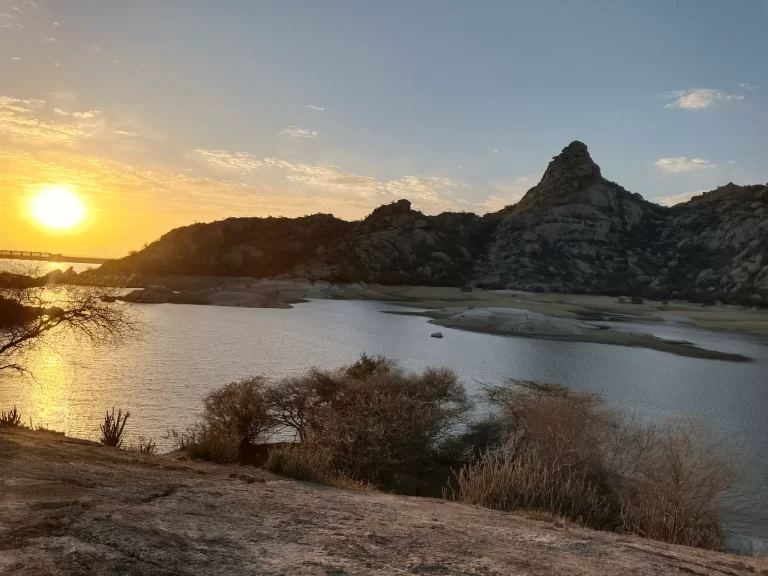
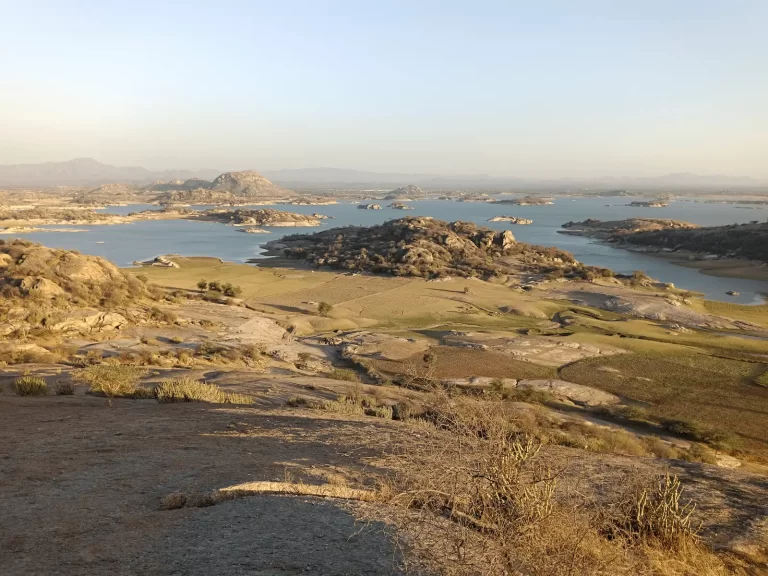
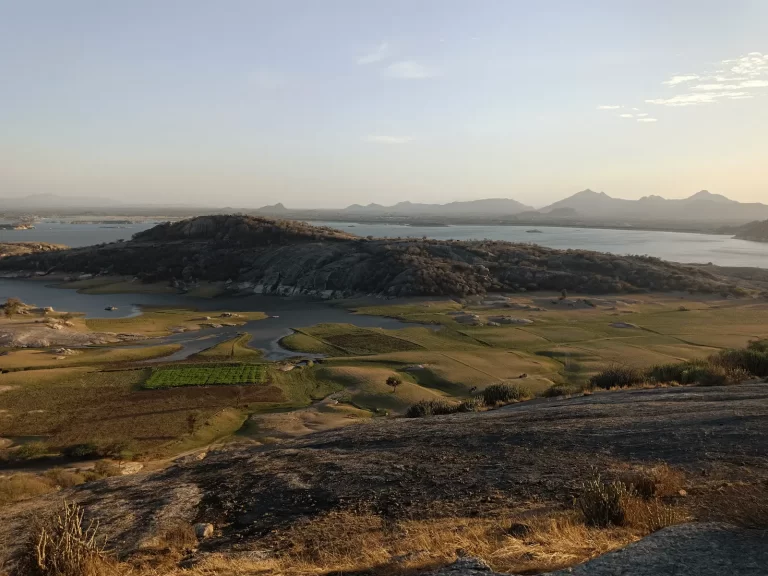
Summer represents the far end of the annual water-level cycle at Jawai Bandh. Having drawn down steadily since the post-monsoon high, the dam typically reaches its lowest point of the year through the pre-monsoon summer months, exposing the greatest extent of granite around its margins before the rains arrive in July to begin refilling it. This extreme low-water period is visually striking in its own right – a stark, sun-bleached granite landscape quite different from the greener look of other seasons – and it reinforces the concentration effect described above, since even the dam’s own shrinking edge becomes one of the few remaining reliable water points in the wider area.
Who Summer Genuinely Suits
Summer is not the right season for every traveller, and it is worth being direct about that rather than overselling it. It does not suit families with young children who will struggle with sustained heat exposure, and it does not suit travellers who want a leisurely, all-day pace with time to explore beyond the two structured safari windows. What it does suit is heat-tolerant travellers, particularly photographers and serious wildlife enthusiasts, who are drawn by two specific advantages: meaningfully lower visitor numbers than peak winter, giving a calmer, less crowded version of the same safari zones, and the genuine possibility of strong, concentrated sightings driven by the water scarcity described above. It also suits travellers with flexible schedules who are combining Jawai with a wider Rajasthan circuit and simply cannot shift their dates into the winter window – summer Jawai, planned properly, is a legitimate choice rather than a fallback.
Comparing Summer to the Rest of the Calendar
It helps to place summer honestly alongside Jawai’s other seasons rather than in isolation. Winter offers more comfortable temperatures and, thanks to low water levels persisting into early summer, similarly exposed granite – but winter also brings the year’s heaviest crowds and the tightest vehicle availability. Summer trades winter’s comfort for genuine solitude: far fewer vehicles on the same tracks, shorter waits at any given sighting, and a noticeably calmer pace at camps and homestays that are working at a fraction of their peak-season occupancy. Compared to monsoon, summer is drier, dustier, and starker in its landscape – monsoon’s green transformation has not yet arrived – but summer’s water-scarcity concentration effect on wildlife movement is sharper and more pronounced than anything monsoon offers, since monsoon spreads water (and therefore animal movement) back out across the hills. Each season is trading one kind of value for another, and summer’s trade is heat for solitude and concentrated sightings.
What Changes for Photography in Summer
Photographers who choose summer deliberately are usually chasing two things: the stark, high-contrast look of sun-bleached granite against a dry, dust-hazed sky, and the practical advantage of near-empty tracks that make it easier to hold a position at a sighting without other vehicles crowding the same view. The concentrated wildlife activity around shrinking water points also means a patient photographer willing to wait quietly near a known water source in the cooler hours has a reasonable chance of activity coming to them, rather than needing to cover wide territory. The trade-off is working within a narrower daily window – the harsh, flat light of midday is unusable for serious photography in any season, but in summer that unusable window is longer and more punishing, compressing the useful shooting time at each end of the day even further than in cooler months.
Wildlife Beyond Leopards in Summer
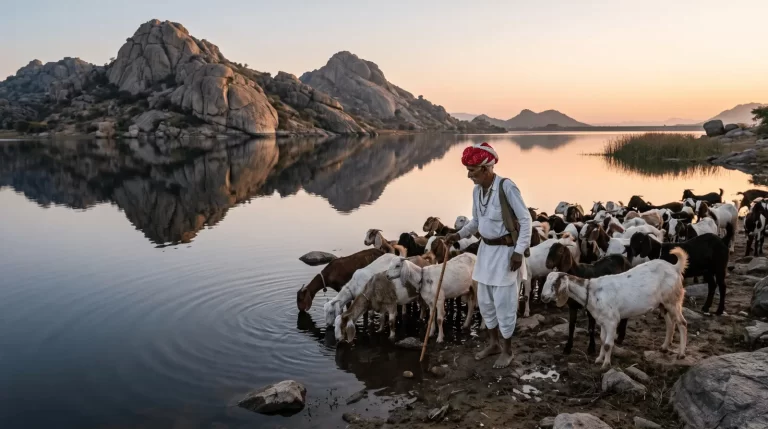
The same water-concentration dynamic that affects leopard visibility applies across the wider Jawai ecosystem in summer. Species that share this landscape – from smaller mammals to the resident birdlife that does not migrate seasonally – are drawn to the same shrinking pools and dam margins, which means a summer safari or a quiet dam-side sit often turns up a broader mix of sightings around the water’s edge than the same spot would offer in a wetter month, even though the migratory winter bird species covered in our dedicated bird guide have not yet arrived. This is a smaller, quieter version of the coexistence story that defines Jawai year-round – the Rabari community continues grazing livestock across this same landscape through the summer heat, timing their own movements around the same water points and the same cooler hours that shape the safari schedule.
Practical Heat Management
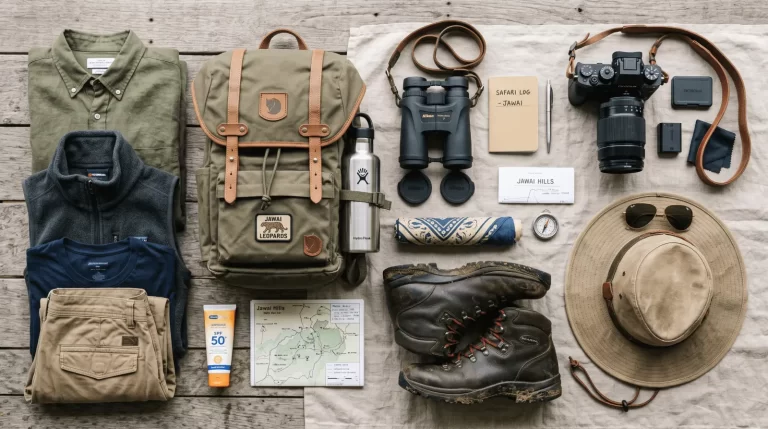
A successful summer trip depends on taking the heat seriously rather than powering through it. Loose, breathable, light-coloured clothing that covers skin from sun exposure works better than minimal clothing that feels cooler but burns faster. Hydration needs to be constant and deliberate, well beyond normal daily habits, starting before you feel thirsty. A wide-brimmed hat and good sun protection are not optional extras in this season. Scheduling matters as much as gear: accepting the early-start, midday-rest, late-afternoon structure rather than trying to fight it is what makes a summer trip work, and any operator or itinerary that proposes all-day activity through a Jawai summer should be treated with real scepticism.
Message us on WhatsApp for current pricing and a quote tailored to your dates and group size.