Jawai in Summer: Heat, Waterholes and the Sightings Nobody Expects
The Season Jawai Content Usually Ignores
July through September is monsoon across Pali district, and it is the stretch of the Jawai calendar that receives the least attention in most travel content – not because there is nothing to say about it, but because it does not fit neatly into a “peak season” sales pitch. That gap is worth correcting. Monsoon transforms this landscape more dramatically than any other seasonal shift: the granite hills turn green, Jawai Bandh dam refills after months of drawing down, and visitor numbers drop to a fraction of what they are in winter. The result is a genuinely different Jawai, not a lesser one, and it deserves an honest look rather than a footnote.
The Green Transformation
For most of the year, Jawai’s defining visual character is granite – bare, exposed rock across the Bera, Sena, and Devgiri hills, especially pronounced through the dry months when water levels are low. Monsoon rain changes that completely. Grasses and scrub vegetation that lie dormant through the dry season come to life across the hillsides, and the stark rock-and-scrub landscape that photographs so distinctively in winter gives way to a green, textured terrain that looks almost like a different region of India entirely. This is a landscape few visitors ever see, simply because so few visit during these months, and it is one of the more striking arguments for a monsoon trip on visual grounds alone.
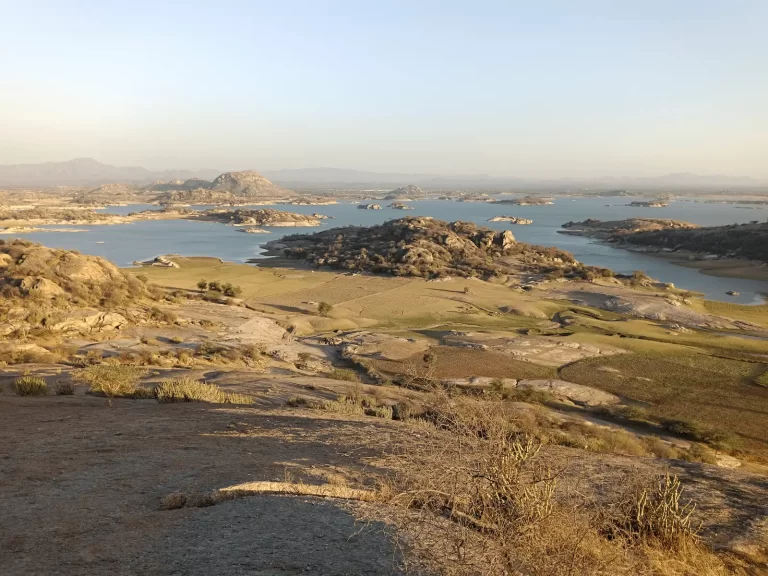
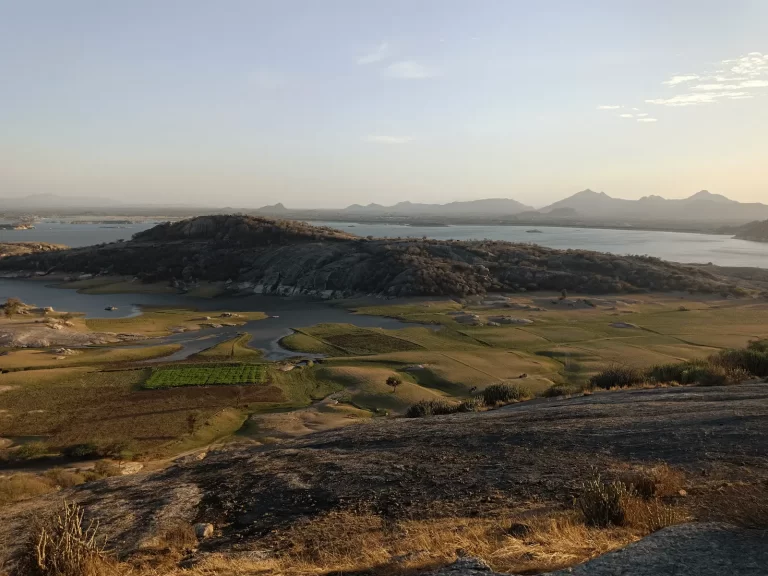
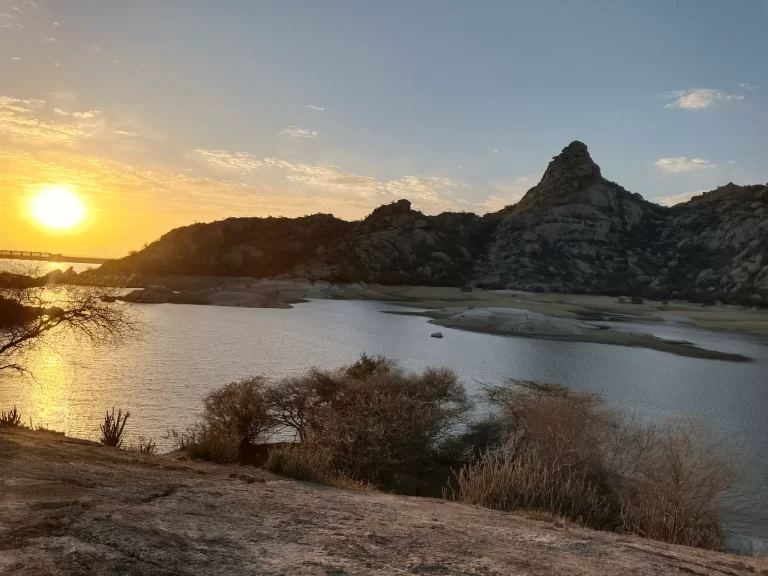
The dam itself undergoes the most dramatic change of the year. Having drawn down to its lowest point through the summer, Jawai Bandh begins refilling with the arrival of the rains, and by the end of monsoon it typically holds close to its highest water level of the year. Watching this refill in progress – the water rising back over granite that was fully exposed a few months earlier – is a specific, unusual thing to witness for anyone who has also seen the dam in its dry-season state.
What Happens to Sightings When the Water Returns
The honest trade-off of monsoon is the direct inverse of the water-level story that makes winter sightings so reliable. As the dam fills and rain replenishes seasonal pools right across the wider landscape, leopards and their prey are no longer concentrated around a shrinking handful of water points – they have far more of the terrain available to them, and far more vegetation cover to move through. This means sightings become less predictable and, on balance, somewhat less frequent than in the dry months, since the same granite exposure that makes leopards easy to spot in January is largely gone, replaced by cover and scattered water sources across a much wider area.
This is not the same as saying leopards disappear – they are resident animals, not migratory, and they do not leave the landscape for the rains. A guide’s ground knowledge, the freshness of tracks, and genuine familiarity with a leopard’s known territory matter more in this season than in the dry months, when the terrain itself does much of the work. Visitors who choose monsoon deliberately tend to be the kind of traveller who values the wider experience – the transformed landscape, the quiet, the different kind of photography – over a narrow focus on maximising sighting odds above all else.
The Case for a Deliberately Quiet Season
Where monsoon genuinely excels is in the scale of the crowd difference. Visitor numbers during these months are a fraction of the peak winter rush, which means far fewer vehicles sharing the same safari tracks, more relaxed pacing at any sighting that does occur, and camps and homestays operating well under capacity. For travellers who have been to more crowded wildlife destinations and found the vehicle congestion around a sighting frustrating, monsoon offers something close to the opposite experience: long stretches of open track, unhurried time with a guide, and a noticeably slower, calmer rhythm to the whole trip.
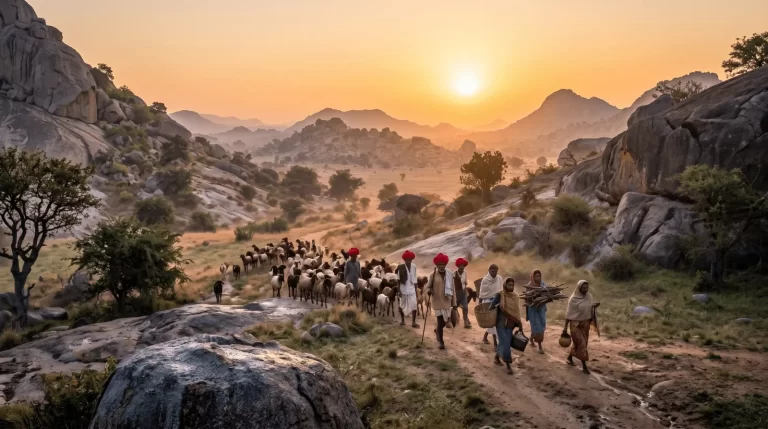
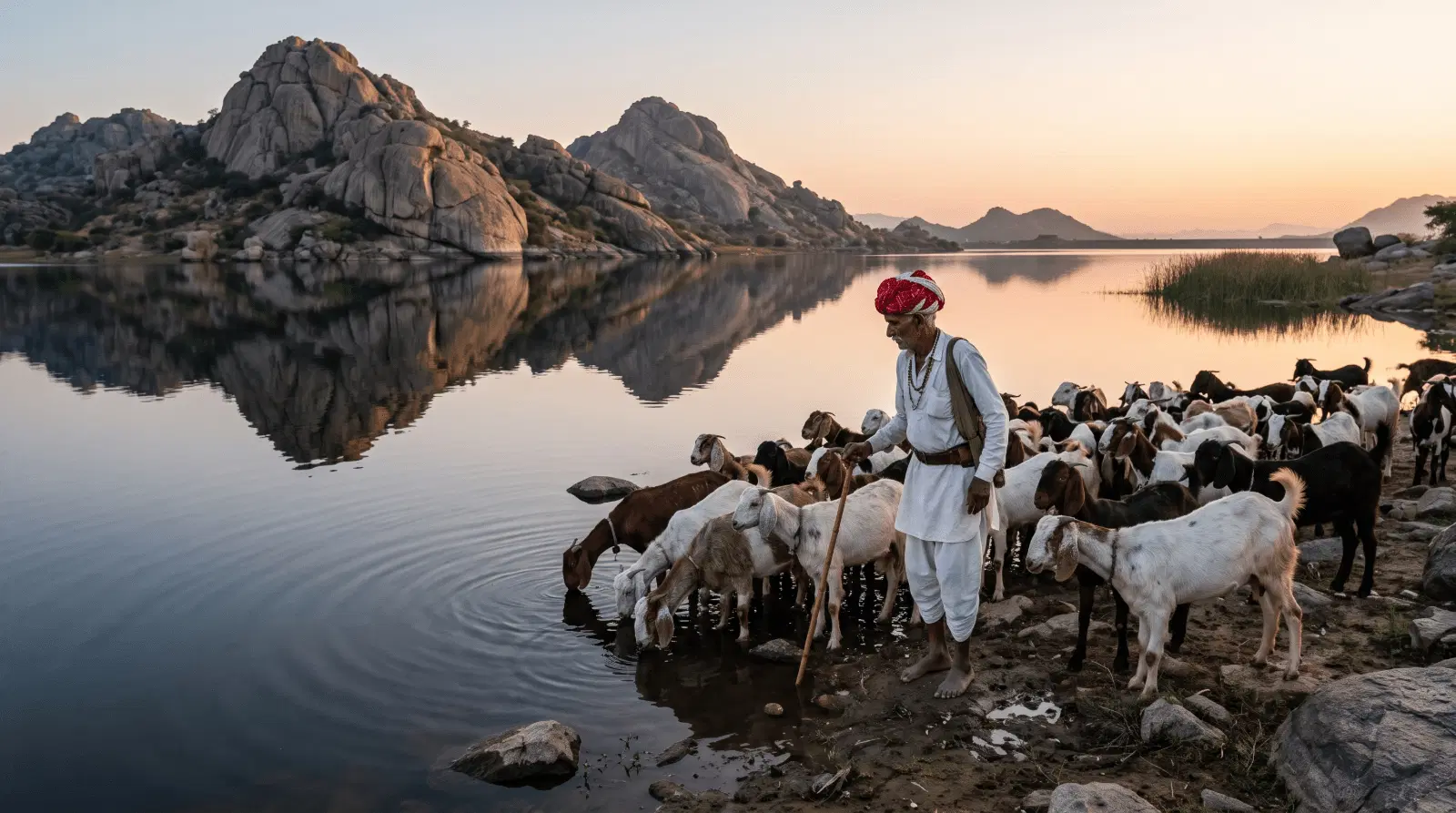
This quiet extends to the cultural side of Jawai too. The Rabari pastoralist community continues its grazing and herding routines through the rains as it does year-round, and the low-conflict coexistence between leopards and herders that defines this landscape is, if anything, easier to observe and appreciate without the bustle of peak-season tourism around it. A monsoon visit to a Rabari settlement or a slow morning watching herders move livestock across a green hillside carries a different texture than the same experience wedged between two crowded winter safari sessions.
The Honest Disruptions: Rain and Access
Monsoon safaris come with a genuine logistical trade-off that deserves upfront honesty rather than being glossed over. Sustained heavy rain can occasionally make certain tracks difficult to navigate, and a scheduled drive may need its timing or route adjusted at short notice around a downpour. This is not a constant disruption – rainfall through the season comes in spells rather than continuous downpour – but it is a real possibility that does not exist in the dry months, and travellers considering monsoon should build some flexibility into their plans rather than expecting the fixed, predictable schedule that a winter trip typically delivers. Humidity is also higher than in the dry season, which affects comfort levels differently to winter’s cold or summer’s dry heat – a mugginess that some travellers find more tiring than either extreme, and others find entirely manageable.
Photography in the Monsoon Light
A specific, smaller community of photographers actively seeks out monsoon at Jawai for reasons that have nothing to do with sighting frequency. Storm light – the particular quality of sun breaking through heavy cloud over green hills, or a granite outcrop lit dramatically against a dark sky before rain – produces images genuinely different from anything available in the dry season’s clearer, harsher light. Combined with near-empty tracks and the unusual green backdrop, monsoon photography at Jawai has a distinct, less commonly seen visual signature that some photographers value precisely because so few others are shooting it.
Month by Month Within Monsoon
July typically brings the onset of sustained rain after the intense dry heat of June, and the first weeks can carry a mix of very heavy downpours and the last lingering heat of the pre-monsoon period before the pattern settles. By August, the season is in full swing – the landscape has greened considerably, the dam is visibly refilling, and rainfall tends to arrive in a more established rhythm that experienced local guides and drivers plan around with some confidence. September marks the tail end of monsoon, with rainfall typically easing, the dam approaching its fullest point of the year, and the very first signs of the seasonal shift that will bring migratory birds back to the water in the weeks ahead – a preview of the winter season covered in our other guides, arriving while the monsoon’s green cover is still at its most lush.
The Dam and Birdlife in Transition
September in particular is a genuinely interesting overlap month at Jawai Bandh. The dam is near its highest annual water level, the surrounding hills are still green from the rains, and the earliest migratory birds of the coming winter season begin to arrive even as the monsoon officially winds down. This transition window offers a distinct combination not available at any other point in the year – full water, green landscape, and the first arrivals of a bird population that will build steadily through the following months. It is a narrow, easily overlooked window, but one worth knowing about if your travel dates happen to fall in early autumn rather than deep monsoon or deep winter.
Accommodation and Access in the Off-Season
Because visitor numbers drop so significantly during monsoon, camps, resorts, and homestays around Bera and Sena operate at a fraction of peak-season occupancy, which generally means far more flexibility in what is available, even at short notice. This is one of the more practical, less discussed advantages of a monsoon trip – the lack of competition for rooms and vehicles that defines the winter booking rush simply does not exist in the same way during these months. It is worth checking directly on current road and track conditions close to your travel dates, since a particularly wet spell can affect specific routes, but this is a manageable, well-understood part of operating in the region during monsoon rather than a reason to abandon the season altogether.
Who Monsoon Genuinely Suits
Monsoon is not the right choice for a first-time visitor whose primary goal is maximising the chance of a leopard sighting on a short trip – for that priority, the winter or shoulder season guides on this site are the better starting point. It is a strong choice for photographers drawn to unusual light and a transformed green landscape, for slow travellers who value quiet and pace over ticking off a sighting checklist, for repeat Jawai visitors who have already experienced the dry-season version and want to see the same hills look completely different, and for travellers with flexible schedules who can absorb the occasional rain-related adjustment to a day’s plan without it derailing the trip.
Message us on WhatsApp for current pricing and a quote tailored to your dates and group size.