Day Trip vs Overnight in Jawai: The Difference One Night Makes
The Question Behind the Question
Almost every traveler weighing a day trip against an overnight stay in Jawai is really asking something more specific: is it worth the extra time and logistics to stay over, or can a single well-planned day deliver enough of the experience to justify skipping the overnight entirely. There isn’t one universal right answer — it genuinely depends on your itinerary, your priorities, and how much you value a hedge against a quiet safari. This guide lays out the comparison as plainly as we can, without pushing you toward the option that happens to be our flagship package, because the honest answer for some travelers really is the day trip.
The Core Trade-Off in One Paragraph
A day trip gets you one safari and several hours of driving on either end, compressed into a single day, with essentially no room for error in timing. An overnight stay gets you two safaris minimum, often three, unhurried time at the dam and in a nearby village, and a buffer against any single outing being disappointing. The overnight costs you more time and, generally, more expense than a day trip — but the added value per additional hour spent is high, because the second and third safari attempts compound on the first rather than simply repeating it. That’s the whole comparison in outline. Everything below fills in the specifics.
Number of Safari Attempts
This is the single biggest practical difference. A day trip from either Udaipur or Jodhpur typically allows for one safari — either the sunrise or the sunset slot, not both, because the drive time on each end consumes too much of the daylight window to fit in a second outing without an unreasonably long day. A one-night stay typically allows for two safaris: an evening drive on arrival and a sunrise drive the next morning before departure. A two-night stay, our recommended minimum for a proper visit, typically allows for three safaris across the stay, giving you real redundancy if any single drive is quiet.
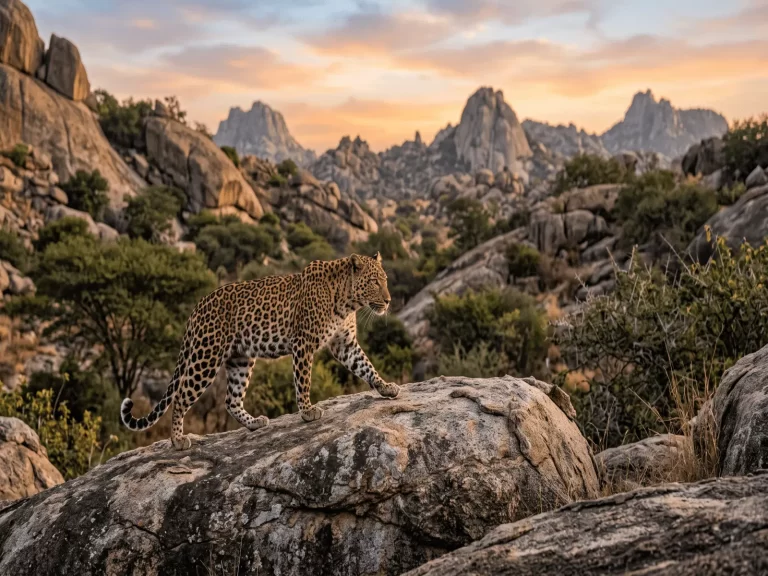
Because Jawai’s leopards are unusually visible in daylight compared to dense-forest reserves — they spend real time resting in the open on granite boulders — sighting odds per safari are relatively good here. But “relatively good” is not “guaranteed,” on any single drive, from any operator, ever. The practical upshot: more attempts genuinely improve your realistic odds of a strong sighting over the course of your visit, in a way that simply isn’t available to someone doing a single day trip.
Time and Logistics
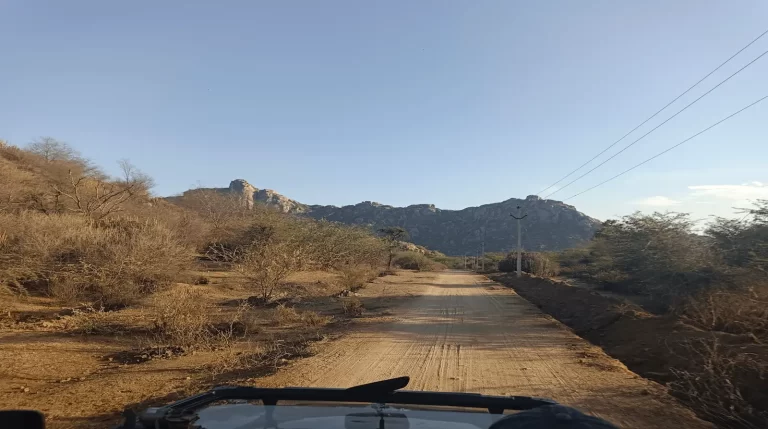
A day trip means one intense day: an early departure (often before 4:30am if you’re chasing sunrise), several hours of driving each way, and a late return. It fits inside a single day of a broader itinerary without requiring you to rebook accommodation elsewhere, which is its main logistical advantage — you don’t need to find or coordinate a stay in Jawai at all.
An overnight stay requires arranging accommodation in Jawai, and it means your broader itinerary needs to accommodate an extra night somewhere along the route rather than staying an extra night in Udaipur or Jodhpur instead. For travelers on a tight overall trip length, this is the real cost of the overnight option — not that it’s dramatically more expensive on a per-night basis, but that it requires an actual extra day in your total trip length, or the reallocation of a day you’d planned to spend elsewhere.
What Else You Get Beyond the Safari
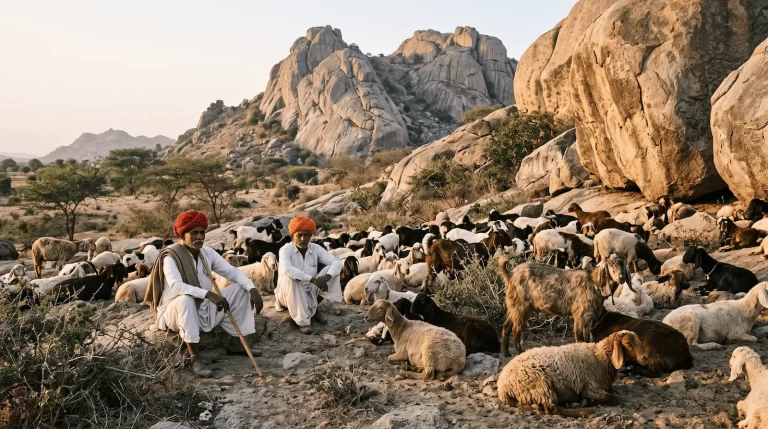
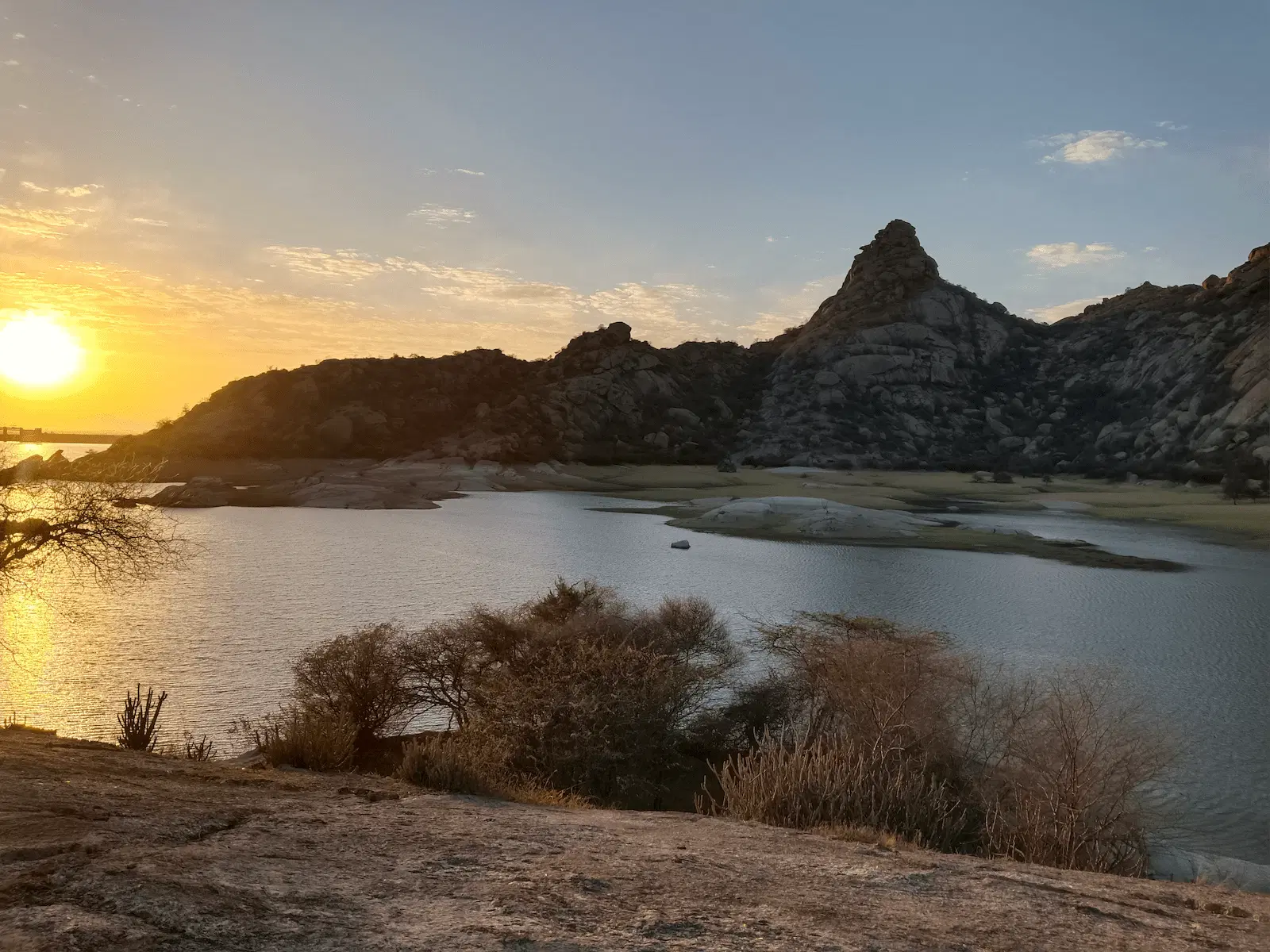
This is where the comparison tends to tilt more decisively toward the overnight option than people expect going in. A day trip typically allows a short stop near the dam if timing works out, but there’s rarely room for anything beyond that — a village walk, an unhurried look at the birdlife on the water, or simply sitting with the landscape rather than moving through it on a schedule. An overnight stay, particularly two nights, gives these elements real room: a proper visit to Jawai Bandh, the 1957 dam that has become an accidental ecosystem for migratory birds and resident crocodiles, and time with a Rabari herding community to see the human side of this landscape, which is arguably as central to what makes Jawai distinctive as the leopards themselves. If your interest in Jawai is purely “see a leopard, move on,” a day trip may satisfy that narrow goal. If your interest includes the dam, the culture, and the general atmosphere of the place, the day trip will likely leave you feeling like you only scratched the surface.
Cost Considerations, Honestly
An overnight stay costs more in absolute terms than a day trip, simply because it adds accommodation and generally an extra safari or two on top of the transfer costs. But it’s worth thinking about this in terms of value per experience rather than raw total spend. A day trip’s cost is almost entirely consumed by the transfer — you’re paying substantially for the driving itself, with comparatively little of the spend going toward the actual Jawai experience. An overnight stay shifts that ratio significantly: the same transfer cost is spread across two or three safaris and a fuller experience of the destination, rather than just one. We won’t give you specific numbers here, since pricing depends on your dates, group size, and exact plan — message us for that — but the framing is worth keeping in mind rather than assuming the day trip is automatically the cheaper choice per experience delivered.
When the Day Trip Is Genuinely the Right Call
There are real scenarios where a day trip is the smarter choice, not just the compromise choice. If your total Rajasthan itinerary is already tightly booked and an extra overnight anywhere would force you to cut something else you care more about, a day trip lets you include Jawai without that trade-off. If you’ve already stayed in Jawai on a previous trip and simply want yesterday’s-visit-style, a shorter return day trip makes sense rather than repeating a full overnight. And if Jawai is genuinely a secondary interest relative to other priorities on your route — say, you’re primarily focused on Udaipur and Jodhpur themselves and Jawai is an add-on rather than a destination in its own right — a day trip may honestly reflect how much of your trip you want to allocate to it.
When the Overnight Is Clearly Worth It
If Jawai is a genuine priority on your trip rather than an add-on — if the leopard safari itself, or the broader coexistence of wildlife and the Rabari community, is something you specifically wanted to see rather than a convenient stop on a longer route — the overnight option is worth the extra time in almost every case. It’s also clearly the better choice for photography-focused travelers, who benefit enormously from multiple light conditions across different times of day in a way a single safari simply can’t provide, and for anyone traveling with children, where having a second or third safari attempt removes the pressure of one outing needing to deliver everything.
A Middle Path: The One-Night Option
It’s worth naming the option that sits between these two extremes. A single overnight stay — one night, two safaris — is a legitimate middle ground for travelers who want more than a day trip but can’t commit to two full nights. It costs you the buffer of a third safari attempt and most of the unhurried time around the dam and village, but it roughly doubles your safari attempts compared to a day trip for a relatively modest addition in time and logistics. For travelers genuinely torn between the day trip and our recommended two-night stay, this middle option is often the practical compromise.
The Regulatory Backdrop That Applies to Both Options
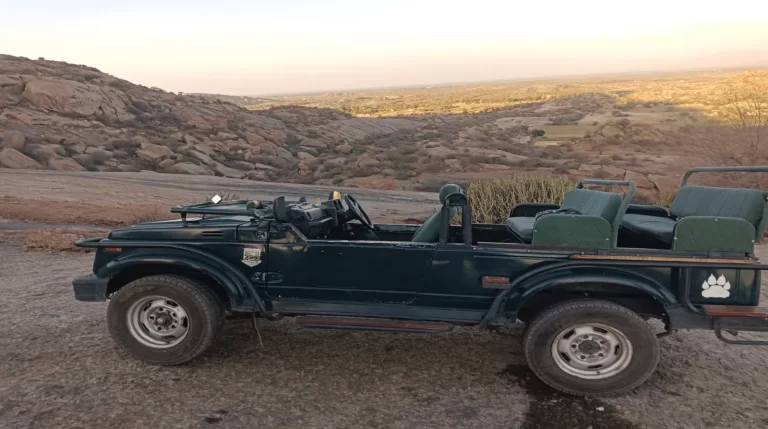
Whichever option you choose, the same rules govern the safaris themselves. Since 2026, only committee-registered, GPS-tracked vehicles may operate commercially in the Jawai safari zone, and every safari runs within a fixed daylight window, roughly 6am to 7pm, with no night safaris permitted under any circumstance. This affects the day trip more acutely than the overnight stay, simply because the day trip has zero slack — if your transfer runs late, you may lose your one safari attempt entirely, whereas an overnight stay with two or three attempts can absorb a single delay without the whole visit being compromised. This is one more quiet argument in favor of the overnight option beyond the ones already covered above, and it is worth factoring into your decision if your transfer timing has any real uncertainty to it — flight delays, monsoon-season road conditions, or an unpredictable pickup point.
How to Decide for Your Specific Trip
Rather than trying to apply a generic rule, it helps to ask yourself three direct questions. First, how much do you actually want to see Jawai specifically, versus treating it as a convenient stop between two cities you were visiting anyway. Second, how much flexibility does your overall itinerary have to absorb an extra night, and what would you have to give up elsewhere to make room for it. Third, how important is a hedge against a single quiet safari to your peace of mind — if one so-so drive would genuinely disappoint you, the overnight buys real insurance against that; if you’re fairly relaxed about outcomes either way, the day trip’s single attempt may be perfectly fine.
We talk through exactly this trade-off with almost every traveler who messages us about Jawai, because it’s rarely obvious from the outside which option fits a specific trip. Tell us your dates, your starting city, and what else is on your itinerary, and we’ll give you a straight recommendation rather than automatically upselling the longer stay. Message us on WhatsApp for current pricing and a quote tailored to your dates and group size.