The 2-Night Jawai Trip: Why This Is the Length That Actually Works
Why Two Nights, Specifically
Most questions about Jawai eventually come back to the same practical issue: how much time does this place actually need. We get asked this more than almost anything else, and our answer is consistent — two nights is the length that works. Not one, and not five. Two nights is long enough to give the safaris room to breathe, short enough to fit comfortably into a wider Rajasthan itinerary, and it lines up with how the safari day is actually structured under the current rules.
The 2-Night Jawai Complete Experience is our flagship offering for exactly this reason. It isn’t a package built around a convenient number — it’s built around what actually fits into the daylight-only safari window and what it takes to see Jawai properly rather than glimpse it. This piece goes through why that length works, what typically fits inside it, and what you’re trading away if you compress it further.
The Daylight Constraint That Shapes Everything
Since 2026, Jawai’s safaris run only within a fixed daylight window, roughly 6am to 7pm, using committee-registered, GPS-tracked vehicles. There are no night safaris, no exceptions, and no informal workarounds — this is enforced, not a suggestion. That single rule does more to determine trip length than almost anything else, because it means every safari opportunity is tied to a specific, narrow slot: the pre-dawn departure for sunrise, or the late-afternoon departure for sunset.
A single day, arriving from Udaipur or Jodhpur, typically allows for one of those slots at most, because several hours of driving eat into the available daylight on either end. Stay one night, and you can usually catch an evening safari on arrival and a sunrise safari the next morning before you have to start the drive onward — two outings, but no slack if either gets disrupted by weather, traffic, or a slow start. Stay two nights, and you’re no longer relying on a single perfect run of timing. You get three realistic safari windows — evening, sunrise, evening again, or some similar combination — with room to lose one to bad conditions and still leave with a full experience.
What a Two-Night Stay Typically Includes
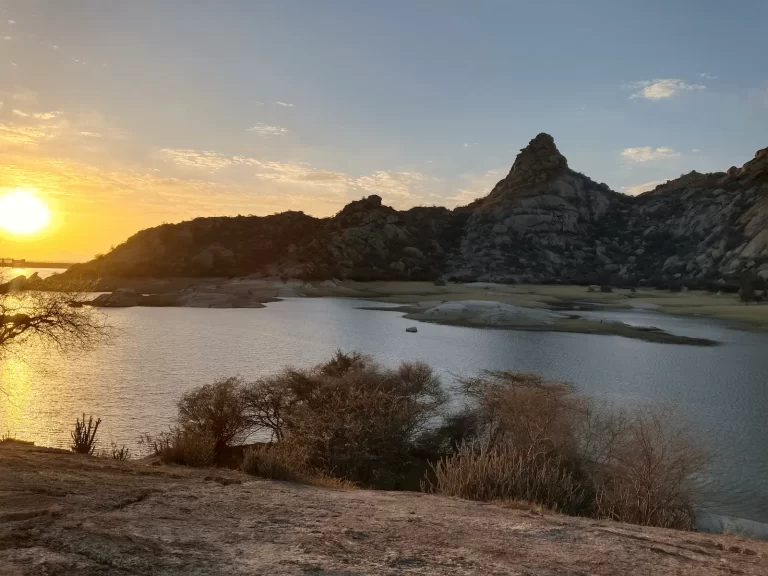
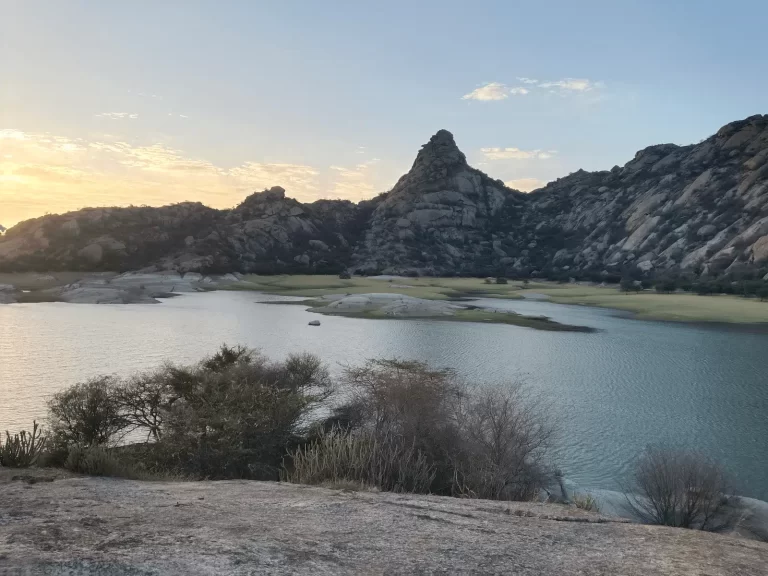
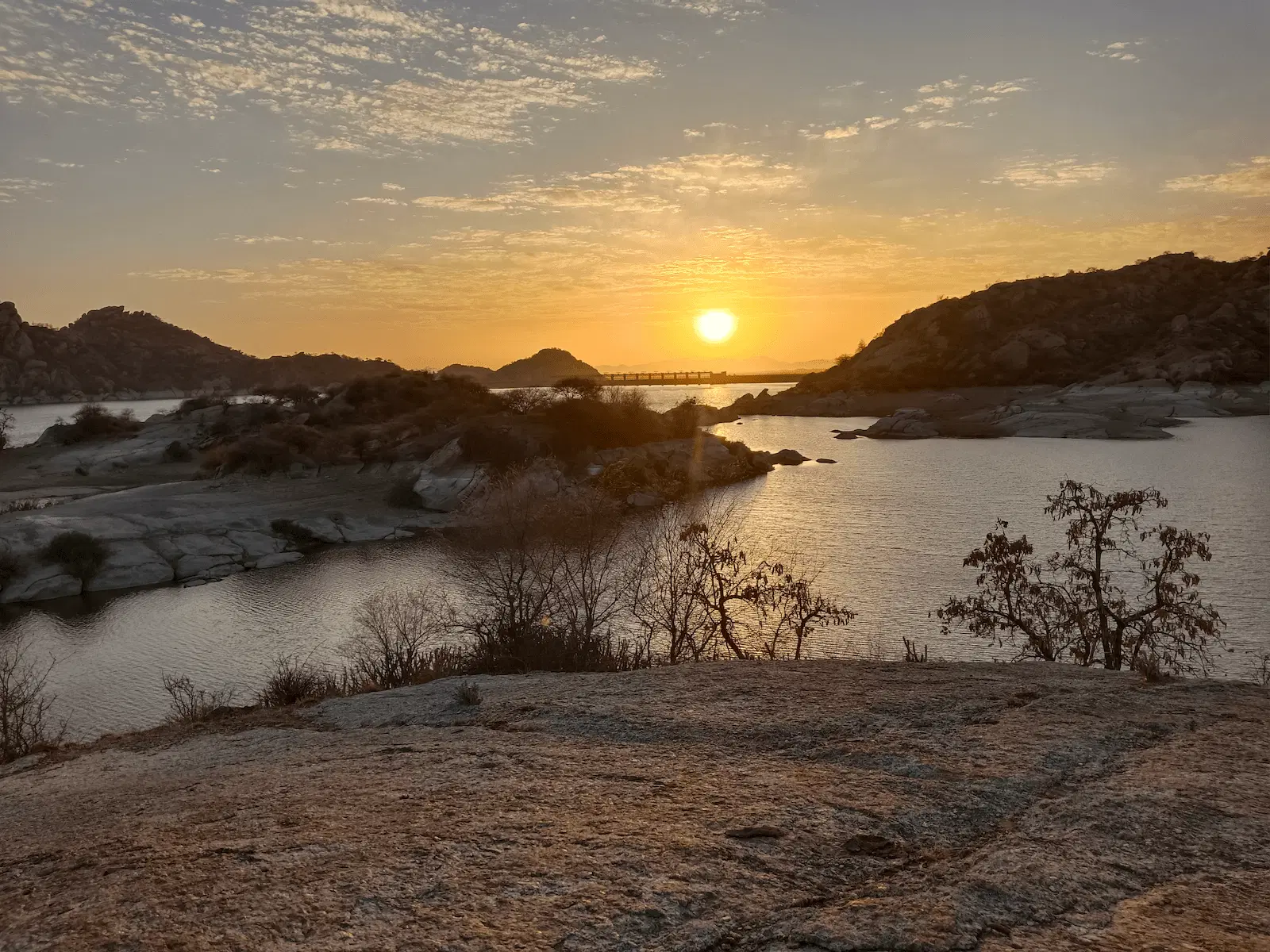
The shape varies a little depending on arrival time and which zone of Jawai you’re based in, but a representative structure looks like this. You arrive in the early afternoon after the drive in from Udaipur or Jodhpur, settle into your stay, and head out for your first safari that evening, timed to catch the light as the sun drops behind the granite hills — this is often when leopard activity picks up as the day’s heat eases and animals start to move.
The next morning starts early with a pre-dawn departure for the sunrise safari. This is frequently the best single window of the whole stay: cooler air, softer light, and a stillness to the landscape that the middle of the day doesn’t have. Back from the drive by mid-morning, the middle part of the day is where the rest of Jawai gets its moment — most commonly a visit to the dam itself, where migratory birds and resident crocodiles share the water with grazing herds, or a walk through a nearby Rabari village to see the human side of this landscape rather than only its wildlife. A second evening safari typically closes out the first full day.
The second morning is the most flexible part of the stay. Some travelers use it for a third safari, particularly if earlier outings were quiet and they’d like one more attempt before leaving. Others use it to slow down — a proper breakfast, a last walk near the dam, or simply an unhurried pack-up before the transfer onward. Because the transfer out typically takes a few hours, having a flexible final morning rather than rushing straight from a jeep into a car changes how the whole trip feels in its closing hours.
We coordinate all of this — the safari timings, the transfer in and out, the stay arrangement, and any add-on like a village walk or dam visit — as a single planned trip rather than a set of separate bookings you have to stitch together yourself.
Multiple Safaris, Not Just More Time
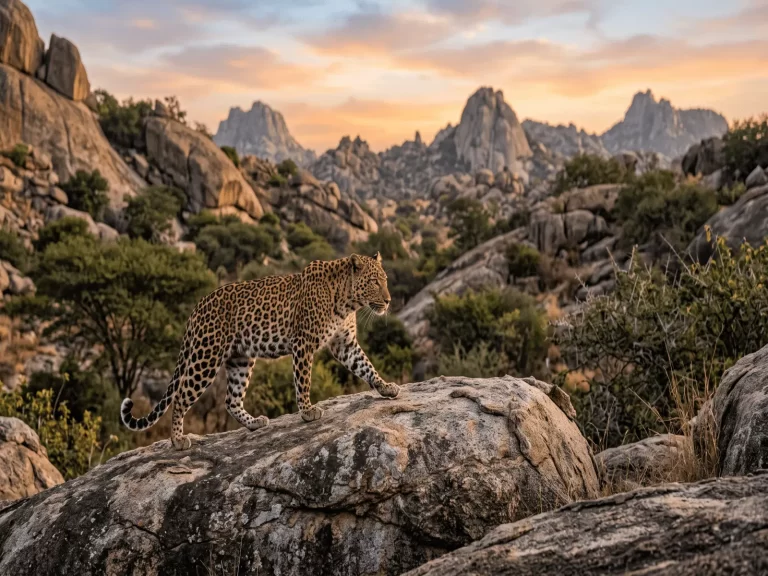
It’s worth being precise about why multiple safaris matter, because the value isn’t just “more hours in a jeep.” Jawai’s leopards are unusually visible by the standards of Indian wildlife destinations — they spend real time resting in the open on granite boulders in daylight, which is part of what makes this landscape different from a dense-forest tiger reserve. But visibility isn’t the same as certainty, and no honest operator will tell you otherwise. Sighting odds shift with season, zone, time of day, and plain chance.
What multiple safaris actually buy you is a hedge against exactly that variability. A single drive might be exceptional, or it might be quiet — that’s true no matter how good your guide or vehicle is. Three drives across different times of day and, often, different zones give you a meaningfully better overall chance of a strong sighting than any single outing could, simply because you’re not depending on one roll of the dice. This is the honest, unglamorous reason two nights outperforms one night by more than the ratio of nights would suggest — it’s not twice as good, it’s often better than that, because the second and third attempts are compounding on the first rather than starting from zero.
The Non-Safari Hours Matter More Than People Expect
A common assumption is that a Jawai trip is entirely about the leopard drives, with everything else as filler. In practice, the hours between safaris are where a lot of the character of the place comes through, and a two-night stay is what gives those hours enough room to matter rather than being rushed past.
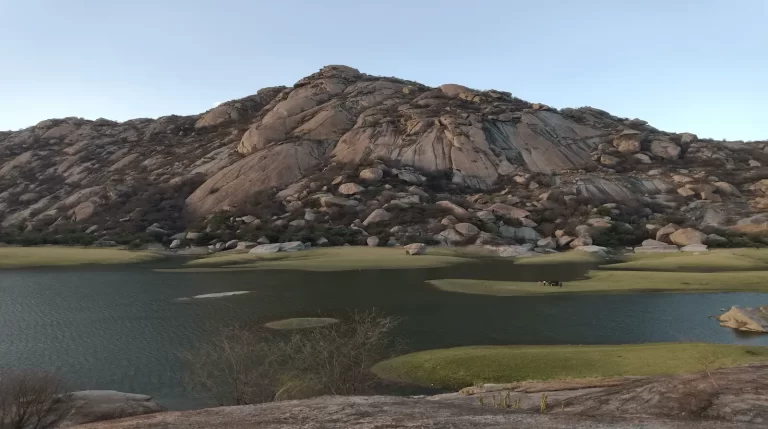
The Jawai Bandh dam, built in 1957, has become an accidental ecosystem in its own right — its water draws migratory birds seasonally, and it’s also home to crocodiles that most visitors don’t expect to find in this part of Rajasthan. Time spent here in the middle of the day, when the safari vehicles are off the road anyway, is unhurried and genuinely worthwhile on its own terms, not just a way to pass time between drives.
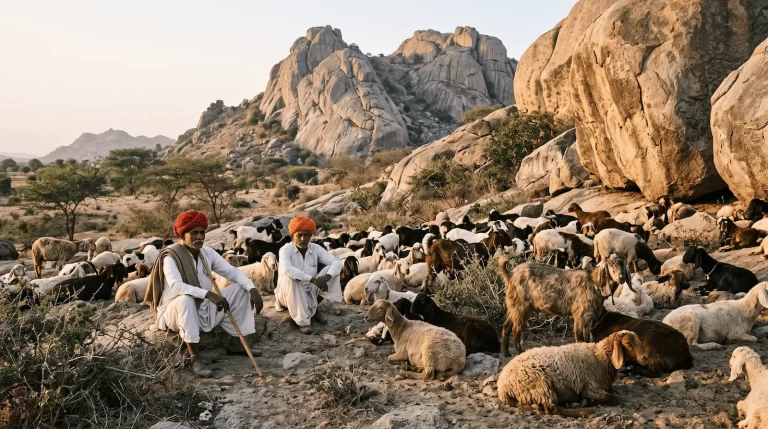
The Rabari community that herds livestock through this same landscape is the other half of what makes Jawai distinct. This isn’t a wilderness empty of people — it’s an inhabited, working landscape where leopards, shepherds, camels, and crocodiles have shared the same water and grazing land for generations. A village walk, arranged respectfully and without turning anyone into a photo subject, gives a two-night stay a dimension that a rushed day trip simply doesn’t have time for.
What You Give Up With Fewer Nights
It’s worth being blunt about the trade-offs rather than only selling the upside of two nights. A single overnight stay is a perfectly legitimate way to see Jawai, and plenty of travelers do it and leave satisfied — you’ll typically get two safari attempts, and if the timing and weather cooperate, that can be enough for a strong sighting and a good sense of the place. What you lose is the buffer: if one drive is quiet, or a transfer runs late, or the weather turns for an evening, there’s no second chance to recover it within the trip.
A day trip compresses things further still, usually down to a single safari, with the bulk of the day spent driving rather than at Jawai itself. It can work as an add-on to a longer Rajasthan circuit when a genuine overnight stop isn’t possible, but it should be chosen with open eyes about what it is — a taste of Jawai, not the full version of it. We’ve written a dedicated comparison of day trip versus overnight if you want the complete trade-off laid out side by side.
Who the Two-Night Structure Suits Best
Almost everyone benefits from the extra buffer that two nights provides, but it particularly suits a few kinds of travelers. Photography-focused visitors benefit enormously from multiple attempts at different times of day, since light quality varies significantly between a sunrise and a sunset drive, and a single outing rarely captures the full range of what the landscape offers. Couples looking for an unhurried, low-crowd experience get more out of two nights because the pace itself — not just the wildlife — is part of the appeal. Families with children benefit from the flexibility of not needing every single safari to deliver, since a slow first drive doesn’t sink the whole trip when there are two more chances to come.
Travelers on a tight overall Rajasthan schedule sometimes worry that two nights is too much time to give one stop. In practice, because Jawai sits almost exactly between Udaipur and Jodhpur, those two nights rarely feel like a detour — they replace what would otherwise be a long, low-value single transfer day between the two cities with two nights that are genuinely worth having on their own account.
How We Put It Together
We arrange the 2-Night Jawai Complete Experience as a single coordinated trip: the safaris with committee-registered, GPS-tracked operators, the transfer from Udaipur or Jodhpur, the stay arrangement for the two nights, and whichever combination of dam visit, village walk, or additional safari slot suits your dates and interests. Nothing about this runs through multiple disconnected bookings — it comes together as one WhatsApp conversation, and we stay involved through the trip rather than handing you off once a booking is confirmed.
We never guarantee sightings, because nobody honestly can, but we will give you a straight read on what the odds look like for your specific dates and season, and we’ll build the two-night structure around giving you the best realistic shot at a memorable stay — leopards included, but not only leopards. Message us on WhatsApp for current pricing and a quote tailored to your dates and group size.